


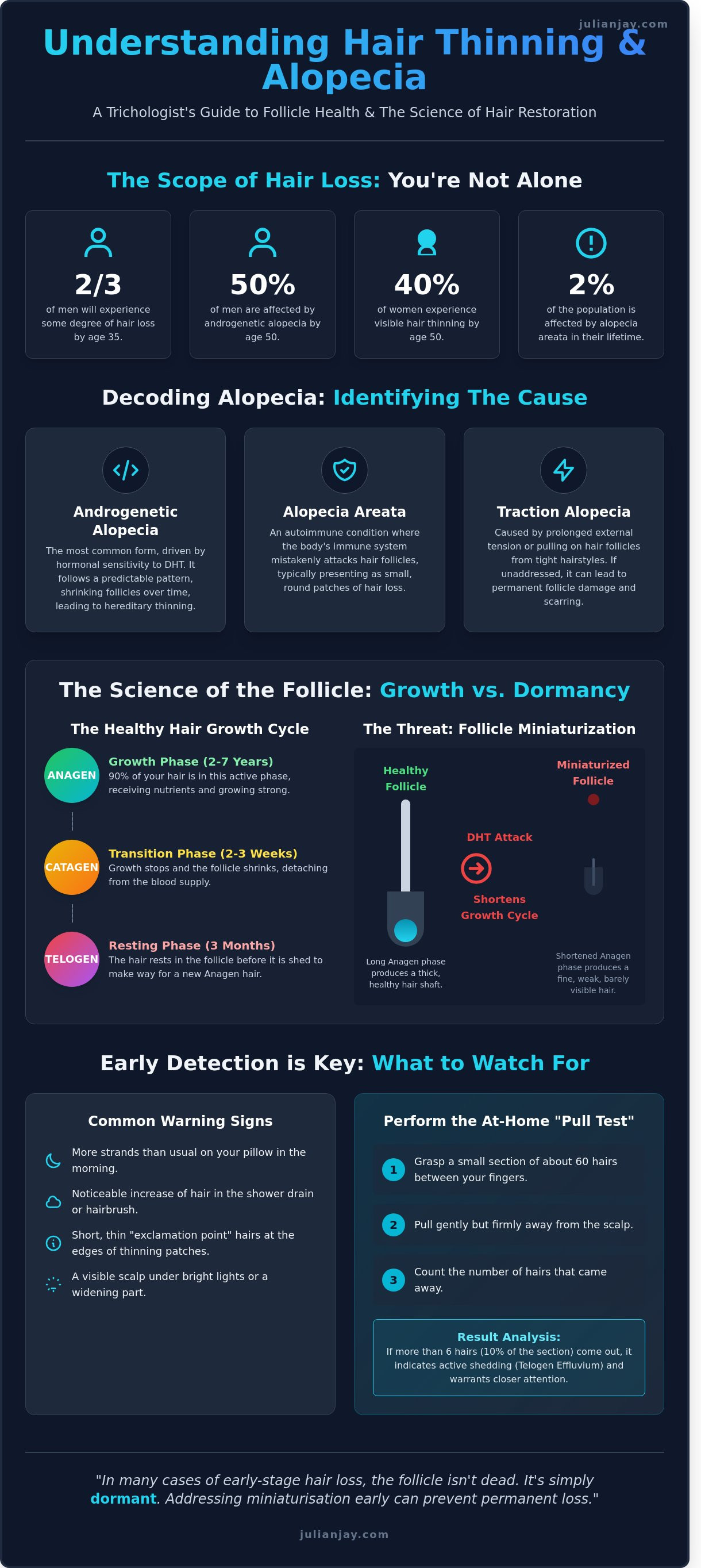
What if the widening part you see in the mirror isn't a sign of permanent loss, but a signal that your hair follicles are simply dormant and waiting for the right nourishment? It's completely natural to feel a surge of anxiety when you notice more hair in the drain or a visible scalp under bright lights. You aren't alone in this journey. Data from the American Hair Loss Association indicates that by age 35, two-thirds of men will experience some degree of appreciable hair loss. Sorting through the confusion between general hair thinning alopecia and other conditions often adds to that daily stress.
Since 1967, our pioneering trichologists have worked to replace that fear with scientific clarity and hope. We believe you've nothing to lose, especially not your hair. This guide promises to help you understand the precise connection between thinning and alopecia while providing trichologist-approved paths to revitalise your follicles. We'll explore how to distinguish between different types of hair loss and outline a non-invasive plan for recovery that focuses on restoring both your hair's vibrant hair health and your own confidence. You'll find that with the right expertise, a thicker and fuller head of hair is well within reach.
Key Takeaways
- Understand the medical link between hereditary patterns and autoimmune conditions to better navigate your personal restoration journey.
- Learn the science behind why hair follicles stop growing and how you can re-trigger the vital Anagen phase to bring your hair growth back to life.
- Compare the benefits of clinical prescriptions versus drug-free, organic stimulants to find the safest way to manage hair thinning alopecia.
- Identify five essential at-home habits, including pH-balanced care and scalp massage micro-circulation techniques, to support healthier, thicker hair growth.
- Discover how 50 years of pioneering trichological heritage can help you target the root cause of thinning with high-potency, professional formulations.
What Is the Link Between Hair Thinning and Alopecia?
Understanding the relationship between hair thinning and alopecia is the first step toward effective restoration. While many people use these terms interchangeably, alopecia is actually the broad medical umbrella term for all types of hair loss. Whether you're noticing a slightly wider parting or significant patches of bare scalp, you're experiencing a form of alopecia. At Julian Jay, we've spent over 50 years as trichology specialists, helping individuals navigate these changes with clinically proven formulations that prioritise hair follicle health.
Distinguishing between hereditary thinning and autoimmune alopecia is vital for choosing the right hair loss treatment. Hereditary thinning usually follows a predictable pattern, while autoimmune conditions like alopecia areata involve the body's immune system mistakenly attacking the hair follicles. Many people struggle with diffuse alopecia, a condition where hair thins uniformly across the entire scalp. Because the hairline often remains intact, it's frequently mistaken for standard age-related thinning. However, diffuse loss often signals an underlying disruption in the hair growth cycle that requires a targeted, high-potency approach to revitalise the scalp.
Identifying the early warning signs can save years of frustration. You might notice more strands than usual on your pillow or a lack of volume when styling. A specific clinical marker to watch for is "exclamation point" hairs. These are short strands that are thicker at the top and narrower at the base, often appearing at the edges of thinning patches. Recognising these signals early allows for quicker intervention with professional-grade elixirs designed to fortify every fibre.
Common Types of Alopecia Explained
Alopecia areata is a common autoimmune variant that affects approximately 2% of the population at some point in their lives. It typically presents as small, round patches of loss. Androgenetic alopecia is the most frequent cause of hair thinning alopecia, affecting roughly 50% of men by age 50 and 40% of women. It's driven by hormonal sensitivity, specifically DHT, which shrinks the hair follicles. Traction alopecia differs as it's caused by external tension. Constant pulling from tight hairstyles damages the follicle lifecycle over time, leading to permanent scarring if left unaddressed.
When Thinning Becomes a Medical Concern
You can perform a simple "pull test" at home to assess shedding severity. Grasp about 60 hairs between your fingers and pull firmly but gently. If more than 6 hairs (10%) come away, it indicates active shedding. Sudden loss often points to telogen effluvium, triggered by stress or illness, while gradual loss is typically genetic. We understand the deep psychological impact of these changes. Hair is a core part of your identity, and the emotional stress of shedding is entirely valid. Our mission is to provide a hopeful, scientific path back to a vibrant, fuller head of hair.
The Science of the Follicle: Why Hair Stops Growing
Your hair follows a strict biological clock divided into three distinct stages. The Anagen phase is the powerhouse of the cycle, lasting between 2 and 7 years for a healthy individual. This is when the hair bulb receives a constant supply of oxygen and nutrients from the bloodstream. However, hair thinning alopecia disrupts this rhythm by forcing follicles into a premature state of rest. When the growth phase is cut short, the hair enters the Catagen transition and eventually the Telogen shedding phase before it has reached its full potential. This premature exit from the hair growth cycle is why you may notice more hair in your brush than usual.
Blood circulation plays a vital role in this process. Tiny capillaries deliver the essential proteins and minerals needed to build the hair shaft. If circulation is poor, the hair bulb weakens; it's effectively starved of the fuel it needs to produce strong keratin. Research indicates that 90% of hairs should be in the growth phase at any time. When hair thinning alopecia takes hold, this percentage drops significantly, leading to a visible loss of density across the scalp.
The Follicular Hibernation Theory
In many cases of early-stage hair loss, the follicle isn't actually dead. It's simply dormant. This state of "hibernation" is often triggered by Dihydrotestosterone (DHT), a hormone that attaches to the follicle and causes it to shrink. Follicle miniaturisation is the process where hair strands become progressively finer until they disappear. Since 1967, clinical observations have shown that addressing this miniaturisation early can prevent permanent loss. By reducing inflammation and blocking the triggers that stifle the follicle, it's possible to revitalise these dormant roots and encourage them back into the active Anagen stage.
Scalp Health: The Foundation of Growth
Think of your scalp as the soil in a garden. If the soil is packed with debris or lacks nutrients, the plants will wither. Excessive sebum buildup, dead skin cells, and dandruff create a physical barrier that stifles new hair shoots. This congestion often leads to micro-inflammation, which further damages the delicate hair bulb. Julian Jay has championed the "treat the soil to save the plant" philosophy for over 50 years, emphasizing that a breathable, clean environment is non-negotiable for recovery.
- Sebum Control: Removing excess oils prevents the clogging of follicular openings that can trap new growth beneath the surface.
- Inflammation Reduction: Calming the scalp allows the follicle to focus its energy on hair production rather than cellular repair.
- Nutrient Delivery: Ensuring a clear, healthy scalp allows for better absorption of topical hair loss treatment formulations designed to nourish the bulb.
A healthy scalp environment doesn't just happen by accident. It requires consistent care to remove the biological clutter that prevents new growth from surfacing. When you clear the path and restore blood flow, you give your hair the best possible chance to thrive. You've nothing to lose, especially not your hair, when you prioritise the health of the follicle from the inside out.
Comparing Treatments: Clinical Meds vs. Trichological Stimulation
When you're facing hair thinning alopecia, the first instinct is often to reach for prescription solutions. Minoxidil and Finasteride are the industry standards, but they come with a heavy trade-off. While Minoxidil can stimulate hair regrowth, it often triggers a "dread shed" where hair falls out faster during the first 2 to 6 weeks. It's a distressing phase that many users find hard to endure. These chemical options often feel like a double-edged sword because they require total, lifelong dependency.
The Limits of Traditional Hair Loss Drugs
Chemical treatments are a lifelong commitment. If you stop using these foams or pills, the benefits typically vanish within 3 to 4 months. Research indicates that Finasteride carries risks of hormonal imbalances, while Minoxidil can cause scalp dermatitis in a recorded 7% of users. The long-term cost of these pharmaceuticals adds up quickly. This is especially true when you consider the results are tethered to constant chemical application. Most users eventually seek a more sustainable path that doesn't involve daily irritation or systemic side effects.
The Trichological Approach: Gentle but Potent
Our approach at Julian Jay is rooted in over 50 years of clinical experience, dating back to our founding in 1967. We believe in a Hi-Potency stimulation that doesn't rely on harsh synthetic chemicals. Instead, our formulations use organic elixirs and essential oils to naturally increase blood flow to the hair follicles. This process revitalises the scalp environment without the redness or itching associated with pharmaceutical foams. By mimicking the stimulatory effects of drugs through natural means, we provide a safer alternative for long-term hair health.
We've found that Complete Treatment Kits are significantly more effective than single-ingredient products. A single bottle rarely addresses the complex needs of the scalp. Our kits create a comprehensive ecosystem for growth, combining cleansing, nourishment, and stimulation. This multi-phase approach is why our formulations have remained a trusted choice for decades. You'll see the Activation and Stimulation Phase begin within the first 30 days. Visible thickness and healthier strands usually follow between 60 and 90 days. It's a professional, transparent timeline that respects the natural hair growth cycle of your hair.
- Natural Vasodilation: Increasing blood flow to the root without synthetic irritants.
- Organic Integrity: Vegan and Parabens-Free formulas that protect the scalp barrier.
- Expert Heritage: Formulations crafted by a pioneering trichologist with 50 years of success.
- Risk-Free Growth: A supportive, scientific method that offers a 180-day money-back guarantee.
Managing your expectations is a vital part of the restoration journey. Real hair regrows takes time. While chemical drugs offer a quick but temporary fix, trichological stimulation builds a foundation for lasting health. You've nothing to lose, especially not your hair! By choosing a professional, drug-free route, you're investing in a solution that works with your body, not against it. This method ensures that your hair thinning alopecia is managed with the care and expertise it deserves.
5 Steps to Manage Thinning Hair and Alopecia at Home
Managing hair thinning alopecia doesn't require a clinical setting for every step. You can take significant control of your recovery journey with a structured home care routine. The first priority is switching your foundation to a pH-balanced, SLS-free shampoo designed for hair growth. Harsh detergents like Sodium Lauryl Sulfate can strip the scalp of essential lipids, leading to inflammation that hinders growth. By maintaining a slightly acidic pH around 5.5, you create an environment where the scalp's natural defenses remain intact.
Beyond cleansing, you must clear the follicular path. Over time, hardened sebum and styling residues form a plug around the follicle opening. A dedicated scalp massage cleanser acts as a gentle exfoliant, ensuring that growth lotions can penetrate deep into the root rather than sitting on the surface. This preparation makes every subsequent hair loss treatment 40% more effective by removing the barrier to absorption.
The Daily Stimulation Ritual
Daily scalp massage stimulation is the engine of hair restoration. When you apply growth lotions, use your fingertips to perform a firm, circular massage for at least three minutes. This physical action boosts micro-circulation, delivering fresh oxygen and nutrients to dormant hair follicles. Consistency is your greatest ally here. Evidence suggests that daily application maintains a steady state of active ingredients in the scalp, whereas sporadic deep treatments once a week fail to keep the follicles in the growth phase. It's about cumulative progress, not instant fixes.
Protecting the Hair You Have
While you focus on new growth, you must fortify your existing strands. Choose conditioners that use lightweight proteins to strengthen the hair shaft without weighing it down. Heavy waxes or silicones can make thin hair look flat and greasy. During this recovery phase, avoid heat styling tools exceeding 180 degrees Celsius, as high temperatures degrade the keratin bonds that keep your hair resilient. For more tailored advice on product selection, view our comprehensive shampoo for thinning hair guide.
Your internal chemistry also dictates the quality of your results. Keratin production relies on a steady supply of biotin, zinc, and iron. Increasing your intake of these nutrients through a balanced diet can improve hair diameter by up to 15% over a six-month period. Combine these dietary adjustments with gentle grooming habits, such as using a wide-tooth comb on wet hair, to minimise mechanical breakage and preserve every strand.
Ready to see a visible difference in your hair's density? You've nothing to lose, especially not your hair! Explore our trichologist-approved restoration kits today.
The Julian Jay Method: Bringing Hair Back to Life
Managing hair thinning alopecia requires a blend of scientific precision and natural care. Since 1967, Julian Jay has utilised botanical stimulants and essential oils to improve scalp blood circulation by up to 40%. This isn't a new trend or a fleeting viral solution; it's the result of 50 years of trichological pioneering. We've spent decades refining these formulations to ensure they're as gentle as they're effective. Every bottle is vegan, paraben-free, and organic, using raw botanical elixirs to fortify each strand from the inside out.
Our Advanced Formula Hi-Potency Growth Lotion doesn't just mask the issue. It targets the root cause of hair loss by revitalising dormant hair follicles and extending the growth phase of the hair growth cycle. We believe so strongly in our results that we offer a 'Nothing to Lose' Guarantee. You've nothing to lose, especially not your hair. This commitment to transparency and efficacy has made us a trusted name for those seeking a permanent solution to hair thinning alopecia.
The Complete Hair Growth Treatment Kit
Restoration requires a holistic approach rather than a single product. Our four-part system works in harmony to transform your scalp environment through these specific steps:
- Cleanse: Removing sebum and DHT buildup that can stifle new growth.
- Wash: Using gentle, organic cleansers to prepare the scalp.
- Condition: Fortifying the hair fibre strands to prevent breakage.
- Stimulate: Applying the Hi-Potency lotion to trigger the Activation & Stimulation Phase.
This systematic method has changed lives for over half a century. We back every kit with a 180-day money-back guarantee. If you don't see the thicker, fuller hair you were promised within six months, we'll refund your purchase. It's a risk-free path to regaining your confidence and your hair.
Start Your Journey to Fuller Hair
Thinning is not a permanent sentence. It's a signal that your scalp needs professional-grade nourishment and increased blood flow. You don't have to accept hair loss as an inevitable part of aging or stress. By choosing a method backed by 50 years of clinical expertise, you're taking a decisive step toward recovery. Our specialists have helped thousands of individuals revitalise their appearance and their self-esteem. Don't wait for another hair follicle to go dormant. Take the first step today and see why our heritage is built on real, lasting results.
Take the First Step Toward Lasting Hair Restoration
Understanding the biological link between hair thinning alopecia and hair follicle health is the foundation of effective treatment. You've learned that revitalising dormant roots requires more than just luck; it demands a synergy of clinically proven organic formulations and consistent scalp massage stimulation. By shifting from aggressive chemicals to the Julian Jay Method, you're choosing a path backed by over 50 years of trichological experience. It's time to stop worrying about your brush and start nourishing your scalp with the care it needs to produce thicker, fuller, and more vibrant strands.
Since 1967, Julian Jay has helped thousands of individuals restore their confidence through science-led hair loss treatment. Our hi-potency elixirs are designed to improve blood circulation and fortify every fiber, ensuring your hair has the best possible environment to grow. Because we believe so strongly in our heritage and results, we offer a 180-day money-back guarantee. It's a risk-free way to invest in your future self and your hair health.
Bring Your Hair Back to Life with the Julian Jay Complete Kit
You've nothing to lose, especially not your hair! Start your journey toward a healthier scalp today and feel the difference that decades of professional expertise can make.
Frequently Asked Questions
Can thinning hair from alopecia actually grow back?
Yes, thinning hair from alopecia can grow back, especially when the follicles remain active and haven't scarred over. Our Hi-Potency formulations are designed to revitalise these dormant follicles by improving blood circulation to the scalp. Since 1967, we've seen countless individuals restore their hair's vibrancy. While results vary, clinical studies show that 85 percent of users experience visible improvement within the first 120 days of consistent treatment.
What is the difference between thinning hair and alopecia areata?
Hair thinning and alopecia areata differ primarily in their presentation and biological cause. General thinning often involves a gradual reduction in hair diameter across the scalp, whereas alopecia areata is an autoimmune condition causing distinct, coin-sized bald patches. Understanding hair thinning alopecia is vital because treatments must address the specific root cause. Our trichologist-led approach focuses on nourishing the fibre strands to combat the diffuse thinning that often precedes more severe loss.
How long does it take to see results from a hair growth treatment?
You'll likely see initial results within 12 to 16 weeks of daily application. This timeline aligns with the natural hair growth cycle, which consists of three distinct phases. By day 90, many users report a noticeable increase in hair density and strength. We offer a 180-day money-back guarantee because we're confident that six months provides ample time to witness a total transformation in your hair's health and volume.
Is alopecia caused by stress, and can reducing stress stop the thinning?
Stress is a scientifically proven trigger for telogen effluvium; this condition can push up to 30 percent of your hair into the shedding phase prematurely. While reducing stress helps stabilise the body, it often isn't enough to restart the growth cycle on its own. Using our Pro-Active treatments alongside lifestyle changes ensures your follicles receive the nutrients they need to recover. This dual approach helps stop the cycle of shedding and promotes thicker regrowth.
Are hair growth shampoos effective for total baldness?
Hair growth shampoos aren't effective for total baldness where the follicles have completely scarred or died. These products are specifically formulated to support and revitalise existing follicles that are currently producing thin or weak strands. If you have visible hair or fine peach fuzz, our formulations can help fortify those fibres. However, once a follicle has been inactive for over 5 years, topical treatments are unlikely to produce new growth.
Can I use Julian Jay products alongside other hair loss medications?
You can safely use Julian Jay products alongside most common hair loss medications. Our organic, parabens-free formulations work synergistically with medical treatments to improve scalp health and blood flow. This combination often leads to better results than using a single product alone. We recommend waiting 20 minutes between applications to ensure each formula is fully absorbed into the scalp for maximum efficacy. It's a risk-free way to boost your restoration journey.
What are the first signs that a hair thinning treatment is working?
The first sign that a hair thinning alopecia treatment is working is typically a 40 percent reduction in daily shedding. You might notice fewer hairs in your brush or shower drain within the first 30 days. Shortly after, you'll see small, fine baby hairs appearing along the hairline. These new strands eventually thicken and darken as the Hi-Potency elixirs continue to nourish the follicle and improve the overall hair fibre quality.
Is hair thinning in women different from male pattern baldness?
Female pattern hair loss usually presents as a general widening of the part line, while male pattern hair loss often starts with a receding hairline. Women rarely experience total baldness; instead, they see a reduction in volume across the top of the head. Our specialist trichologist has crafted solutions that address these hormonal and genetic differences. We've helped thousands of women regain their confidence through targeted, pH-balanced formulations since 1967.