


Imagine waking up at 3:00 AM, your fingers instinctively reaching for your head to scratch at a persistent, burning irritation. You check the mirror and notice a cluster of raised, red spots that weren't there yesterday. For the 50% of adults who struggle with scalp sensitivity, an itchy scalp with bumps isn't just a minor annoyance. It's a source of genuine anxiety about visible redness and the frightening possibility of permanent follicle damage.
It's exhausting to deal with a scalp that feels like it's constantly under attack. You've likely tried every high-street shampoo on the shelf, only to find the irritation returns within hours. Drawing on over 50 years of clinical experience since 1967, we know you need a solution rooted in science rather than guesswork. This guide will help you discover why your scalp is reacting with these painful bumps and how a professional-grade recovery routine can restore both your comfort and your hair health. We'll explore common triggers like folliculitis and dermatitis, then outline a clear path to clearing your skin while protecting your hair density.
Key Takeaways
- Identify the specific biological triggers, from bacterial folliculitis to yeast overgrowth, that cause persistent scalp discomfort.
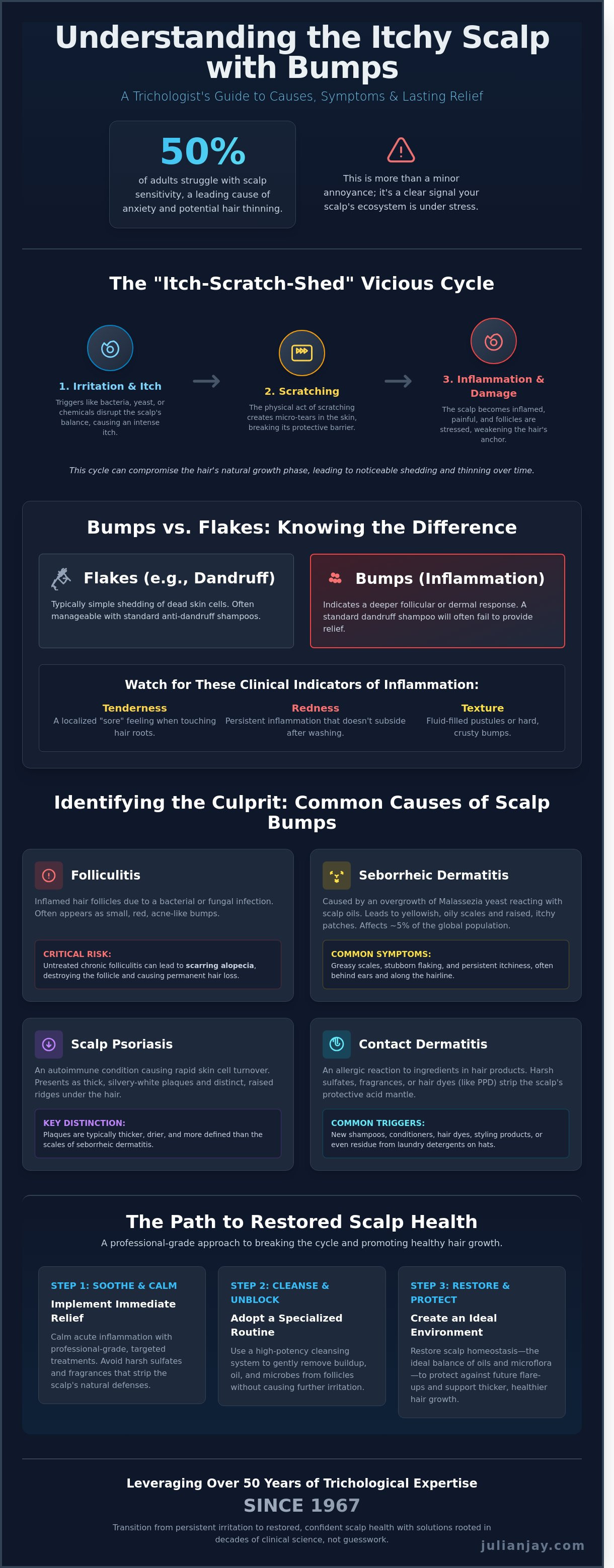
- Understand the "itch-scratch-shed" cycle and why an itchy scalp with bumps can compromise your hair’s natural growth phase.
- Implement immediate, professional-grade relief strategies to calm inflammation and eliminate common irritants from your daily routine.
- Discover how a specialized scalp cleansing routine can unblock follicles and create the ideal environment for thicker, healthier hair.
- Leverage over 50 years of trichological expertise to transition from persistent irritation to restored, confident scalp health.
Understanding Itchy Scalp with Bumps: More Than Just an Itch
Dealing with an itchy scalp with bumps is far more than a minor grooming annoyance. It's a source of genuine anxiety that can distract you from work or social life, often leading to a cycle of "itch-scratch-inflame" that impacts your confidence. Unlike the skin on your arms or legs, your scalp is a complex, highly sensitive ecosystem. With roughly 100,000 hair follicles and a dense network of nerves, any inflammation here feels magnified. When you feel raised texture alongside a persistent urge to scratch, your body is sending a clear signal that the underlying tissue is under significant stress.
The psychological toll of chronic scalp discomfort shouldn't be underestimated. We've seen how persistent irritation can lead to sleep disruption and a constant, nagging worry about visible redness or hair thinning. It's a clinical reality that the scalp is uniquely prone to these reactions because it's one of the most vascular and oil-rich areas of the human body. Identifying the difference between a passing dry spell and a chronic inflammatory response is the first step toward regaining your comfort and hair health.
The Anatomy of a Scalp Reaction
The human scalp contains approximately 800 sebaceous glands per square centimeter. These glands produce sebum, a natural oil meant to protect the hair fiber. However, when sweat and styling product residue mix with this oil, they create a humid 'micro-climate' that encourages the overgrowth of opportunistic microbes. Scalp homeostasis is the balance of natural oils and microflora. If this balance breaks, the follicles become vulnerable to infection and inflammation. Since 1967, our trichological research has shown that ignoring these early signs can lead to weakened hair strands and eventual thinning.
Bumps vs. Flakes: Knowing the Difference
Many people reach for a standard dandruff shampoo at the first sign of an itch, but this often fails when an itchy scalp with bumps is the primary symptom. While simple dandruff is typically just the shedding of dead skin cells, bumps indicate a deeper follicular or dermal response that requires a more sophisticated, Hi-Potency approach. You need to look for specific indicators that suggest a more serious condition is developing.
- Tenderness: Localized pain or a "sore" feeling when touching the hair roots.
- Redness: Persistent inflammation that doesn't subside after a standard wash.
- Texture: Fluid-filled pustules or hard, crusty elevations around the hair shaft.
If the itch persists for more than 14 days or you notice localized hair shedding, it's a clinical concern for your long-term hair health. Addressing the inflammation quickly helps you maintain a vibrant, healthy head of hair. You've nothing to lose, especially not your hair, by taking a scientific approach to scalp care today.
Identifying the Culprit: Common Causes of Scalp Bumps
Dealing with an itchy scalp with bumps is more than a minor annoyance. It's a signal from your skin that the delicate microbiome is out of balance. As trichologists with over 50 years of experience, we've seen how these irritations often stem from a few primary conditions. Seborrheic dermatitis is perhaps the most frequent offender, affecting approximately 5% of the global population according to clinical data. This condition occurs when an overgrowth of Malassezia yeast reacts with scalp oils, creating yellowish, oily scales and raised, itchy patches. Scalp psoriasis, while looking similar, presents as thicker, silvery-white plaques that feel like distinct, raised ridges under the hair.
Folliculitis: The Follicle Under Attack
Folliculitis occurs when hair follicles become inflamed, usually due to a bacterial or fungal infection entering the pore. You'll notice small, red bumps that look remarkably like a sudden breakout of scalp acne. Common triggers include excessive sweating after a workout, wearing tight headwear for long periods, or using heavy oils that clog pores. If you leave chronic folliculitis untreated, it can lead to permanent damage. This condition, known as scarring alopecia, destroys the follicle entirely. Once the follicle is replaced by scar tissue, hair cannot regrow, making early intervention vital for maintaining your hair density.
Chemical Sensitivities and Product Buildup
Your choice of hair care plays a massive role in scalp health. Harsh sulfates and synthetic fragrances can strip away the acid mantle, which is the skin's natural protective barrier. When this barrier fails, you become prone to allergic contact dermatitis. This is often triggered by ingredients like Paraphenylenediamine (PPD) found in many hair dyes or harsh preservatives. You might also experience hives, or Urticaria, which is a rapid, itchy response to a new product that usually appears within minutes or hours of contact.
- Parabens and Sulfates: These chemicals can cause micro-tears in the skin, leading to chronic irritation and a compromised scalp barrier.
- Styling Buildup: Dry shampoos and heavy waxes create an invisible film that traps bacteria and sweat against the skin.
- Allergic Reactions: Synthetic dyes and fragrances can cause intense itching and weeping bumps within 48 hours of application.
If your current routine leaves your skin feeling tight or inflamed, it's time to switch to clinically proven formulations that respect your scalp's natural pH. Restoring this balance is the first step toward a calm, flake-free head of hair. You've nothing to lose, especially not your hair, by choosing gentler, specialist-approved alternatives that nourish rather than strip your skin.
The Critical Link: How Itchy Bumps Can Lead to Hair Thinning
An itchy scalp with bumps is more than a simple annoyance; it's a distress signal from your follicles. When your scalp environment is compromised by inflammation or infection, your hair's growth cycle often pays the price. This disruption usually begins with the "itch-scratch-shed" cycle. Physical trauma from persistent scratching causes micro-tears in the skin and mechanical damage to the hair shaft. You aren't just soothing an itch; you're often snapping hair fibres at the root or pulling them out prematurely.
Beyond the physical damage, inflammation acts as a silent growth inhibitor. A stressed scalp cannot effectively support the Anagen, or growth, phase of the hair cycle. When the skin is focused on fighting off the cause of those bumps, it deprioritizes hair production. This often leads to follicular strangulation. In this state, a combination of hardened sebum, cellular debris, and inflammatory swelling physically restricts the hair fibre. This constriction thins the hair as it emerges, making it brittle and prone to falling out long before its time.
Inflammation and Blood Circulation
A healthy scalp requires a constant, robust supply of blood to deliver oxygen and vitamins to the hair bulb. Chronic inflammation, which typically causes an itchy scalp with bumps, acts like a roadblock for these nutrients. When tissues are inflamed, local capillaries can become constricted or compressed by swelling. This lack of nourishment starves the follicle, causing the hair to grow back weaker and finer with every cycle. It's vital to remember that hair loss is often a symptom of a neglected scalp environment rather than a standalone problem.
Can Scalp Bumps Cause Permanent Hair Loss?
Most people experiencing shedding due to scalp irritation are suffering from Telogen Effluvium. This is a temporary condition where hair is pushed into the resting phase too quickly. However, if the underlying cause of the bumps is left untreated for months, the risk of permanent follicle death increases. Since 1967, our clinical observations have shown that early intervention is the only way to ensure temporary shedding doesn't become permanent thinning.
The Julian Jay Active Scalp Cleanser is formulated to reverse this process by clearing the pathways for new growth. By removing the inflammatory buildup and soothing the skin, you allow the follicles to breathe and recover. Our perspective is simple: a clean, calm scalp is the foundation for hair that stays. We're so confident in this approach that we offer a 180-day money-back guarantee; you've nothing to lose, especially not your hair. Start your journey toward a healthier scalp today and bring your hair back to life.
Professional Relief Strategies: How to Soothe and Clear Your Scalp
Managing an itchy scalp with bumps requires a disciplined, scientific approach. Your first priority is temperature control. Scalp skin is far more sensitive than the skin on your arms or legs. Water exceeding 38 degrees Celsius can strip the scalp of its natural sebum, leading to a 15% increase in moisture loss. This dehydration triggers the body to overproduce oil, which often traps bacteria and worsens existing bumps. Always use lukewarm water to keep the skin calm and the follicles relaxed.
Removing irritants is your next step. Audit your current hair care routine and discard products containing harsh sulfates or synthetic fragrances. Statistics from dermatological studies indicate that 1 in 5 individuals with sensitive skin react poorly to these additives. Replace them with formulations that respect the scalp's delicate ecosystem. You should also differentiate between mechanical and chemical cleansing. Avoid aggressive scrubbing with fingernails, as this creates micro-tears that allow bacteria to enter. Instead, rely on the chemical action of active, organic ingredients to lift debris without trauma.
The Art of the Gentle Scalp Cleanse
Proper technique matters. Use the pads of your fingers to gently move the scalp skin in small circles. This method stimulates blood circulation without breaking the surface of any existing bumps. If you have high sebum production, double cleansing is a necessity. The first wash breaks down surface oils and pollutants; the second ensures that your treatment ingredients actually reach the follicles. Look for products that are pH-balanced between 4.5 and 5.5. This specific range maintains the acid mantle, which is the skin's primary defense against infection.
Ingredients to Look For (and Avoid)
Selection of ingredients can make or break your recovery. Avoid silicones at all costs. While they make hair feel smooth, they form a waterproof seal over the scalp that traps heat, sweat, and bacteria. This often exacerbates an itchy scalp with bumps by creating a breeding ground for folliculitis. Instead, seek out organic elixirs like tea tree oil, known for its antiseptic properties, or aloe vera, which can reduce visible redness by up to 30% in clinical applications. Incorporating Hi-Potency nutrients like Vitamin B5 and Zinc will help fortify the hair fibre strands while the skin heals.
Consistency is the final piece of the puzzle. Establish a scalp detox schedule twice weekly to clear away dead skin cells and product buildup. This routine prevents the recurrence of inflammation and keeps follicles clear for healthy growth. You've nothing to lose, especially not your hair, when you follow a trichologist-led regimen. Start your journey toward a calmer, healthier head today by using our clinically proven formulations.
The Julian Jay Solution: Restoring Scalp Health Since 1967
Living with an itchy scalp with bumps is more than a physical discomfort; it's a source of daily frustration that affects your confidence. At Julian Jay, we've spent over 50 years perfecting the science of scalp recovery. Our journey began in 1967, led by a pioneering trichologist who understood that healthy hair cannot grow from a compromised foundation. We don't believe in temporary fixes. Instead, we provide clinical-grade formulations that address the biological triggers of inflammation and follicular blockage.
Our approach centers on the Complete Hair Growth Treatment Kit, a comprehensive system designed to transition your scalp from a state of irritation to one of vibrant health. This isn't a generic retail product. It's a professional-grade regimen that leverages five decades of expertise to improve blood circulation and fortify hair fibre strands from the very first application.
Why the Active Scalp Cleanser is Your First Line of Defence
The "bumps" associated with an itchy scalp with bumps are often caused by debris and excess sebum trapping bacteria at the follicular entrance. Our Active Scalp Cleanser is specifically engineered to unblock these vital points. Unlike standard shampoos that use harsh sulphates, our organic formulation deep-cleanses while soothing the skin. It acts as an antiseptic shield, cooling the heat of inflammation and creating a sterile environment for recovery.
- Follicular Clearance: It removes the keratinised skin cells that plug the hair pore.
- Inflammation Control: Organic elixirs reduce redness and the urge to scratch.
- Safe for Daily Use: Our parabens-free, vegan formula respects your skin's natural pH.
To start your recovery, you can find the Active Scalp Cleanser product page here to learn more about its specific botanical ingredients.
Your Journey to Thicker, Healthier Hair
When you start the Julian Jay system, you'll move through distinct phases of healing. In the first 30 days, the priority is the "Activation and Stimulation" phase. During this time, the Active Scalp Cleanser works to eliminate the burning sensation and flatten those painful bumps. You'll notice a significant reduction in scalp sensitivity as the skin's barrier begins to repair itself.
Once the environment is stabilised, our Hi-Potency Lotion takes over. It shifts the focus from itch relief to growth stimulation, nourishing the root to encourage thicker, fuller strands. We're so certain of these results that we offer a 180-day money-back guarantee. This gives you six months to experience the transformation without any financial risk. It's time to bring your hair back to life. After all, you've nothing to lose, especially not your hair.
Take Control of Your Scalp Health Today
Dealing with an itchy scalp with bumps is more than a daily annoyance; it’s a direct signal from your follicles that they require professional intervention. We’ve explored how common culprits like folliculitis or seborrheic dermatitis can disrupt your scalp’s delicate ecosystem, often creating a critical link to hair thinning. Since 1967, Julian Jay has pioneered solutions that bridge the gap between clinical trichology and organic hair care. Our methods rely on over 50 years of hands-on experience to soothe inflammation and revitalize your hair from the root up. You don’t have to settle for persistent discomfort or the stress of seeing your hair lose its vitality.
By utilizing our clinically proven organic formulations, you’re giving your scalp the specific nourishment it needs to heal and thrive. We’re so confident in these results that we offer a 180-day money-back guarantee, making your path to a healthier, thicker head of hair completely risk-free. It’s time to stop the itch and start the growth. Remember, you’ve nothing to lose, especially not your hair!
Start your scalp recovery today with our Complete Hair Growth Treatment Kit
Frequently Asked Questions
What causes itchy bumps on the scalp that feel like pimples?
Scalp folliculitis is the most frequent cause of these pimple like bumps, occurring when hair follicles become inflamed or infected. This condition affects approximately 12% of patients visiting trichology clinics for scalp irritation. Other common triggers include seborrheic dermatitis and scalp acne, which result from excess sebum production. Since 1967, we've seen how identifying the specific cause helps in selecting the right clinically proven formulation to revitalise the skin.
Can an itchy scalp with bumps cause my hair to fall out?
Yes, persistent inflammation from an itchy scalp with bumps can lead to temporary hair shedding known as telogen effluvium. Research indicates that 30% of individuals with chronic scalp conditions experience noticeable thinning because the inflammation disrupts the natural growth cycle of the follicles. Addressing the irritation quickly is vital to protect your hair. Our Hi-Potency treatments focus on calming this distress, ensuring you have nothing to lose, especially not your hair.
How do I tell the difference between dandruff and a scalp infection?
Dandruff typically presents as loose, white or oily flakes without significant swelling, whereas a scalp infection involves pus-filled bumps, redness, or crusting. Fungal infections like Tinea Capitis often create distinct circular patches and affects nearly 5% of the population at some point. If you notice localized heat or a foul odour, it's likely an infection rather than simple shedding. Professional trichologists use 50 years of experience to differentiate these symptoms accurately.
Is it safe to wash my hair every day if I have itchy bumps?
It's actually beneficial to wash your hair daily when dealing with an itchy scalp with bumps to remove bacteria and excess oils. Regular cleansing with a pH-balanced, parabens-free shampoo can reduce surface microbes by up to 90%. This prevents the pores from clogging and helps maintain a healthy environment for your follicles to thrive. Always use lukewarm water, as temperatures above 40 degrees Celsius can further irritate the sensitive skin.
What home remedies actually work for an itchy scalp?
Diluted apple cider vinegar and tea tree oil are two home remedies with documented success in balancing scalp pH and reducing microbes. A 5% tea tree oil solution has been shown in clinical studies to improve itchiness by 41% over a four week period. While these provide temporary relief, they're most effective when used alongside professional formulations. These natural elixirs help nourish the scalp while you wait for deeper therapeutic results to take hold.
When should I see a doctor or trichologist for scalp bumps?
You should consult a specialist if your scalp bumps persist for more than 14 days or if you notice any yellow discharge. Seeking expert advice is also necessary if the bumps are accompanied by swollen lymph nodes or patches of hair loss. Julian Jay has been a trusted specialist since 1967, providing the reassurance needed to tackle these distressing issues. Early intervention often prevents minor irritations from becoming chronic conditions that require intensive treatment.
Can stress cause itchy bumps to appear on my head?
Stress is a significant trigger because it increases cortisol levels, which in turn boosts oil production in your scalp. A 2018 study found that 67% of people suffering from inflammatory scalp conditions reported a major stressful event prior to their flare up. This excess oil can clog follicles and lead to the formation of itchy, painful bumps. Managing stress while using soothing, organic formulations can help bring your hair back to life.
How long does it take for scalp bumps to clear up with treatment?
Most minor scalp irritations begin to clear within 7 to 10 days of starting a dedicated Activation Phase of treatment. However, it takes about 28 days for the skin cells on your scalp to fully renew themselves. We provide a 180-day money-back guarantee because we understand that consistent care is the key to long-term health. Following a professional regimen ensures your scalp remains vibrant and free from recurring bumps for years to come.