


You’re sitting in a quiet meeting when that familiar, burning sensation begins, and your only focus becomes resisting the urge to scratch in front of your colleagues. It’s more than a simple nuisance. It’s the social embarrassment of checking your shoulders for flakes and the growing anxiety that this persistent irritation is thinning your hair. You find yourself constantly wondering, "why is my scalp so itchy," while fearing that your follicles are under permanent threat.
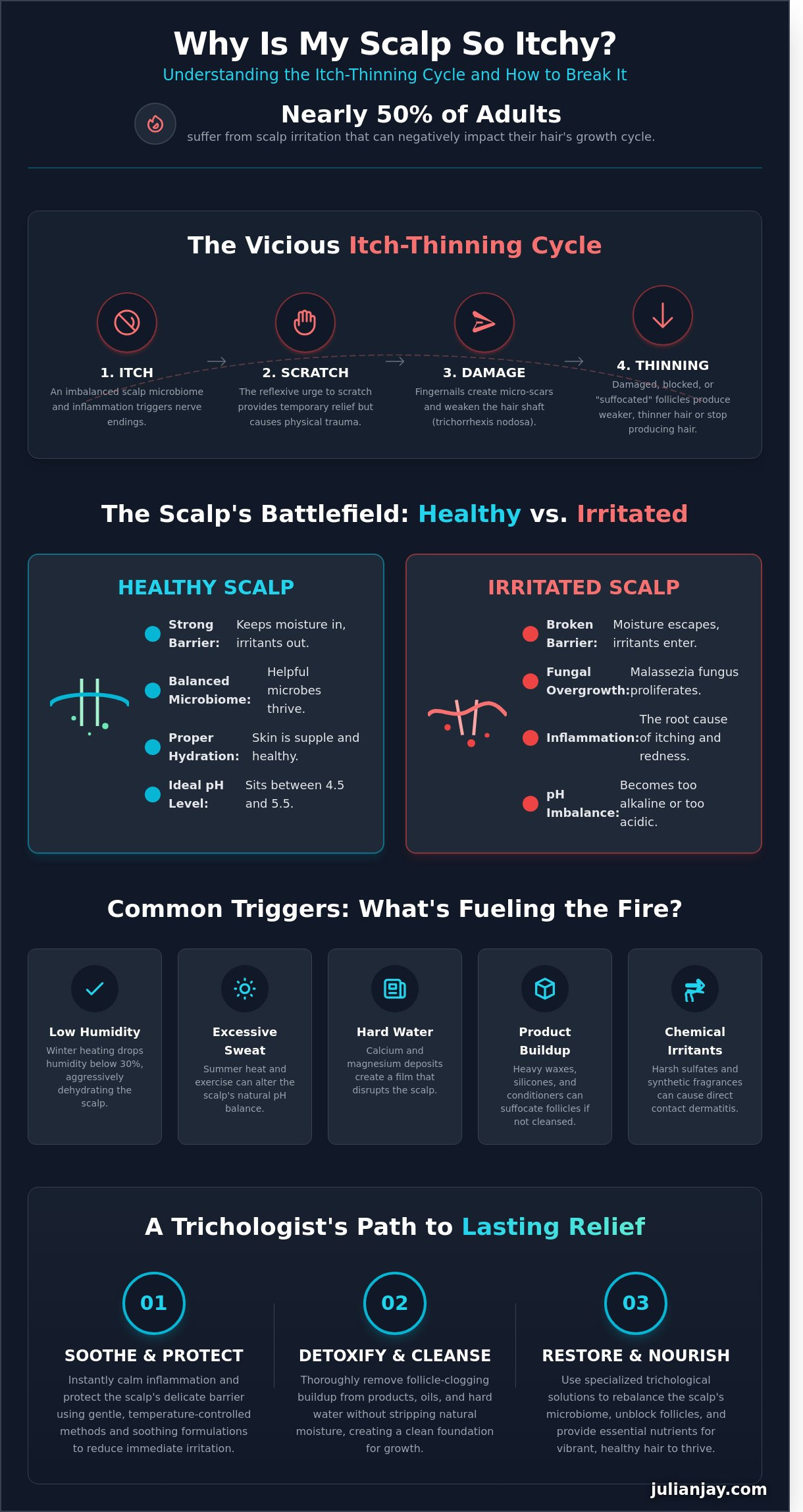
We know how exhausting it is to feel like your own skin is working against you. According to research published in the British Journal of Dermatology, nearly 50% of adults suffer from scalp irritation that can impact their hair's growth cycle. Since 1967, our pioneering trichologists have focused on the belief that a vibrant head of hair can only grow from a healthy, nourished foundation. You've nothing to lose by seeking a professional solution, especially not your hair.
This guide provides a clear, scientific look at the root causes of your discomfort and offers a proven path to soothe the irritation immediately. We will break down the differences between common conditions like seborrheic dermatitis and simple dryness. You'll learn exactly how to restore your scalp's natural balance and create the perfect environment for thicker, fuller hair to thrive.
Key Takeaways
- Understand the biological triggers behind scalp pruritus and how an imbalanced microbiome leads to persistent, uncomfortable irritation.
- Uncover the "Itch-Thinning Cycle" to understand why is my scalp so itchy and how chronic scratching physically damages your hair follicles.
- Learn to distinguish between dandruff, psoriasis, and allergic reactions to ensure you are treating the true cause of your scalp discomfort.
- Adopt a professional two-step routine involving temperature control and detoxification to instantly soothe and protect an inflamed scalp.
- Discover how specialized trichological formulations can unblock follicles and restore the vibrant, healthy environment your hair needs to thrive.
Understanding the Biology: Why Is My Scalp So Itchy?
To find a lasting solution, we must first understand the science behind the irritation. Clinically known as Scalp pruritus, an itchy scalp is more than just a surface-level annoyance; it's a complex neurological and inflammatory response. When your scalp's nerve endings detect a chemical or physical irritant, they send an immediate signal to the brain, which triggers the reflexive urge to scratch. This response is often a warning sign that the delicate balance of your skin is under threat.
Your scalp is home to a unique microbiome, a diverse ecosystem of bacteria and fungi that live in harmony when you're healthy. However, when this balance shifts, certain microbes like Malassezia can overgrow. This leads to an inflammatory cycle that breaks down the scalp's "barrier function." This barrier is your primary defence against the outside world. When it's disrupted, essential moisture leaks out and external irritants seep in, causing the sensitivity that makes you wonder why is my scalp so itchy. While an occasional itch might be caused by a simple stray hair, chronic inflammation that persists for more than 14 days requires professional intervention to prevent long-term damage to the hair follicles.
The Scalp Environment vs. The Rest of Your Skin
The scalp is distinct from the skin on your arms or legs because it contains a staggering density of approximately 100,000 hair follicles. Each follicle is attached to a sebaceous gland that produces sebum, a natural oil designed to protect the hair. Because of this high density, the scalp produces significantly more oil and sweat than other areas. This creates a warm, moist environment that can easily trap dust, pollutants, and dead skin cells. At Julian Jay, our 50 years of trichological expertise has shown us that the scalp acts as the "soil" for your hair fibres. If this soil becomes congested or imbalanced, it cannot support the growth of thicker, healthier hair.
Immediate Triggers: From Environment to Products
External factors often provide the initial spark for scalp discomfort. During the winter months, indoor heating often drops humidity levels to below 30 percent, which aggressively dehydrates the skin. Conversely, excessive sweating in the summer can alter the scalp's natural pH, which should ideally sit between 4.5 and 5.5. Other common triggers include:
- Hard Water: High concentrations of calcium and magnesium in your shower water can leave a mineral film that disrupts the scalp's acidity.
- Product Buildup: Heavy styling waxes, silicones, and "hi-potency" conditioners can suffocate the skin if not thoroughly cleansed.
- Chemical Irritants: Harsh sulfates or synthetic fragrances can cause contact dermatitis, leading to the persistent question of why is my scalp so itchy even after washing.
Recognising these triggers is the first step toward revitalising your scalp health. By addressing the biological roots of the problem, you can move away from temporary fixes and toward a vibrant, flake-free future.
The Hidden Link: How Chronic Itching Impacts Hair Growth
If you find yourself constantly asking "why is my scalp so itchy" throughout the day, you're dealing with more than just a minor annoyance. This persistent irritation often triggers what trichologists call the Itch-Thinning Cycle. It's a destructive loop where the physical act of scratching and the underlying inflammation work together to sabotage your hair's density and health. When you scratch, you aren't just seeking temporary relief; you're unintentionally launching a physical assault on your hair follicles.
The good news is that your hair is remarkably resilient. While chronic itching can cause temporary thinning, creating a healthier scalp environment can often revitalise dormant follicles. By addressing the root cause of the irritation, you can stop the cycle and bring your hair back to life.
The Impact of Mechanical Damage
The physical trauma of fingernails against the scalp causes immediate structural damage. This repeated friction leads to trichorrhexis nodosa, a condition where the hair shaft develops thickened, weak points that cause it to snap easily. Beyond the hair itself, aggressive scratching creates micro-scars on the scalp surface. These tiny patches of scar tissue can physically block or "suffocate" the follicle, making it difficult for new, fine hairs to emerge. Follicular miniaturisation is the direct result of prolonged scalp neglect and persistent mechanical trauma.
Inflammation and the Growth Cycle
When your scalp is in a state of distress, your body’s immune response can become overactive. A systematic review of scalp itch demonstrates how various inflammatory triggers can disrupt the natural hair cycle. During a flare-up, immune cells may accidentally target the hair follicles, prematurely pushing them out of the anagen (growth) phase and into the telogen (shedding) phase.
Inflammation also causes the blood vessels surrounding the follicle to constrict. This restriction limits the flow of oxygen and essential nutrients to the root, which is why soothing the itch is the essential first step in any hair loss treatment. To protect your hair’s future, you must calm the underlying fire. You can view our specialist scalp formulations designed to restore this vital balance and encourage healthy regrowth.
- Cuticle Abrasion: Scratching lifts the protective scales of the hair, leading to moisture loss.
- Follicular Suffocating: Excess sebum and inflammatory debris can clog the follicle opening.
- Reduced Vitality: Chronic inflammation saps the energy required for robust hair production.
By understanding "why is my scalp so itchy" from a physiological perspective, you can move away from temporary fixes and toward long-term recovery. Relief isn't just about comfort; it's about protecting every single strand.
Identifying the Culprit: Common Scalp Conditions
When you find yourself asking why is my scalp so itchy, you're looking for more than just a temporary fix. You want to understand the biological root of the irritation. In my 50 years of trichological experience, I've seen how a persistent itch can signal various underlying conditions, ranging from simple dehydration to complex inflammatory responses. Identifying the specific culprit is the first step toward restoring your hair health and comfort.
Dandruff vs. Dry Scalp: The Crucial Difference
Many people mistake a dry scalp for dandruff, but the two require very different treatments. Dandruff, or seborrheic dermatitis in its more advanced form, is typically oily. It's driven by an overgrowth of Malassezia, a yeast-like fungus that feeds on excess sebum. This results in large, yellowish, oily flakes. If you use a harsh, clarifying dandruff shampoo on a scalp that's actually just dry, you'll strip away the few natural oils remaining. This makes the itching and tightness significantly worse.
A true dry scalp lacks moisture and produces tiny, white, dusty flakes. It's often caused by environmental factors or aging. While dandruff needs antifungal intervention, a dry scalp requires deep nourishment and mild, pH-balanced formulations to repair the skin barrier. Understanding this distinction is vital to stop the cycle of irritation.
Sensitivities and Allergic Reactions
If you're wondering why is my scalp so itchy despite having no visible flakes, you might be experiencing Allergic Contact Dermatitis. High-street shampoos often contain aggressive surfactants like Sodium Lauryl Sulphate (SLS) and synthetic fragrances that can trigger delayed-onset itching. These chemicals disrupt the acid mantle, leaving the follicles vulnerable to inflammation.
- Parabens and Sulphates: These common preservatives and foaming agents are frequent irritants for sensitive skin.
- Hair Dyes: Paraphenylenediamine (PPD) is a known allergen in permanent dyes that can cause intense itching days after an appointment.
- Natural Irritants: Don't assume "natural" always means "safe." For example, while some use tea tree for dandruff, it can actually cause contact sensitivity if used at incorrect concentrations or on broken skin.
Other conditions can also mimic these symptoms. Scalp Psoriasis presents with thick, silvery scales and a very intense itch, while Seborrheic Dermatitis often shows redness and greasy scaling around the hairline. In rarer cases, the itch might stem from Tinea Capitis, a fungal infection that requires prescription treatment, or Folliculitis, where the hair follicles themselves become inflamed and itchy. Identifying these patterns early ensures you choose a solution that supports long-term hair growth and scalp vitality.
A Trichologist’s Routine for Lasting Scalp Relief
Understanding why is my scalp so itchy often reveals a need for a more disciplined, clinical regime rather than a simple change of shampoo. Since 1967, our research has shown that lasting relief is built on a foundation of five specific steps designed to restore the skin's natural barrier and calm overactive nerves.
The first step is a pre-wash detox. This involves applying a treatment to dry hair to clear the path for active ingredients. By dissolving hardened sebum and environmental pollutants before you even turn on the shower, you ensure that your cleanser can reach the follicles directly. It's about preparation, not just cleaning.
Temperature control is your second priority. Many people use water that's far too hot, which strips the acid mantle and triggers a histaminic response. Keep the water at approximately 38 degrees Celsius. This lukewarm temperature is warm enough to melt oils but cool enough to prevent the inflammation that leads to that familiar crawling sensation.
Once you've applied your cleanser, move to gentle massaging. Don't use your fingernails, as these create microscopic tears in the skin that invite bacteria and infection. Instead, use the pads of your fingers in slow, circular motions. This stimulates blood flow without causing physical trauma to the sensitive epidermis.
Precision rinsing is the fourth step. Spend at least 60 seconds rinsing your hair after every wash. Chemical residue from surfactants is a leading cause of contact dermatitis. If you don't rinse thoroughly, those chemicals sit on the skin, dry out, and cause the very itching you're trying to stop.
Finish your routine with targeted stimulation. Use a specialized lotion post-wash to nourish the follicles. These formulations stay on the scalp rather than being rinsed away, providing a continuous "drip-feed" of nutrients that support long-term hair health and skin resilience.
The Art of the Scalp Massage
Mastering the "pads of the fingers" technique is essential for effective scalp care. This method avoids skin trauma while effectively aiding lymphatic drainage. By moving the scalp over the skull in firm, rhythmic circles, you reduce tension and increase the delivery of oxygen to the hair roots. It's a simple way to turn a daily chore into a clinical treatment that revitalizes the entire head.
Choosing the Right Formulations
When selecting products, look for Hi-Potency organic ingredients. Many mass-market brands use synthetic fillers that provide a temporary "slip" but offer no real biological benefit. A pH-balanced cleanser, ideally sitting around 5.5, is vital for maintaining the acid mantle. We also recommend avoiding parabens to prevent long-term sensitisation. These preservatives can build up over time, eventually causing the immune system to overreact, which explains why is my scalp so itchy even when using "gentle" products.
Ready to experience professional-grade relief? Explore our range of trichologist-approved scalp treatments today.
Restoring Balance: The Julian Jay Solution for Itch Relief
Understanding why is my scalp so itchy is the first step toward recovery, but the second step requires professional-grade intervention. For over 50 years, Julian Jay has pioneered trichological solutions that go far beyond basic retail products. Our Active Scalp Cleanser serves as a specialist tool designed to unblock follicles and reset the scalp's natural environment. Since 1967, we've applied clinical expertise to create formulations that don't just mask symptoms but actually address the physiological triggers of irritation.
The Julian Jay approach focuses on the "Activation & Stimulation Phase" of hair care. By improving blood circulation and fortifying the hair fibre strands, our products help you reclaim your confidence. We understand the emotional toll that a persistent itch and thinning hair can take. That's why our Hi-Potency formulas are designed to be both powerful and reassuringly gentle on sensitive skin.
Why Active Cleansing Beats Standard Washing
Standard shampoos usually only clean the surface of the hair shaft. They rarely have the molecular structure needed to reach the sebum plug, which is a hardened accumulation of oil and debris deep within the follicle. Our Active Scalp Cleanser is specifically engineered to penetrate these obstructions. This process clears the path for healthy growth and removes the irritants that cause you to ask why is my scalp so itchy in the first place.
Using the cleanser creates a perfect foundation for our other treatments. When you combine this deep-cleansing action with the best shampoo for hair growth, you establish a synergy that revitalises the entire scalp ecosystem. The cleanser removes the barriers, and the shampoo delivers the vital nutrients needed for a thicker, fuller appearance.
Real Results and Expert Assurance
Our brand philosophy is simple: we want to bring your hair back to life. We achieve this by prioritising scalp health as the primary driver of hair quality. You don't have to compromise your values for results, either. Our formulations are vegan, organic, and entirely parabens-free. This ensures that even the most distressed scalps receive nourishment without the risk of further chemical irritation.
We've spent five decades refining these elixirs to ensure they meet the highest professional standards. Because we believe so strongly in our heritage and our results, we offer a 180-day money-back guarantee. This gives you six full months to experience the transformation for yourself. You've nothing to lose but the itch. Start your journey to a calm, healthy, and vibrant scalp today by choosing a solution backed by a lifetime of trichological expertise.
Restore Your Scalp Comfort and Protect Your Hair
You don't have to settle for the constant distraction of a dry, irritated scalp. Understanding why is my scalp so itchy is the first step toward restoring the vibrant, healthy hair you deserve. We've explored how chronic inflammation disrupts your hair growth cycle and identified the specific conditions that often go unnoticed. By implementing a professional routine, you can stop the cycle of damage before it leads to permanent thinning. Since 1967, Julian Jay has used over 50 years of trichological expertise to craft clinically proven organic formulations that actually work. Our Hi-Potency solutions nourish your follicles and stabilise the scalp environment to encourage thicker, fuller growth. Every bottle is backed by our 180-Day Money-Back Guarantee, ensuring you can treat your hair with absolute peace of mind. It's time to stop the irritation and start your journey toward a healthier, more confident you. You've nothing to lose, especially not your hair!
Banish the itch and revitalise your hair with our Active Scalp Cleanser
Frequently Asked Questions
Can an itchy scalp cause my hair to fall out?
An itchy scalp can lead to hair loss if the physical act of scratching damages your hair follicles or causes inflammation. While the itch itself isn't the cause, a 2018 study published in the Journal of Investigative Dermatology found that scalp inflammation can disrupt the hair growth cycle. Constant friction can also cause traction related breakage. Using a trichologist approved formulation helps soothe the area before any permanent damage occurs.
How can I tell the difference between dandruff and a dry scalp?
You can distinguish between the two by looking at the size and color of the flakes. Dandruff flakes are usually larger than 1 millimeter, oily, and yellowish, often caused by a yeast like fungus called Malassezia. Dry scalp flakes are tiny, white, and accompanied by dry skin on other parts of your body. If you're wondering why is my scalp so itchy, check if your skin feels tight or if your hair looks excessively greasy.
Why is my scalp so itchy even though I don’t have dandruff?
Your itch might be caused by contact dermatitis or a reaction to one of the 2,000 chemical ingredients often found in commercial hair products. Even without visible flakes, product buildup can clog follicles and trigger a 48 hour inflammatory response. Allergic reactions to fragrances or preservatives like parabens are common culprits. Switching to a pH balanced, Hi-Potency formula can often eliminate this irritation within 3 to 5 washes.
Will washing my hair every day help or hurt an itchy scalp?
Daily washing often hurts an itchy scalp by stripping away the natural oils that protect your skin barrier. If you use water hotter than 38 degrees Celsius, you risk dehydrating the scalp further. However, if your itch is caused by seborrheic dermatitis, washing every 24 hours with a medicated shampoo is necessary to control fungus. For most people, a schedule of 3 times per week is the optimal frequency to maintain health.
What is the fastest way to get relief from an itchy scalp overnight?
The fastest way to find relief is applying a soothing scalp lotion containing peppermint oil or aloe vera for 15 minutes before bed. These ingredients provide an immediate cooling sensation that blocks the itch signal to your brain. You'll wake up with less inflammation if you avoid scratching during the night. For a long term solution, a trichologist formulated tonic can revitalise the skin and provide a more permanent fix than a quick overnight remedy.
Is it normal for my scalp to itch more in the winter?
It's very common for scalp irritation to increase when indoor humidity levels drop below 30% during the winter months. Cold air outside and central heating inside strip moisture from your skin, leading to a condition called winter itch. This seasonal shift affects approximately 60% of people with existing skin sensitivities. Using a nourishing, organic shampoo during this time helps replace the lost lipids and keeps your hair follicles hydrated.
When should I see a professional about my itchy scalp?
You should consult a trichologist if your symptoms persist for more than 14 days despite using over the counter treatments. Professional advice is essential if you notice crusting, bleeding, or patches of hair loss. A specialist provides a clinical diagnosis to rule out conditions like psoriasis or lichen planopilaris. Early intervention is the best way to ensure you've nothing to lose, especially not your hair.
Can stress cause my head to itch?
Stress directly triggers scalp itching by causing your body to release high levels of cortisol, which increases systemic inflammation. A 2020 study on the brain skin axis showed that psychological stress can exacerbate conditions like seborrheic dermatitis. When you're stressed, your nerves become hypersensitive, making you wonder why is my scalp so itchy even when there's no visible rash. Managing stress and using gentle formulations can help break this cycle.