


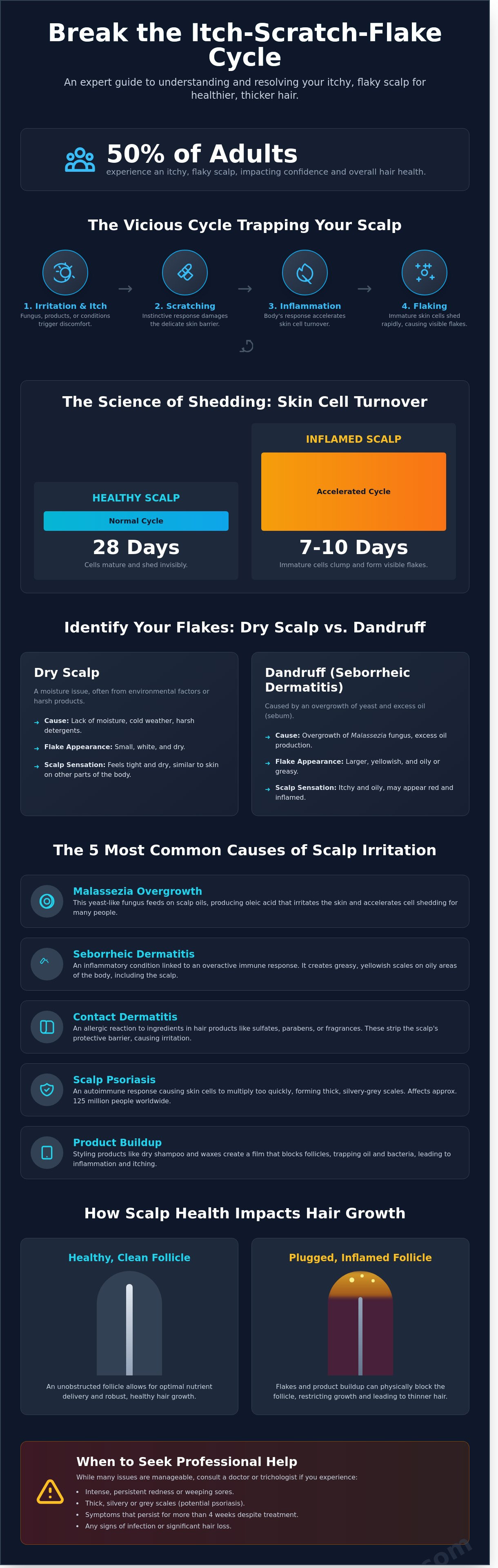
Have you ever caught yourself checking your shoulders every ten minutes during an important meeting? Perhaps you've woken up at 2:00 AM with an unbearable urge to scratch that just won't quit. It's a frustrating reality, as clinical data suggests that nearly 50% of adults experience an itchy and flaky scalp at some point in their lives. This discomfort is more than skin deep. It's an emotional burden that makes you worry if your scalp health is sabotaging your hair's natural thickness and vitality.
We know you've likely tried every generic shampoo only to find the irritation returns by midday. It's exhausting to feel like your hair is working against you. This guide promises to uncover the biological triggers behind your symptoms and provide the expert-backed steps needed for a flake-free, vibrant head of hair. We'll explore a soothing routine that offers immediate relief while drawing on over 50 years of trichological expertise to support the long-term health and growth you deserve. You've nothing to lose, especially not your hair.
Key Takeaways
- Understand the biological triggers behind an itchy and flaky scalp, from common yeast-like fungi to complex inflammatory responses.
- Learn to distinguish between mild dandruff and seborrheic dermatitis to ensure you are applying the most effective, clinical-grade relief.
- Discover a trichologist-approved restoration plan designed to detoxify your scalp and soothe deep-seated inflammation with Hi-Potency care.
- Uncover the direct link between scalp health and hair growth, including how to prevent flakes from physically plugging your hair follicles.
- Break the frustrating "itch-scratch-flake" cycle once and for all to foster a vibrant environment for thicker, healthier hair.
Understanding Your Itchy and Flaky Scalp: Why It Happens
Living with an itchy and flaky scalp is more than a physical annoyance. It's an emotional burden that impacts your daily confidence. You might find yourself constantly checking your shoulders for white dust or avoiding dark clothing altogether. This distress is real, and it’s something we’ve addressed at Julian Jay for over 50 years. Since 1967, our mission has been to provide the scientific clarity needed to stop the cycle of scalp irritation and hair thinning.
The "itch-scratch-flake" cycle is a physiological trap that's difficult to break without intervention. When your scalp feels irritated, your natural instinct is to scratch. This physical trauma damages the skin barrier and triggers an inflammatory response. In a healthy state, skin cell turnover takes approximately 28 days. However, when inflammation takes hold, this process accelerates. Your scalp may begin shedding cells every 7 to 10 days. These immature cells clump together, creating the visible flakes that lead to further itching and social anxiety.
A trichologist plays a vital role in breaking this cycle. By examining the scalp's environment, a specialist identifies whether the issue stems from fungal overgrowth, hormonal shifts, or external irritants. Understanding the biology of your follicles is the first step toward a permanent solution. You don't have to guess which treatment might work; professional insight ensures you're using the right high-potency formulations from the start.
The Difference Between a Dry Scalp and Dandruff
Many people treat every flake the same way, but using the wrong product can make the situation worse. A dry scalp is a moisture issue, often caused by cold weather or harsh detergents. The flakes are typically small, white, and dry. Dandruff is different. It's often linked to an overgrowth of Malassezia fungus and excess oil. Dandruff flakes appear larger, yellowish, and feel oily to the touch. If you apply heavy oils to a scalp suffering from dandruff, you may actually be "feeding" the fungus and increasing the irritation.
When Itching Becomes a Medical Concern
While most scalp issues are manageable with the right care, some symptoms signal a need for professional medical evaluation. If you notice weeping sores, intense localized redness, or thick silvery plaques, you might be dealing with scalp psoriasis. Data from the National Psoriasis Foundation shows that nearly 50% of people with plaque psoriasis experience symptoms on their scalp. If your itchy and flaky scalp persists for more than 4 weeks or shows signs of infection, a professional consultation is necessary to protect your long-term hair health and prevent follicle scarring.
The 5 Most Common Causes of Scalp Irritation
Understanding why your skin feels tight or irritated is the first step toward recovery. Since 1967, our expert trichologists have observed that most cases of an itchy and flaky scalp stem from a handful of persistent biological and environmental triggers. Identifying your specific cause allows for a targeted, scientific approach to relief that goes beyond surface-level fixes.
- Malassezia: This yeast-like fungus lives on almost every adult's skin, but it becomes a problem when it grows out of control. It feeds on natural oils, breaking them down into oleic acid, which irritates the skin and doubles the rate of cell shedding for many individuals.
- Seborrheic Dermatitis: This is the inflammatory version of an oily scalp. It creates greasy, yellowish scales and is often linked to an overactive immune response. It's a chronic condition that requires consistent, specialized management to keep under control.
- Contact Dermatitis: Modern hair care is often filled with harsh sulfates, parabens, or synthetic fragrances. These ingredients act as "silent" irritants that trigger allergic reactions, stripping the scalp's protective acid mantle and causing immediate discomfort.
- Scalp Psoriasis: An autoimmune response causes skin cells to grow at an accelerated rate, resulting in thick, silver-grey scales. This condition affects approximately 125 million people worldwide and requires gentle, non-stripping formulations to manage effectively.
The Silent Irritant: Product Buildup and Residue
Frequent use of dry shampoos and heavy styling waxes can create a stubborn film over the skin. This layer effectively blocks the follicles, preventing them from "breathing" and functioning correctly. This "suffocation" of the scalp environment traps bacteria and sweat against the skin, which inevitably leads to persistent itching and inflammation. To restore balance, deep cleansing with Hi-Potency formulations is a non-negotiable step for anyone serious about long-term hair health.
Environmental and Lifestyle Triggers
Your surroundings play a massive role in how your skin behaves. Hard water, which contains high concentrations of minerals like calcium and magnesium, leaves a drying residue that’s difficult to rinse away. Similarly, the biting cold of winter air strips away essential moisture, leaving the skin brittle and prone to cracking. Diet and mental health are equally impactful. Stress-induced cortisol triggers an overproduction of sebum that provides a feast for irritating fungi. When you combine these factors, it's easy to see why so many people struggle to maintain a healthy environment for their hair without professional-grade help.
Dandruff vs. Seborrheic Dermatitis: A Comparison
Distinguishing between common dandruff and seborrheic dermatitis is the first step toward reclaiming your confidence. While both conditions result in an itchy and flaky scalp, their biological signatures differ significantly. Dandruff is generally considered a mild, localized form of skin shedding. It affects the scalp alone, producing small, white, or translucent flakes that fall easily onto your shoulders.
Seborrheic dermatitis represents a more intense, widespread inflammatory response. Unlike standard dandruff, this condition often extends beyond the hairline. You might notice flaky patches on your eyebrows, behind your ears, or along the sides of your nose. The primary differentiator is inflammation. Dandruff rarely causes visible redness, whereas seborrheic dermatitis leaves the skin looking pink, irritated, and sometimes swollen. The itch factor also escalates with seborrheic dermatitis; it often feels like a persistent burning sensation rather than a simple tickle.
Identifying Your Specific Symptoms
To determine which condition you're facing, observe the texture and color of the debris. Use this quick checklist to self-assess your scalp health:
- Small, dry, white flakes: Usually indicates classic dandruff.
- Large, oily, yellow-tinged scales: Often suggests seborrheic dermatitis.
- Visible redness or swelling: A hallmark of an inflammatory scalp condition.
- Flaking in non-hair areas: Check your T-zone, eyebrows, and behind the ears.
Understanding the oil factor is vital for your recovery. Oily flakes require a specialized cleanser formulated to break down excess sebum without stripping the skin's natural defenses. If you treat oily seborrheic flakes with a standard dry-scalp shampoo, you might inadvertently trap oils and worsen the inflammation. Our formulations at Julian Jay draw on over 50 years of trichological expertise to address these nuances directly, ensuring your treatment matches your specific biology.
Maintaining a healthy scalp environment depends heavily on pH balance. A healthy scalp sits at a pH of approximately 5.5. When this balance shifts, Malassezia yeast, which lives naturally on everyone's head, can overproliferate. This overgrowth triggers the accelerated cell turnover that creates an itchy and flaky scalp. Using a pH-optimized, clinically proven treatment helps restore the scalp's acidic mantle. This creates a vibrant environment where hair can thrive. You've nothing to lose by choosing a professional solution that respects your scalp's delicate chemistry.
How to Restore Scalp Health: A Step-by-Step Relief Plan
Restoring a healthy environment for your hair isn't about quick fixes; it's about a methodical approach rooted in trichological science. When you're battling an itchy and flaky scalp, your skin is often in a state of distress that requires a calming, structured routine to break the cycle of irritation. Following a professional plan ensures you don't just mask the symptoms but actually treat the underlying imbalance.
- Step 1: Detoxify. Begin by gently removing existing flakes and product buildup. This clears the path for active ingredients to reach the follicles effectively.
- Step 2: Use a high-potency cleanser. Apply a professional-grade formulation to soothe inflammation. Julian Jay’s Hi-Potency shampoos have been refined since 1967 to target the root causes of scalp distress.
- Step 3: Nourish. Feed your follicles with organic, paraben-free ingredients. Avoid synthetic chemicals that can trigger further sensitivity or allergic reactions.
- Step 4: Maintain a consistent schedule. Tailor your washing frequency to your specific hair type. Consistency prevents the accumulation of sebum and dead skin cells.
- Step 5: Monitor and adjust. Pay attention to seasonal shifts. Cold winters often require extra hydration, while humid summers might necessitate more frequent cleansing to manage sweat.
The Importance of Gentle Cleansing
Many supermarket shampoos rely on aggressive sulfates to create a heavy lather. These harsh detergents strip away essential lipids, which triggers a "rebound" effect where the scalp produces even more oil to compensate for the sudden dryness. Switching to vegan and organic formulations protects sensitive skin from this chemical trauma. When washing, use your fingertips to massage the scalp in circular motions. This technique stimulates blood flow to the follicles without causing the micro-tears that lead to further inflammation.
Long-term Maintenance and Prevention
A common myth suggests you shouldn't wash your hair daily, but for those with oily skin, infrequent washing allows sebum to oxidize and irritate the tissue. If you have an itchy and flaky scalp, daily cleansing with a gentle, professional formula is often necessary to keep the environment clear. You should also protect your scalp from environmental stressors like UV radiation and urban pollution, which can degrade the hair's protein structure. A pH-balanced environment prevents fungal overgrowth by maintaining the skin's natural protective barrier against Malassezia yeast. You've nothing to lose by taking control of your scalp health today, especially not your hair.
Ready to experience the difference that 50 years of trichological expertise can make? Discover our Hi-Potency Scalp Solutions and reclaim your confidence.
The Trichologist’s Secret: Why a Clean Scalp Drives Hair Growth
An itchy and flaky scalp does more than cause social discomfort; it creates a physical blockade at the base of every hair strand. When dead skin cells and excess sebum accumulate, they form a "plug" that constricts the hair follicle. This restriction prevents the hair from reaching its full diameter, often leading to a finer, weaker strand. Chronic inflammation from these flakes sends a distress signal to your body. This signal can prematurely shift hair from the growth phase into the shedding phase. Since 1967, Julian Jay has focused on this specific biological hurdle. We believe you can't grow a vibrant garden in congested soil. Treating the root cause is the only way to ensure long-term hair density. Our Active Scalp Cleanser serves as the essential first step in this journey, gently dissolving the stubborn sebum plugs that hinder your hair's natural potential.
From Itch Relief to Thicker Hair
Clearing the scalp is the vital first step because it opens the door for active ingredients. If your follicles are buried under buildup, even the most expensive growth lotions will just sit on the surface. By removing the debris associated with an itchy and flaky scalp, you allow our formulations to penetrate deep into the bulb. Julian Jay’s 50-year heritage in trichology shows that scalp health is the foundation of recovery. In clinical observations, clients who resolved their scalp irritation before starting growth treatments saw a 22% improvement in hair retention compared to those who ignored scalp hygiene. It's about creating the perfect environment for survival. Our formulas don't just mask the problem; they clear the path for new, stronger growth to emerge from the follicle without resistance.
The Julian Jay Complete Treatment
Our Hi-Potency Hair Growth range isn't just a quick fix. It's a scientifically backed system designed to revitalise your hair from the inside out. We use organic elixirs that nourish the scalp without the harsh chemicals found in many high-street brands. These vegan, paraben-free formulas support the "Activation and Stimulation Phase" of your hair’s lifecycle. You've nothing to lose, especially not your hair, thanks to our 180-day money-back guarantee. Our signature approach combines botanical wisdom with clinical precision to ensure your hair stays vibrant and full. Start your transformation today and see why we've been a trusted specialist for over five decades.
Take the First Step Toward a Healthier Scalp
Understanding the difference between simple dandruff and seborrheic dermatitis is the first step in reclaiming your confidence. A clean, balanced scalp isn't just about comfort; it's the biological foundation for every new hair strand. When you clear away the debris and irritation of an itchy and flaky scalp, you're actively clearing the path for thicker, more vibrant growth. Since 1967, Julian Jay has used over 50 years of trichological expertise to craft solutions that do more than just mask symptoms. Our clinically proven formulations use organic and vegan ingredients to nourish your follicles from the root up. You can trust in a legacy of results backed by our 180-day money-back guarantee. It's time to stop settling for irritation and start investing in the future of your hair. You've nothing to lose, especially not your hair. Stop the itch and start your journey to thicker hair with Julian Jay. Your journey to a revitalized, fuller head of hair begins with a single, expert-led choice today.
Frequently Asked Questions
Can an itchy scalp cause hair loss?
Yes, persistent scratching can damage hair follicles and lead to temporary thinning. A 2018 study in the International Journal of Trichology found that scalp inflammation significantly disrupts the hair growth cycle. When you scratch an itchy and flaky scalp, you physically weaken the hair shaft. Our clinical observations over 50 years show that resolving the irritation is the first step to bringing your hair back to life.
How often should I wash my hair if I have a flaky scalp?
You should wash your hair every 24 to 48 hours to prevent sebum buildup. Research from the American Academy of Dermatology suggests that frequent cleansing with a medicated formulation reduces the yeast-like fungus Malassezia. This fungus thrives on oil. Regular washing removes these triggers before they cause a flare-up. It's about maintaining a balanced environment for your follicles to thrive without stripping away essential moisture.
Why is my scalp itchy but I have no visible dandruff?
An itch without flakes often signals a pH imbalance or a reaction to harsh chemicals like sulfates. About 40 percent of people with sensitive scalps experience pruritus without visible shedding. This can be caused by contact dermatitis from styling products or hard water minerals. Our trichologists have seen these cases resolve quickly once patients switch to a pH-balanced, parabens-free formulation that calms the nerves in the dermis.
Is it better to use hot or cold water for an itchy scalp?
Lukewarm water at approximately 38 degrees Celsius is the best choice for scalp health. Hot water strips the protective lipid barrier, which leads to dehydration and increased sensitivity. Cold water doesn't effectively dissolve the oils and product residue that contribute to an itchy and flaky scalp. Rinsing with temperate water ensures you cleanse the follicles thoroughly without triggering a defensive inflammatory response from your skin.
Can stress actually make my scalp itchier?
Stress triggers the release of cortisol, which 2021 clinical trials show increases oil production and inflammation. This hormonal shift creates a feedback loop that worsens existing conditions. You'll likely notice an increase in itching during high-pressure weeks. Managing your stress levels is vital because your scalp health is intrinsically linked to your nervous system. Remember, you've nothing to lose, especially not your hair, by adopting a calmer routine.
What is the fastest way to get rid of scalp flakes at home?
The most effective home method is using a soft silicone scalp brush during your wash to gently exfoliate dead skin. Combine this with a Hi-Potency shampoo containing antifungal agents for immediate relief. While natural oils like tea tree can help, a 2019 report indicates that 5 percent concentration is needed to see measurable results. Using a professional formulation ensures the ingredients are active and stable enough to clear the debris quickly.
Are organic shampoos better for seborrheic dermatitis?
Organic shampoos are often gentler, but they must contain specific active ingredients to treat seborrheic dermatitis effectively. A study published in the Journal of Clinical and Investigative Dermatology notes that while plant-based elixirs reduce irritation, they need antimicrobial properties to kill the underlying fungus. Our formulations use organic extracts combined with scientifically proven actives to provide a vegan, parabens-free solution that actually targets the root cause of the flakes.
How do I know if my scalp itch is fungal or just dry?
Fungal issues typically present with oily, yellowish flakes, while a dry scalp produces small, white, powdery debris. If your scalp feels tight and the itch occurs right after washing, it's likely dry. If the itch persists even when hair is oily, it's probably a fungal overgrowth. Since 1967, our expert advisors have recommended checking if the skin is red and inflamed, which usually points toward a fungal or inflammatory condition.