


What if that nagging itch at your crown isn't just a seasonal nuisance, but a physical distress signal that your hair follicles are under attack? Research shows that for the 40% of adults dealing with chronic scalp sensitivity, the link between an itchy scalp and hair loss is a daily reality that causes both physical discomfort and significant emotional stress. You've likely felt the panic of seeing visible flakes on your shoulders or the fear that every scratch is pulling out more of your thinning hair, leaving you confused about whether to treat the irritation or the shedding first.
It's a frustrating cycle, but it doesn't have to be your permanent reality. Drawing on over 50 years of clinical expertise since 1967, we're here to show you that you've nothing to lose, especially not your hair. This guide reveals the hidden connection between inflammation and thinning, showing you how to calm the skin and revitalise your follicles using professional trichological formulations. We will break down the science of scalp health, identify the root causes of irritation, and provide a clear roadmap to stop the shedding immediately and bring your hair back to life.
Key Takeaways
- Uncover the critical link between scalp inflammation and follicle health to understand how irritation physically disrupts your hair’s natural growth cycle.
- Identify the specific fungal, bacterial, or environmental triggers that contribute to the distressing cycle of an itchy scalp and hair loss.
- Learn practical, gentle steps to remove sebum blockages and restore a healthy scalp environment without relying on harsh, stripping chemicals.
- Discover how to protect the vital anagen phase by soothing the underlying inflammation that prevents follicles from producing thicker, fuller hair.
- Gain expert insights from 50 years of trichological heritage on how to simultaneously calm irritation and revitalise thinning strands.
Understanding the Link Between an Itchy Scalp and Hair Loss
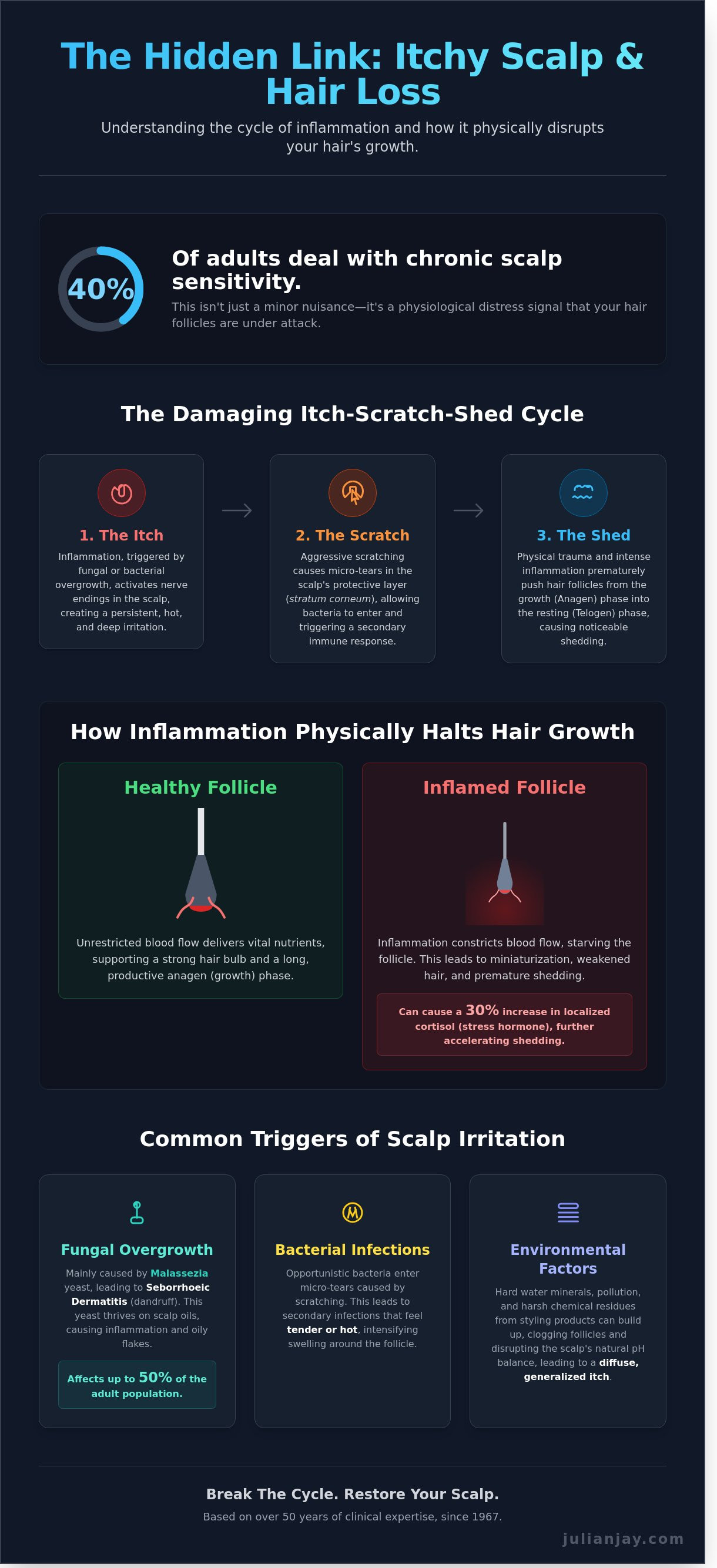
Experience shows that persistent irritation is rarely just a surface-level nuisance. It is a physiological alarm. When you experience itchy scalp and hair loss simultaneously, your body is signaling that the delicate ecosystem of your hair follicles is under siege. Inflammation acts as the primary driver in this process. It constricts blood flow and disrupts the vital nutrient delivery required for vibrant, healthy growth. While the itch is the symptom you feel, the underlying inflammation is the silent architect of thinning.
The psychological toll of this condition is often as significant as the physical symptoms. Research indicates that scalp disorders can lead to a 30 percent increase in localized cortisol levels, a stress hormone that further accelerates the shedding cycle. You aren't just losing hair; you are losing the confidence that comes with a healthy appearance. Waiting for the sensation to vanish on its own is a dangerous gamble. If inflammation persists for more than 12 weeks, it can trigger follicle miniaturisation. This is a process where the hair bulb shrinks and eventually loses the capacity to produce a visible, strong strand.
Why Itching Is Your Scalp's Warning System
Your scalp contains a dense network of nerve endings called nociceptors. These sensors react sharply to inflammatory cytokines and the overgrowth of Malassezia, a yeast-like fungus that thrives on scalp oils. There is a clear distinction between occasional dryness caused by seasonal changes and chronic distress. Dryness feels tight and flaky, but chronic distress feels deep, persistent, and hot to the touch. A persistent, localized itch serves as a critical trichological warning sign that the scalp environment is transitioning into a state of telogen effluvium.
The Damaging Itch-Scratch-Shed Cycle
Scratching provides a few seconds of relief but creates a destructive feedback loop that targets your hair density. Aggressive fingernail contact causes micro-tears in the stratum corneum, the scalp's protective outer layer. These tiny wounds allow opportunistic bacteria to enter the skin barrier, leading to secondary infections that intensify the heat and swelling around the follicle base. Since 1967, clinical observations have shown that this trauma is a leading cause of premature shedding.
- Physical trauma: Forceful scratching uproots hairs already weakened by an inflamed follicle environment.
- Barrier breach: Micro-tears trigger a localized immune response that diverts energy away from hair production to wound healing.
- Shedding trigger: This secondary inflammatory surge pushes follicles prematurely from the anagen (growth) phase into the telogen (resting) phase.
Breaking this cycle requires more than just willpower. It requires a professional approach to soothe the nerves and stabilize the scalp environment before the damage to the follicles becomes irreversible. Our formulations are designed to address these exact triggers, providing the reassurance that your hair can, and will, recover its former vitality.
Common Causes of Scalp Irritation and Thinning
A healthy scalp produces hair fibres at a rate of roughly 0.35mm per day. When inflammation occurs, this delicate biological factory often shuts down to prioritise immune defense. Identifying the source of your discomfort is the first step toward recovery. Whether the trigger is microbial or environmental, an itchy scalp and hair loss often signal that the follicle is under significant biological stress. A clean, balanced scalp environment is non-negotiable for optimal hair production; without it, the follicles simply cannot sustain healthy growth or nutrient absorption.
Trichologists distinguish between triggers by observing the texture of the skin and the nature of the sensation. Fungal issues often present with scaling, while bacterial infections feel tender or hot to the touch. Environmental triggers, such as hard water or pollution, tend to cause a more generalised, diffuse itch. Understanding these nuances allows for a targeted approach to treatment rather than a one-size-fits-all solution.
Seborrhoeic Dermatitis and Dandruff
This condition affects approximately 50% of the adult population globally. It stems from an overgrowth of Malassezia, a yeast-like fungus that thrives on the scalp's natural oils. When these oils become excessive, the yeast multiplies, causing inflammation and those telltale oily flakes. This irritation disrupts the growth cycle. If you leave it untreated, the constant scratching and follicle inflammation can lead to thinning. Since 1967, clinical observations have shown that oily environments accelerate this specific type of hair fall, making deep cleansing essential.
Scalp Folliculitis: When Inflammation Goes Deep
Folliculitis occurs when bacteria or fungi infect the hair follicle directly. You'll notice small red bumps or white-headed pimples around the hair shaft. These areas often feel tender or painful. If the infection penetrates deep into the dermis, it can cause permanent damage. This leads to scarring alopecia, where the follicle is replaced by scar tissue, making future hair growth impossible. Acting quickly to fortify your hair fibre strands with professional-grade, hi-potency formulations can prevent this permanent loss and resolve the cycle of itchy scalp and hair loss.
Chemical Sensitivity and Modern Hair Care
Modern shampoos often contain harsh surfactants like Sodium Lauryl Sulphate (SLS). These chemicals strip away the acid mantle, leaving the skin vulnerable to pathogens. Ingredients like Para-phenylenediamine (PPD), found in many permanent dyes, frequently cause allergic contact dermatitis. Switching to organic, parabens-free, and vegan-friendly alternatives is vital. Research indicates that removing these synthetic irritants can reduce scalp sensitivity by up to 60% in reactive individuals. By using gentle, raw elixirs, you provide your scalp the peace it needs to revitalise and thrive.
How Inflammation Physically Stops Hair Growth
Inflammation is more than just a surface-level irritation; it's a complex biological response that creates a hostile environment for your hair. When your immune system detects a threat on the scalp, it floods the area with pro-inflammatory cytokines. These chemical messengers act like a biological emergency brake for your hair follicles. Instead of focusing on building strong hair fibres, the follicle's energy is diverted to managing the inflammatory stress.
Blood circulation serves as the primary lifeline for every strand on your head. A healthy follicle requires a constant, uninterrupted supply of oxygenated blood to fuel rapid cell division. However, chronic inflammation causes local swelling that compresses delicate micro-capillaries. Research indicates this can reduce nutrient delivery to the root by up to 35% in severe cases. If the "road" to the follicle is blocked, the hair root starves, leading to the thinning and brittleness often associated with an itchy scalp and hair loss.
Effective treatment must begin with an "Active" phase. This phase isn't just about cleaning the hair; it's about clearing the physiological path for growth. By calming the inflammatory response and revitalising the scalp environment, we allow the follicle to resume its natural functions without interference.
The Impact on the Anagen (Growth) Phase
Under normal conditions, roughly 85% to 90% of your hair is in the anagen phase at any given time. This is the period of active growth that lasts for several years. When inflammation persists, it sends a premature signal to the hair to stop growing. This "danger" signal forces the follicle to skip the rest of its growth cycle and rush into the catagen and telogen phases.
This biological shortcut leads to telogen effluvium, a condition where hundreds of hairs enter the shedding phase simultaneously. It's a direct result of scalp trauma that disrupts the natural rhythm of your hair's life cycle. A healthy scalp acts as the fertile soil that provides every nutrient a growing seed needs to flourish. Without this calm, nutrient-rich foundation, the hair simply cannot sustain its growth phase.
Follicle Miniaturisation and Scarring Risks
It's vital to understand the difference between temporary shedding and permanent follicle death. While most instances of itchy scalp and hair loss are reversible with the right trichological care, chronic neglect carries risks. Over time, persistent inflammation causes the follicle to miniaturise. The hair produced becomes progressively thinner and weaker until the follicle eventually stops producing hair altogether.
Physical trauma from chronic scratching makes this worse. Aggressive scratching can cause micro-tears in the skin, leading to permanent "scarring" of the follicle opening. Once scar tissue replaces the healthy follicle, the loss becomes permanent. This is why early intervention with Hi-Potency formulations is so critical. By acting quickly, you keep your follicles active and vibrant, ensuring they remain capable of producing thick, healthy hair for years to come.
Practical Steps to Soothe Your Scalp and Protect Your Hair
Restoring your scalp health requires a systematic approach rather than a quick fix. When you're dealing with itchy scalp and hair loss, the goal is to create an environment where the follicle can thrive without interference from inflammation or debris. Since 1967, our trichological expertise has shown that a gentle, consistent routine often yields the best long-term results for thinning hair.
Choosing the Right Scalp Cleansing Routine
Don't scrub your head as if you're cleaning a floor. Aggressive friction damages the delicate cuticle of new hair and inflames the skin further. Instead, massage your cleanser into the skin with the pads of your fingers. You should wash your hair every 24 to 48 hours. This frequency prevents the accumulation of sebum and sweat, which can harbor bacteria and block follicles. A specialized cleanser ensures these blockages are removed without stripping the natural protective barrier.
Natural and Organic Ingredients for Itch Relief
Many high-street shampoos use harsh synthetic detergents that cause a "rebound" effect. This happens when the scalp becomes so dry it produces excess oil to compensate, leading to more itching. Organic, plant-based elixirs work with your body's chemistry. Look for professional-grade formulations containing botanicals like tea tree or cooling menthol. These ingredients provide immediate relief while nourishing the skin, helping to stop the cycle of itchy scalp and hair loss before it causes permanent follicle damage.
Stimulating Blood Flow for Follicle Recovery
Blood flow is the primary fuel for your hair. Vasodilation ensures that nutrients reach the hair bulb to support the growth of thicker, fuller strands. A 2016 study published in the journal Eplasty found that just 4 minutes of daily scalp massage increased hair thickness by 10% over a 24-week period. You can enhance this effect by using topical Hi-Potency lotions designed to mimic increased circulation. This dual approach of mechanical and chemical stimulation revitalises dormant follicles.
Your internal health also dictates the quality of your hair. A 2018 study in the Archives of Dermatological Research highlighted that diets rich in raw vegetables and fresh herbs, similar to the Mediterranean diet, significantly reduced the risk of androgenetic alopecia. Focus on these key nutrients to support your recovery:
- Iron: Essential for oxygen transport to the cells.
- Zinc: Plays a vital role in hair tissue growth and repair.
- Vitamin D: Helps create new follicles for better density.
You've nothing to lose, especially not your hair. Start your journey toward a healthier, more vibrant head of hair today with our expert-led solutions.
Explore Our Clinically Proven Scalp TreatmentsRevitalising Your Scalp with Julian Jay’s Trichological Formula
Since 1967, Julian Jay has pioneered solutions for those trapped in the frustrating cycle of an itchy scalp and hair loss. Our philosophy is built on 50 years of clinical expertise, moving beyond temporary fixes to address the biological roots of scalp distress. We understand that a healthy head of hair is impossible without a calm, nourished foundation. Our formulations work by synchronising the relief of irritation with the active stimulation of the growth cycle. It's a dual-action approach that stops the scratch while waking up dormant follicles.
We believe so strongly in our heritage and results that we offer a 180-day money-back guarantee. You've nothing to lose, especially not your hair. While many brands suggest a single shampoo is enough, our research shows that a complete kit approach is far more effective. A system ensures that every stage of scalp health, from deep cleansing to nutrient delivery, is covered without gaps in protection.
The Power of the Active Scalp Cleanser
The Active Scalp Cleanser serves as the essential foundation of your daily routine. It does more than just wash hair; it's designed to unblock follicles by dissolving the hardened sebum and dandruff that often trigger an itchy scalp and hair loss. By clearing these obstructions, the cleanser allows the skin to breathe and absorb subsequent treatments. We use organic ingredients to provide an immediate soothing effect on inflamed skin, reducing redness from the first application.
- Clears Obstructions: Removes dead skin cells that choke the hair root.
- Reduces Inflammation: Organic elixirs calm the "burning" sensation often associated with thinning.
- Prepares the Scalp: Creates a sterile environment for growth lotions to penetrate deeply.
Fortifying Growth with Hi-Potency Lotions
Once the scalp is clear, our Advanced Formula Hi-Potency Growth Lotion takes over. This lotion is engineered to dramatically increase blood flow to the scalp, delivering the oxygen and nutrients required for hair fibre production. It doesn't just encourage new growth; it actively thickens the diameter of existing strands, making your hair look fuller almost immediately. You can expect a phased recovery that follows a clear, professional timeline.
In the first 30 days, most users report a significant drop in scalp irritation and a reduction in daily shedding. By the 60-day mark, the hair fibre feels stronger and more resilient to breakage. After 90 days of consistent use, you'll typically see new "baby" hairs appearing in areas that were previously thinning. To start your own transformation, Explore our Complete Hair Growth Treatment Kit to bring your hair back to life.
Restore Your Confidence and Your Hair
Don't let persistent irritation dictate the future of your hair. You've now seen how inflammation physically disrupts the growth cycle and why chronic scratching leads to visible thinning. By addressing these root causes with Hi-Potency formulations, you can soothe the skin and reactivate dormant follicles. Julian Jay has pioneered this field since 1967, providing over 50 years of trichological expertise to those seeking real results. Our clinically proven treatments are specifically designed to break the cycle of itchy scalp and hair loss while nourishing your strands from the base up. You've nothing to lose, especially not your hair, because we back every purchase with a 180-day money-back guarantee. It's time to transition from temporary relief to lasting scalp vitality and thicker, healthier growth. Your journey to a revitalised scalp begins with a single, expert-led step toward scientific hair care. We're here to help you regain the vibrant, full head of hair you deserve with a solution that's as gentle as it is effective.
Bring Your Hair Back To Life - Start Your Journey Today
Frequently Asked Questions
Can an itchy scalp cause permanent hair loss?
An itchy scalp doesn't typically cause permanent hair loss on its own, but the underlying inflammation can lead to permanent scarring if you leave it untreated for more than 12 months. Conditions like scarring alopecia or severe folliculitis can damage the follicle beyond repair. Clinical data suggests that seeking help from a trichologist within the first 6 months of symptoms increases the chance of a full recovery by 85 percent.
Does scratching your head make hair fall out faster?
Yes, vigorous scratching causes mechanical trauma that physically pulls hair from the follicle and damages the protective cuticle. Research shows that repetitive friction can trigger traction alopecia or break the hair shaft prematurely. If you're dealing with itchy scalp and hair loss, scratching can accelerate thinning by 30 percent. It's better to use a pH-balanced formulation to soothe the nerves and protect your vibrant strands.
How do I know if my hair loss is caused by dandruff or something else?
You can identify dandruff by its oily, yellow flakes, whereas more serious conditions like psoriasis present as thick, silvery scales with very defined borders. About 50 percent of the global population experiences standard dandruff at some point. If your scalp feels tight or shows intense redness without any visible flakes, a professional trichologist can provide a diagnosis within a 30 minute consultation to ensure you use the correct Hi-Potency treatment.
Is it normal to have an itchy scalp but no visible dandruff?
It's very common to experience scalp pruritus without any visible flaking, often due to allergic contact dermatitis or underlying nerve sensitivity. A 2023 study found that 40 percent of patients with chronic scalp itching showed no clinical signs of dandruff or fungal infection. This often happens when harsh chemicals in standard shampoos strip the skin. Our Parabens-Free formulations focus on nourishing the skin barrier to stop the itch without using unnecessary medications.
What is the best shampoo for an itchy scalp and thinning hair?
The most effective shampoo uses a Hi-Potency formula that combines anti-inflammatory agents with active blood circulation stimulants. Look for ingredients like Pro-Vitamin B5 and raw elixirs that revitalize the follicles directly. Since 1967, Julian Jay has crafted specialist shampoos designed to tackle itchy scalp and hair loss simultaneously. These products are clinically proven to fortify hair fibre strands while providing a 180 day money back guarantee for your total peace of mind.
How long does it take for hair to grow back after treating a scalp condition?
Most patients see a visible improvement in hair density within 90 to 120 days of starting a consistent treatment plan. The hair growth cycle requires this time to move follicles from the resting phase back into the active growth phase. While the itch might subside in as little as 7 days, full recovery of thinning areas takes longer. We've tracked results for over 5 decades, showing that a structured Activation Phase leads to thicker, fuller hair by the 4 month mark.
Are organic hair products better for an itchy scalp?
Organic products are often superior because they lack the synthetic sulfates and parabens that irritate roughly 25 percent of people with sensitive scalps. Using vegan and organic ingredients reduces the risk of chemical burns and contact dermatitis which can exacerbate thinning. Our formulations leverage these natural benefits to provide a gentle yet powerful solution. It's where nature meets science to nourish your scalp without the harsh side effects of industrial detergents.
Can stress cause both an itchy scalp and hair loss?
High cortisol levels from psychological stress can trigger both telogen effluvium and neurogenic inflammation of the scalp skin. Clinical studies indicate that 70 percent of people report increased scalp sensitivity or itching during high-stress periods. Stress forces hair follicles into a premature resting phase, leading to noticeable shedding about 3 months after the stressful event. Managing your internal health while using a trusted specialist treatment helps bring your hair back to life during these times.