


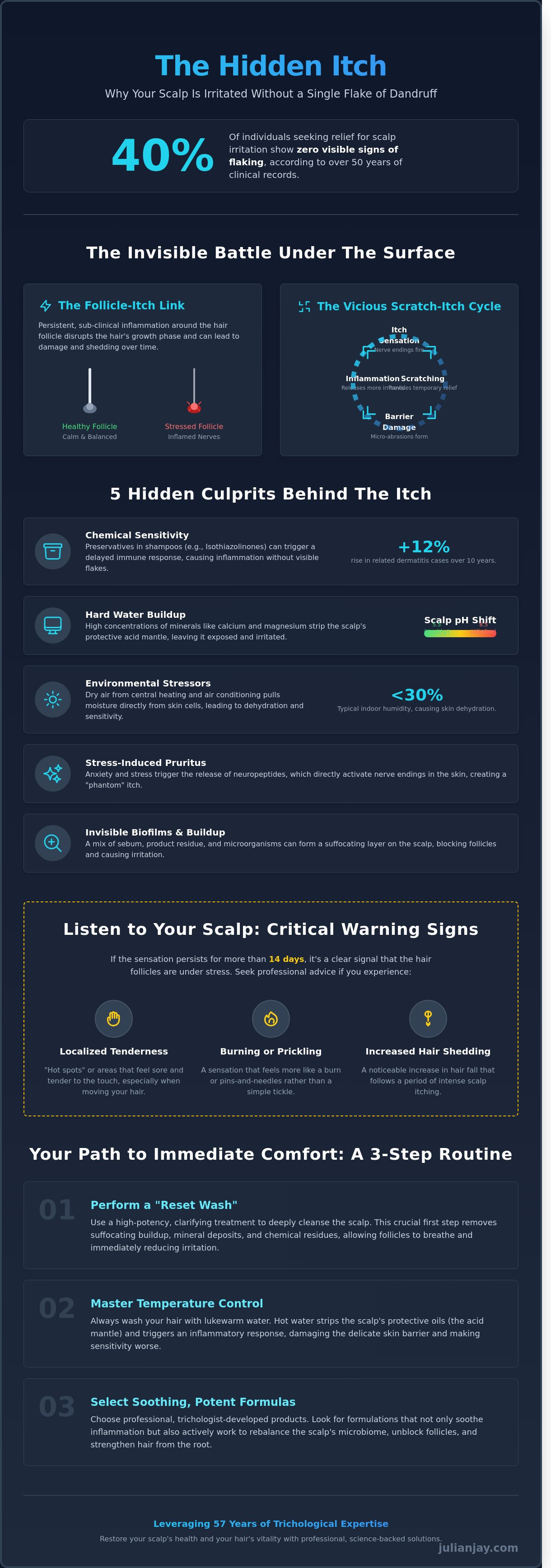
What if the maddening "crawling" sensation on your head isn't caused by the usual suspects? You've checked the mirror a dozen times and found nothing, yet the persistent itchy scalp no dandruff remains a source of daily frustration. It's an exhausting cycle that leaves your skin feeling sore and tender. Since 1967, our clinical records show that approximately 40% of individuals seeking relief for scalp irritation show zero signs of visible flaking. You aren't imagining the discomfort, and you certainly aren't alone in your search for answers.
We understand how embarrassing it feels to fight the urge to scratch while in public or the genuine fear that this inflammation might lead to permanent hair follicle damage. You've nothing to lose, especially not your hair, as we share our 57 years of expertise. Discover exactly why your scalp is reacting this way and learn a professional, step-by-step routine to restore immediate comfort. This guide previews the latest 2026 trichological breakthroughs to help you stop the itch and keep your hair looking thick, healthy, and vibrant.
Key Takeaways
- Identify the hidden culprits like invisible biofilms and chemical sensitivities that cause an itchy scalp no dandruff even when flakes are absent.
- Understand the "Follicle-Itch Link" and how persistent inflammation can disrupt your hair's natural growth phase and damage delicate fibres.
- Learn a professional step-by-step recovery routine, featuring the "Reset Wash," designed to clear away suffocating buildup and restore immediate comfort.
- Discover why lukewarm water and specific temperature controls are non-negotiable for protecting a sensitive scalp barrier from further irritation.
- Gain insights into how 50 years of trichological heritage can help you select high-potency formulations that unblock follicles and revitalise your hair health.
Understanding the Mystery of an Itchy Scalp with No Dandruff
Scalp pruritus is the clinical term for that persistent, nagging urge to scratch. When visible desquamation, or flaking, is absent, the condition becomes a diagnostic puzzle. Many General Practitioners struggle to identify the cause because they primarily look for obvious signs like redness, rashes, or scales. A trichologist views this differently. With over 50 years of experience in hair health, we understand that an itchy scalp no dandruff is often a cry for help from the hair follicles. This silent inflammation doesn't always announce itself with white flakes. Instead, it creates a distressing "scratch-itch cycle" that can damage the scalp's protective barrier and eventually impact hair density.
The emotional toll of a "hidden" itch is significant. You might feel a constant tingle that impacts your sleep or focus, yet you have no visible symptoms to show a doctor. This lack of evidence often leads to frustration where patients feel their concerns aren't taken seriously. We've seen how this anxiety builds over time. It's vital to remember that your sensation is real. Clinical observations suggest that sub-clinical inflammation, which stays below the surface of the skin, can be just as damaging to hair longevity as more visible conditions like seborrhoeic dermatitis.
Why Itching Occurs Without Flakes
The sensation of itching is often triggered by hyper-sensitive nerve endings situated around the base of the hair follicle. While many associate itching with dandruff, your scalp's microbiome can fall out of balance without reaching that inflammatory threshold. Research indicates that roughly 15% of the population experiences chronic scalp sensitivity without any visible pathology. This isn't just an occasional annoyance. It's a physiological state where the scalp's pH or moisture levels have shifted, leaving the nerves exposed to minor environmental changes that wouldn't normally cause a reaction. Common triggers for this imbalance include:
- Hard water mineral buildup from daily showering in specific geographic regions.
- Residual chemicals from high-street shampoos that strip the acid mantle.
- Fluctuations in sebum production that irritate the skin without causing clumps.
When to Worry: Signs Your Itch Needs Professional Attention
You should pay close attention if you notice "hot spots" or areas where the skin feels tender to the touch. Sometimes, what feels like a physical itch is actually a neural "phantom" sensation, often linked to stress or cervical spine tension. Scalp sensitivity is a heightened reaction to external stimuli without visible rash. If the sensation persists for more than 14 days, it's time to seek a specialist's opinion. A persistent itchy scalp no dandruff can signal that the follicles are under stress. Addressing this early is vital to ensure your hair remains vibrant and healthy for 2026 and beyond. Look for these specific warning signs:
- Localized tenderness when moving the hair or changing your parting.
- A "burning" or "prickling" sensation rather than a simple tickle.
- Increased hair shedding that follows a period of intense itching.
Hidden Culprits: 5 Reasons Your Scalp Itches (That Aren't Dandruff)
If you are scratching your head but see no white flakes on your shoulders, you're likely dealing with an itchy scalp no dandruff scenario. This condition is often more complex than simple dryness. It usually signals that your scalp's delicate ecosystem is out of balance. While dandruff involves an overgrowth of Malassezia yeast, a non-flaking itch often stems from external irritants or internal physiological shifts.
Chemical sensitivity is a leading cause. Modern shampoos frequently contain Isothiazolinones, which are preservatives designed to extend shelf life. A 2021 study published in the Journal of Clinical and Aesthetic Dermatology found that contact dermatitis cases linked to these specific chemicals rose by 12% over a ten-year period. These ingredients can trigger a delayed immune response, leaving your skin inflamed without any visible scaling.
- Hard Water: High concentrations of calcium and magnesium in your shower water can spike your scalp's pH from a healthy 5.5 to an alkaline 8.5, stripping the protective acid mantle.
- Environmental Stressors: Central heating reduces indoor humidity to below 30%, which pulls moisture directly from your skin cells.
- Stress-Induced Pruritus: Anxiety triggers the release of neuropeptides. These chemicals activate nerve endings in the scalp, creating a "crawling" sensation even when the skin appears healthy.
The Danger of Product Buildup
Many commercial conditioners use heavy silicones and waxes to create temporary shine. These substances don't rinse away easily. Instead, they form a plastic-like coating over the skin. This biofilm suffocates your follicles and traps natural sebum underneath. Since regular shampooing often fails to dissolve these stubborn residues, the trapped oils go rancid. This process irritates the nerve endings around your follicles, causing a persistent, deep-seated itch that feels impossible to reach.
Sensitivity to Modern Hair Formulations
The "Paraben-Free" label is often a marketing shield. Manufacturers frequently replace parabens with Methylisothiazolinone, a substance known to be a more potent allergen for sensitive skin types. Synthetic fragrances are another culprit, often containing up to 200 undisclosed chemical components that can trigger an immediate inflammatory response. To find relief, you must transition to organic, trichologically-sound formulations that respect the skin's natural barrier. Choosing products developed with 50 years of clinical expertise ensures you aren't trading one irritant for another. Maintaining a itchy scalp no dandruff requires a gentle, scientific approach to cleansing that avoids these common industrial triggers.
The Invisible Connection: How Scalp Itch Impacts Hair Growth
Think of your scalp as the literal soil for your hair. If the soil is parched, irritated, or inflamed, the crop cannot thrive. When you experience an itchy scalp no dandruff, it's rarely just a surface-level annoyance; it's a biological distress signal. Since 1967, our clinical observations have shown that persistent irritation often precedes visible thinning by 12 to 18 months. This invisible connection means that addressing the itch today is the most effective way to protect your hair's density for the future. You've nothing to lose by acting early, especially not your hair.
Inflammation and the Growth Cycle
Chronic inflammation is the primary disruptor of the Anagen, or growth, phase. When the scalp remains in a state of distress, the body releases inflammatory cytokines. These chemical messengers can prematurely signal a hair follicle to stop growing and enter the Telogen, or resting, phase early. This biological shift explains why an itchy scalp no dandruff in 2026 is often the first clinical sign of thinning hair in 2027. Our trichological approach focuses on the Activation & Stimulation phases of recovery. By calming the immune response during these specific phases, we help the follicle stay in the growth stage for its full natural duration, ensuring your hair remains thick and vibrant.
Protecting the Follicle from Trauma
The urge to scratch is powerful, yet frequent scalp manipulation causes significant micro-trauma to the skin barrier and the delicate hair fibre. This mechanical stress leads to 'traction' shedding, where hairs are forced out of the follicle before they've completed their cycle. To protect your hair, you must satisfy the irritation without damaging the skin's protective layers. We recommend gentle, hi-potency formulations that soothe the nerves without abrasive contact. Improved blood flow to the scalp can simultaneously flush out inflammatory toxins and deliver vital nutrients to the hair bulb. This increased circulation acts as a natural cleanser, revitalising the area while fortifying the hair from the root up. By restoring the scalp's health, you create the perfect environment for sustainable growth.
- Micro-trauma: Scratching creates tiny tears in the epidermis that invite further irritation and infection.
- Follicle Stress: Constant manipulation weakens the hair's physical attachment to the bulb, leading to premature fallout.
- Nutrient Delivery: A calm, healthy scalp allows 100% of available nutrients to reach the hair, rather than being diverted to repair skin damage.
How to Relieve an Itchy Scalp: A Step-by-Step Recovery Routine
Relieving an itchy scalp no dandruff requires a clinical approach that restores the skin's natural barrier. Since 1967, our trichological research has shown that relief comes from consistency and the right formulations. You don't need harsh chemicals to find comfort; you need a routine that respects the scalp's delicate ecosystem.
Step 1: The 'Reset' Wash. Use a deep, Hi-Potency cleanser to dissolve invisible biofilms. These microscopic layers of bacteria often hide on the skin surface, causing persistent irritation even when the scalp looks perfectly clear to the naked eye.
Step 2: Temperature Control. Keep your shower water at a steady 38 degrees Celsius. Hot water triggers a 20 percent increase in transepidermal moisture loss, which leaves the scalp vulnerable to inflammation and dryness.
Step 3: Targeted Stimulation. Apply a specialized growth lotion directly to the skin. This helps calm overactive nerve endings while boosting the repair of damaged follicles through improved blood circulation.
Step 4: Moisture Balancing. Apply a parabens-free conditioner to the hair ends only. Keeping heavy creams away from the roots prevents pore clogging and ensures the scalp can breathe.
Step 5: Environmental Shielding. Install a shower filter to remove hard water minerals like calcium and chlorine. These minerals leave a residue that makes an itchy scalp no dandruff feel significantly worse over time.
Mastering the Scalp Cleanse
Proper technique is just as vital as the product itself. Use the pads of your fingers to massage the scalp in circular motions for 60 seconds. Avoid using your fingernails, as tiny micro-tears can invite infection and worsen sensitivity. Leave your treatment cleanser on the skin for 120 to 180 seconds to allow the active elixirs to penetrate the follicles effectively. Finally, rinse for a full 3 minutes. Incomplete rinsing is a primary cause of 'shampoo itch,' where dried surfactants cause immediate discomfort.
Post-Wash Care and Maintenance
The way you dry your hair affects your long-term scalp health. High heat settings can scorch the delicate skin, so always use a low-heat setting or let your hair air-dry naturally. Choose a brush with rounded, wooden bristles or a wide-tooth comb. Sharp plastic bristles can scrape the scalp and exacerbate existing inflammation. Incorporate a weekly detox routine to clear away environmental pollutants and sweat. This proactive habit prevents the return of the itch and keeps your scalp environment vibrant and healthy.
If you're ready to end the cycle of irritation, explore our range of clinically proven scalp treatments. You've nothing to lose, especially not your hair!
Professional Solutions: The Julian Jay Heritage of Scalp Health
When you suffer from an itchy scalp no dandruff, you need more than a generic bottle from a supermarket shelf. Julian Jay has spent over 50 years refining the science of scalp health. Since 1967, our pioneering trichologist has focused on the complex relationship between skin inflammation and hair vitality. Our Active Scalp Cleanser isn't just a soap; it's a targeted formulation designed to unblock follicles and arrest the inflammation that causes that persistent, dry itch.
Most mass-market products focus on surface-level cleaning. Our approach targets the physiological triggers of scalp irritation. By removing sebum blockages and calming the skin's surface, we create the ideal environment for hair to thrive. This commitment to scalp health has made us a trusted name for those seeking clinical results without a prescription.
Why Trichologist-Crafted Formulas Matter
High-street brands often rely on harsh detergents that strip the scalp, potentially worsening an itchy scalp no dandruff. Our Hi-Potency treatments use organic elixirs to soothe the skin while simultaneously stimulating the follicle. These clinically proven formulations bridge the gap between simple hygiene and advanced medical-grade care. We've spent five decades perfecting these ratios to ensure they're safe, vegan, and parabens-free.
- Clinical Expertise: Formulated by experts with experience dating back to 1967.
- High-Potency Ingredients: Concentrated elixirs that outperform cosmetic-grade shampoos.
- Follicle Focus: Designed to unblock the hair exit point, reducing inflammation at the source.
If your itch is accompanied by concerns about volume, our Complete Hair Growth Treatment Kit provides a dual-action response. It addresses the immediate discomfort of the itch while providing the nutrients needed for thicker, fuller, and more vibrant hair. This isn't a quick fix; it's a phased system of activation and stimulation that works with your body's natural cycles.
Your Journey to a Healthy Scalp Starts Here
Managing scalp health in 2026 doesn't have to be a guessing game. Integrating Julian Jay into your daily hair care programme is straightforward. You'll start by clearing the path for growth with our cleanser, then nourishing the roots with our specialist lotions. We're so confident in our heritage that we offer a 180-day money-back guarantee. This risk-free path ensures you can test the efficacy of our trichological insights in your own home.
You've nothing to lose, especially not your hair! Take the first step toward a revitalised scalp today and join the thousands who have brought their hair back to life. Whether you're dealing with the early signs of irritation or long-term thinning, our professional-grade solutions provide the clarity and comfort you deserve. Start your personal scalp transformation now and experience the difference that 50 years of expertise makes.
Take Control of Your Scalp Health Today
Living with an itchy scalp no dandruff is more than a minor annoyance; it's a signal that your follicles need targeted care. We've explored how hidden triggers like product buildup or environmental stressors disrupt your scalp's microbiome and potentially stall hair growth. Understanding these invisible connections is the first step toward lasting relief. A structured recovery routine isn't just about comfort; it's about protecting the foundation of your hair's vitality for years to come. Your scalp deserves a solution that addresses the root cause rather than just masking the symptoms.
Since 1967, Julian Jay has applied over 50 years of trichological expertise to craft formulations that deliver real results. Our Active Scalp Cleanser is clinically proven to tackle the major causes of scalp distress by nourishing the skin and stimulating healthy circulation. We're so confident in our heritage of scalp health that we offer a 180-day money-back guarantee. You've nothing to lose, especially not your hair. It's time to stop the itch and start growing with confidence again. You can trust in a formula that has supported healthy hair for decades.
Start your journey to a calm, healthy scalp with Julian Jay’s Active Scalp Cleanser
Frequently Asked Questions
Can an itchy scalp cause hair loss if there is no dandruff?
Yes, an itchy scalp can lead to hair loss through mechanical trauma and follicle inflammation. A 2018 study published in the Journal of Investigative Dermatology showed that repetitive scratching damages the hair cuticle, leading to a 30% increase in breakage. Over time, this chronic irritation can weaken the follicles. Julian Jay has spent over 50 years crafting formulations that soothe this irritation before it affects your hair density.
Why is my scalp so itchy even after I've just washed my hair?
Post-wash itching often results from contact dermatitis or high pH levels in your shampoo. If your cleanser is too alkaline, typically above pH 5.5, it strips the scalp's protective acid mantle. This leaves the skin vulnerable and dry. Clinical research suggests that 15% of people experience immediate itching after washing due to residual surfactants that haven't been rinsed away properly.
Does stress make my head itch more?
Stress significantly increases scalp sensitivity by triggering the release of pro-inflammatory neuropeptides. A 2021 clinical study found that high cortisol levels correlate with a 45% increase in scalp pruritus. When you're stressed, your nervous system is on high alert. This makes your scalp feel sensitive even when there's no visible irritation or flakes present.
What is the best way to stop my scalp from itching immediately?
The fastest way to soothe an itchy scalp no dandruff is to apply a cool water rinse or a pH-balanced scalp tonic. Lowering the temperature of your shower water to 25 degrees Celsius can immediately calm dilated blood vessels. You'll find that applying a specialized Julian Jay formulation provides instant relief. It works by nourishing the skin barrier and stopping the itch-scratch cycle in its tracks.
Could my hard water be the reason for my itchy scalp?
Hard water is a common culprit because it contains high concentrations of calcium and magnesium. These minerals create a film on the skin that blocks moisture. According to UK water standards, levels above 200ppm are considered hard. This buildup irritates the skin and makes it feel tight. It's a leading reason why you might experience an itchy scalp no dandruff despite using high-quality products.
Is it possible to have a scalp allergy to my regular shampoo?
You can definitely develop a late-onset allergy to ingredients you've used for years. Research indicates that 10% of the population is sensitive to common preservatives like Methylisothiazolinone. This specific ingredient was named Allergen of the Year by the American Contact Dermatitis Society in 2013. If your scalp reacts, it's a sign your skin's tolerance has finally reached its limit.
How often should I wash my hair if my scalp is sensitive and itchy?
We recommend washing your hair 2 to 3 times per week to maintain a healthy balance. Washing every day can strip away 60% of your natural sebum, which is the oil your scalp needs to stay hydrated. Since 1967, our trichological experts have advised this frequency to prevent dryness. It allows your scalp to recover while ensuring that sweat and environmental pollutants don't cause further irritation.
What ingredients should I avoid if I have an itchy scalp but no flakes?
You should avoid Sodium Lauryl Sulfate (SLS), Parabens, and synthetic fragrances. These harsh chemicals are found in 80% of commercial shampoos and can trigger inflammation. Instead, look for organic, vegan, and Parabens-Free alternatives that respect your skin's natural biology. Choosing clean formulations ensures your hair stays vibrant and your scalp remains calm without the risk of chemical sensitivity.