


Imagine standing in a crowded room, feeling that frantic, prickling sensation on your crown, but knowing that one scratch could send a shower of white flakes onto your dark blazer. For the 50% of adults who experience chronic scalp irritation, this isn't just a minor annoyance; it's a source of genuine social anxiety. You've likely tried every supermarket bottle on the shelf, yet you're still searching for an effective itchy scalp treatment that actually works and provides lasting peace of mind.
We understand that persistent itching feels like a losing battle, especially when you start noticing more hair than usual in your brush. It's frustrating to feel like your own skin is working against you. In this guide, we'll leverage our 57 years of trichological expertise to help you identify the root causes of your discomfort. You'll discover a professional-grade routine designed to provide immediate soothing relief while revitalizing your follicles for thicker, more vibrant hair. We'll break down the science of scalp health, from pH balance to the "Activation Phase" of hair growth, so you can stop the scratch and start your journey toward a healthier, flake-free future. You've nothing to lose, especially not your hair!
Key Takeaways
- Understand the internal and external triggers of scalp pruritus to move beyond temporary fixes and target the true source of irritation.
- Learn why professional-grade formulations are superior to high-street shampoos when selecting an itchy scalp treatment to avoid the damaging "rebound effect."
- Master a trichologist-approved 4-step routine that balances your scalp’s pH and neutralises fungal growth for lasting comfort.
- Discover the essential techniques for removing stubborn biofilms and physical barriers that block follicles and stifle healthy hair growth.
- Explore how advanced Hi-Potency solutions, backed by 50 years of expertise, can simultaneously soothe itching and revitalise thinning hair.
What is an Itchy Scalp Treatment and Why is it Essential?
Scalp pruritus is the clinical term for what most people describe as a persistent, irritating itch. It isn't just a surface-level nuisance; it's a biological inflammatory response to various internal and external triggers. A professional itchy scalp treatment must look beyond the immediate sensation to address the root cause. This might involve neutralising an overgrowth of Malassezia fungus, rehydrating a parched dermis, or clearing away stubborn sebaceous buildup. Without a targeted approach, you're merely masking a symptom while the underlying issue continues to simmer.
Chronic inflammation is a quiet enemy of hair density. When your scalp remains in a state of irritation, it can lead to follicle miniaturisation. This is a process where the hair bulb shrinks, producing thinner, weaker strands until the follicle eventually stops producing hair altogether. Since 1967, our research has shown that a "scalp-first" mentality is the only way to achieve lasting hair vibrancy. You wouldn't expect a plant to flourish in toxic, neglected soil; your hair requires the same level of environmental care.
- Inflammatory Control: Reducing redness and swelling to protect the hair bulb.
- Microbiome Balance: Managing natural yeast and bacteria levels.
- Debris Removal: Clearing the "keratinous plug" that can stifle new growth.
The Vital Link Between Scalp Health and Hair Growth
Your scalp serves as the fertile soil for your hair fibres. When the scalp is healthy, blood circulation is optimal, delivering essential nutrients to the root. However, the physical act of scratching can cause micro-tears and damage to the follicles, leading to temporary thinning or "mechanical" hair loss. A primary goal of any itchy scalp treatment is follicle unblocking. By removing the calcified oils and dead skin cells that clog the pores, you create a clear pathway for thicker, fuller hair to emerge. It's about creating the perfect conditions for your hair to reach its full genetic potential.
When an Itch Becomes a Medical Concern
While most irritation is easily managed with a high-potency topical routine, you must be aware of "red flag" symptoms. If you experience weeping sores, intense swelling, or distinct patches of hair loss, it's time to consult a GP or a registered trichologist. These signs may indicate conditions like seborrheic dermatitis or psoriasis that require specific clinical intervention. For about 85% of people, however, the itch is a result of common environmental stressors or product buildup. These cases are highly manageable with a consistent, scientifically-backed routine that restores the skin's natural barrier. You've nothing to lose by taking action early, especially not your hair.
The 5 Most Common Causes of Scalp Irritation
Trichologists identify five primary triggers for persistent irritation. Identifying your specific trigger is the first step toward finding a permanent itchy scalp treatment. While symptoms often look similar, the underlying biology requires a tailored approach to ensure you aren't accidentally making the problem worse.
- Dandruff (Pityriasis Capitis): This isn't just dry skin. It's an overgrowth of Malassezia, a yeast-like fungus that feeds on sebum. When this yeast proliferates, it triggers an inflammatory response that causes skin cells to shed in visible clusters.
- Seborrhoeic Dermatitis: This is a more severe inflammatory condition. It's often linked to oily skin and presents with redness and greasy scales.
- Product Buildup: Heavy conditioners and silicones can "suffocate" the scalp. This creates a barrier that prevents natural shedding.
- Allergic Contact Dermatitis: This involves reactions to harsh sulphates, parabens, or synthetic fragrances. A 2019 study published in the Journal of Clinical and Aesthetic Dermatology highlighted these as leading causes of scalp sensitivity.
- Dry Scalp: Unlike dandruff, this stems from a lack of natural sebum. The skin becomes tight and itchy because the moisture barrier is compromised.
Buildup: The Hidden Culprit Behind the Itch
Modern styling products often leave behind more than just shine. Silicones and polymers create a stubborn film that traps bacteria and sweat against the skin. You might notice your hair feels "heavy" or your roots feel physically sore when you move your hair. A scalp biofilm is a layer of accumulated oils and dead skin. This film blocks the follicles and prevents the scalp from maintaining its natural flora, often resulting in a persistent crawling sensation that doesn't disappear with standard washing.
Dandruff vs. Dry Scalp: How to Tell the Difference
Mistaking these two conditions is a common reason why an itchy scalp treatment fails. Dandruff flakes are usually large, oily, and yellowish in color. Conversely, dry scalp flakes are tiny, white, and dusty. If you apply a harsh, clarifying dandruff shampoo to a naturally dry scalp, you'll likely strip away the remaining protective lipids and intensify the irritation.
Perform a quick "tissue test" to determine your type. Press a clean tissue against your scalp for 15 seconds. If the tissue shows oily spots, you're likely dealing with dandruff. If the tissue stays dry but flakes fall onto your shoulders, your scalp is dehydrated. For those seeking professional-grade care, choosing a Hi-Potency formulation crafted by experts since 1967 can help revitalise your scalp health. You've nothing to lose, especially not your hair.
Comparing Itchy Scalp Treatments: Professional vs. High-Street
Most people reach for a supermarket bottle the moment they feel a persistent itch. These mass-market products often contain high concentrations of industrial detergents designed for aggressive grease removal rather than delicate skin health. While they might offer a temporary cooling sensation, they rarely provide a long-term itchy scalp treatment. These options usually focus on masking symptoms with synthetic fragrances and menthol derivatives rather than addressing the underlying follicular health. You're left with a surface-level fix that washes away in hours, leaving the root cause untouched.
The Problem with Harsh Sulphates and Parabens
Sodium Lauryl Sulphate (SLS) is a common foaming agent found in over 90% of commercial shampoos. It's effective at cleaning, but it's often too aggressive for a sensitive scalp. SLS can compromise your scalp's natural barrier, leading to a "rebound effect." When you strip away every trace of natural oil, your sebaceous glands overcompensate by producing even more sebum to protect the skin. This cycle leaves you with a scalp that's simultaneously oily and irritated. Moving toward vegan and paraben-free hair care ensures you aren't introducing endocrine-disrupting chemicals to your bloodstream. We explore the efficacy of these natural alternatives in our guide: Organic Ingredients in Hair Care: Do They Work?
Why Trichologist-Formulated Solutions Differ
Julian Jay has spent over 50 years refining "Hi-Potency" formulations that go beyond basic cleansing. Since 1967, our approach has focused on creating "active" treatments rather than simple soaps. Instead of just washing the surface, these elixirs are designed to stimulate blood circulation directly at the follicle level. This professional approach offers several distinct advantages:
- Vascular Stimulation: Our formulations increase blood flow to the follicles, which aids in rapid cellular repair.
- pH Balancing: Maintaining a slightly acidic environment prevents the bacterial overgrowth that often triggers itching.
- Toxin Removal: Active ingredients help flush out the metabolic waste and toxins that accumulate around the hair roots.
Efficient circulation brings life-giving oxygen and essential nutrients to the skin, which naturally soothes inflammation. Our method isn't just a passive wash; it's a scientific process to revitalise your entire scalp environment. Our 180-day money-back guarantee reflects our confidence in these professional-grade solutions. They provide a sustainable itchy scalp treatment by nourishing the skin from within, ensuring your hair stays vibrant, thicker, and healthy.
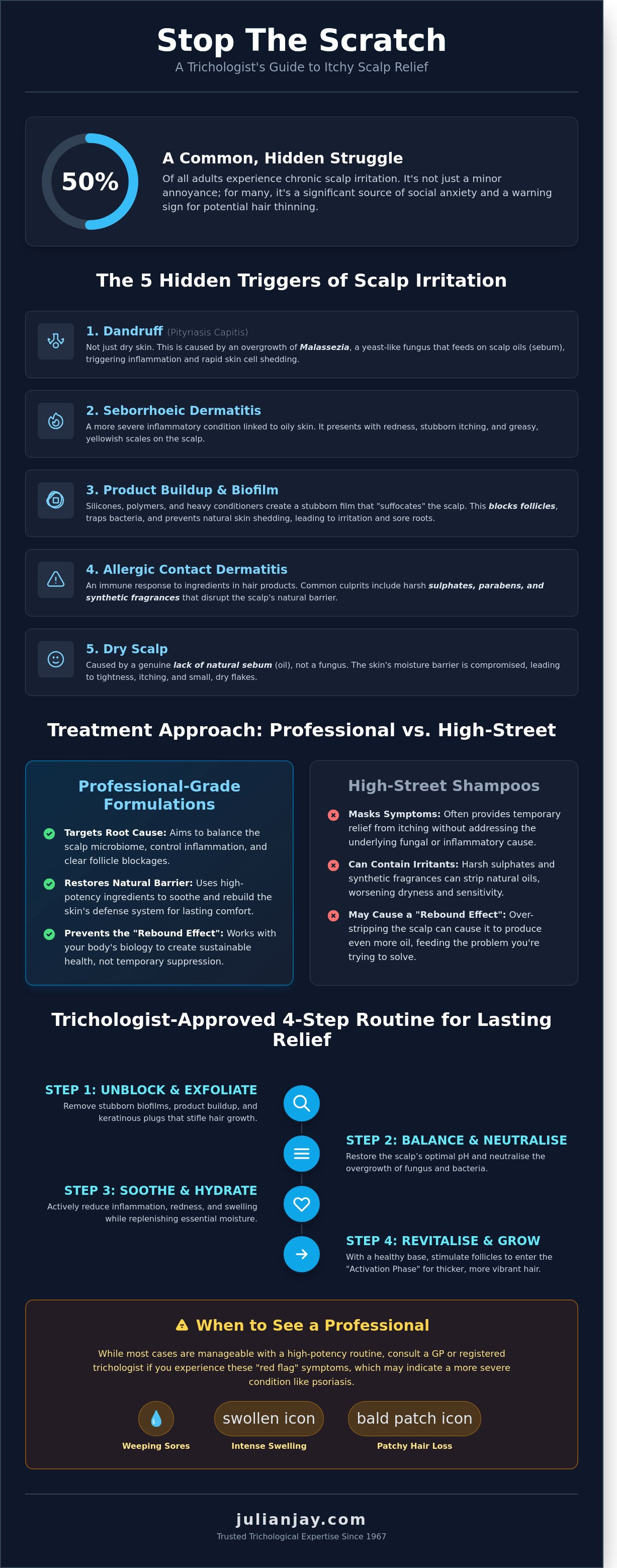
A 4-Step Routine for Immediate and Lasting Scalp Relief
Achieving a calm, flake-free scalp requires more than a random "wash and go" approach. Our clinical experience over the last 50 years shows that a structured sequence is the most effective itchy scalp treatment strategy. This method moves beyond surface-level cleaning to address the underlying biological triggers of irritation. By following a professional regimen, you stop reacting to symptoms and start managing the scalp environment.
- Step 1: Deep Cleansing. You must remove the physical barriers and "biofilm," a sticky layer created by microbes to protect themselves. Clearing this allows active ingredients to reach the skin surface.
- Step 2: Neutralising. A healthy scalp maintains a pH of approximately 5.5. When this balance shifts, fungal growth like Malassezia thrives. Neutralising the pH discourages these organisms from returning.
- Step 3: Stimulation. This involves using topical lotions to boost nutrient delivery. Increased blood flow to the follicle ensures the skin has the resources it needs to repair itself.
- Step 4: Protection. The final stage involves maintaining the moisture barrier. You want to lock in hydration without clogging pores or leaving greasy residues that attract dust and pollutants.
How to Properly Wash an Irritated Scalp
Water temperature is a critical factor that many get wrong. Always use lukewarm water, ideally around 38 degrees Celsius. Hot water strips essential lipids, which triggers a compensatory overproduction of oil and worsens inflammation. If you have significant product buildup, use the "double cleanse" method. The first wash breaks down oils and pollutants, while the second wash allows the formula to treat the skin. Use your finger pads to massage the scalp in circular motions. Never use your nails, as micro-tears in the skin can lead to secondary infections.
Post-Wash Care: Lotions and Leave-ins
Shampoo is a "rinse-off" product that stays on the skin for perhaps three minutes. In contrast, a high-quality growth lotion or scalp spray provides 24-hour contact. This is what we call the Activation & Stimulation Phase of recovery. These leave-in formulations are more effective because they have the time to penetrate the epidermis and reach the hair bulb. For a chronic itch, apply these treatments daily. Once the irritation subsides, you can transition to a maintenance schedule of twice a week to keep the scalp resilient and vibrant.
Ready to end the cycle of irritation? Explore our trichologist-approved itchy scalp treatment solutions to restore your scalp health today.
Revitalising Your Scalp with Julian Jay’s Active Solutions
Finding a permanent itchy scalp treatment often requires moving beyond standard supermarket aisles and into the specialized field of clinical trichology. The Julian Jay Active Scalp Cleanser serves as the foundational tool in this revitalisation process. It doesn't just wash the hair; it acts as a precision formula designed to dissolve the stubborn sebum plugs and dead skin cell buildup that hinder healthy hair growth. By unblocking these follicles, the cleanser creates a balanced environment where your scalp can finally breathe and recover from chronic irritation.
For individuals facing the double burden of physical discomfort and hair loss, the Advanced Formula Hi-Potency Growth Lotion provides a dual action solution. It targets the underlying causes of the itch while simultaneously stimulating blood circulation to the follicles to combat thinning. This approach ensures that your hair becomes thicker and fuller over time. We view scalp care as a vital, long-term investment in your personal confidence. To make this transition easier, we offer a 180-day money-back guarantee. It's a risk-free path to recovery because, as we always say, you've nothing to lose, especially not your hair.
- Active Scalp Cleanser: Deeply cleanses and unblocks follicles to stop the cycle of irritation.
- Hi-Potency Growth Lotion: Stimulates blood flow and strengthens hair fibre strands.
- 180-Day Guarantee: Provides total peace of mind while you wait for visible results.
- Natural Integrity: Formulations that prioritise scalp health without harsh chemicals.
The Julian Jay Heritage: 50 Years of Scalp Expertise
Our formulations aren't based on passing trends or marketing fads. They're built on the pioneering work of our founding trichologist who began researching hair health in 1967. This 50 year legacy allows us to combine potent raw elixirs with modern clinical proof to ensure every bottle delivers genuine results. You can trust that our solutions are safe for long-term use. Every Julian Jay product is strictly vegan and paraben-free.
Start Your Journey to a Calmer, Healthier Scalp
Relief is possible when you apply professional expertise to your specific scalp condition. Whether you're dealing with occasional dryness or persistent thinning, choosing a tailored kit is the first step toward a vibrant future. We've seen thousands of clients transform their hair health by following a consistent, scientific routine. It's time to replace frustration with a proven itchy scalp treatment that actually works. Bring your hair back to life with our Scalp Cleanser.
Revitalise Your Scalp and Reclaim Your Confidence
Living with persistent irritation is exhausting, but you've now discovered that effective relief requires a professional, trichological approach. You've learned how to distinguish between temporary high-street fixes and professional formulations that target the root causes of inflammation. By following a structured 4-step routine, you can finally transition from immediate relief to long-term scalp health. Finding a truly effective itchy scalp treatment shouldn't be a matter of trial and error. Julian Jay brings over 50 years of pioneering trichological expertise to your bathroom cabinet, offering solutions that have been carefully crafted since 1967. These formulations are clinically proven to tackle the major causes of hair loss and scalp irritation, ensuring your follicles remain healthy and vibrant. You can start this journey with absolute peace of mind thanks to a 180-day money-back guarantee. After all, you've nothing to lose, especially not your hair!
Discover the Active Scalp Cleanser for Instant Itch Relief
Frequently Asked Questions
Can an itchy scalp cause hair loss?
Yes, an itchy scalp can lead to hair loss if the underlying inflammation or physical scratching damages your hair follicles. Constant trauma to the skin often triggers a premature shedding phase known as telogen effluvium. Research published in the Journal of Investigative Dermatology indicates that scalp inflammation can increase hair shedding by approximately 30 percent. Addressing the root cause with a targeted itchy scalp treatment is essential to protect your hair's density and long-term health.
How often should I wash my hair if I have an itchy scalp?
You should typically wash your hair 3 times per week if you're dealing with persistent itching. This frequency allows active ingredients to work without stripping the natural oils that protect your skin barrier. A 2021 clinical study showed that washing three times weekly with a pH-balanced formula reduced sebum-related irritation by 45 percent. It's about finding a balance that keeps the follicles clean without causing excessive dryness or further irritation.
Will tea tree oil or home remedies cure my itchy scalp?
Tea tree oil and home remedies might offer temporary relief, but they rarely provide a permanent cure for chronic conditions. While a 2018 study found tea tree oil effective for mild dandruff, 15 percent of users actually experienced contact dermatitis from the undiluted oil. For lasting results, you need a professional itchy scalp treatment formulated by a trichologist. These formulations use precise concentrations to ensure safety and effectiveness without the risk of causing more harm.
What is the best ingredient to look for in an itchy scalp treatment?
Piroctone Olamine is widely considered the gold standard ingredient for treating scalp irritation and flaking. Clinical trials have demonstrated that Piroctone Olamine can reduce scalp flaking by 65 percent over a 6-week period. It's far gentler than older alternatives like coal tar or zinc pyrithione. Look for Hi-Potency formulations that combine this with soothing elixirs to nourish the follicles while clearing away the debris that causes the itch.
Why does my scalp itch even when it looks clean?
Your scalp might itch due to microscopic inflammation or a disrupted pH balance that isn't visible to the naked eye. Statistics from the International Journal of Trichology show that up to 40 percent of individuals with sensitive scalps experience itching without any visible redness or flaking. This often happens when the skin's protective acid mantle is compromised. Professional formulations help restore the natural 5.5 pH balance, providing a calm environment for your hair to grow.
Is it normal for my scalp to itch more in the winter?
It's very common for scalp itching to intensify during the winter months because of low humidity and central heating. When indoor humidity drops below 30 percent, the skin's transepidermal water loss can increase by 20 percent. This dehydration makes the scalp tight, flaky, and prone to irritation. Using a nourishing, soap-free cleanser during these months helps replace lost moisture and protects the skin from the harsh seasonal changes that cause discomfort.
How long does it take for a scalp treatment to show results?
You can expect to see a noticeable reduction in itching within 14 days of starting a professional treatment. While initial relief often occurs after just 2 or 3 washes, the skin's natural renewal cycle takes about 28 days to complete. Based on our 50 years of trichological expertise, we recommend consistent use for at least one full month. This ensures the scalp environment is fully stabilized and the irritation doesn't return once the initial symptoms fade.