


Ever looked in the mirror and felt that tiny, frustrating strand missing, wondering if there’s a simple fix?
We’ve all been there – that moment when you’re pulling a ponytail together and you notice the scalp peeking through a bit more than usual. It’s especially baffling for women over 30, when hormones start playing tricks and hair thinning sneaks in.
Here’s the thing: hair growth pills for women aren’t a magic wand, but they can give your follicles the extra boost they need. Think of them as a daily multivitamin, but one that’s formulated specifically for the scalp, delivering biotin, zinc, and plant‑based extracts right where the growth cycle begins.
In our experience at Julian Jay, we see clients combine these supplements with a gentle, nutrient‑rich shampoo and a scalp‑loving lotion. The synergy works because the pills address internal deficiencies while the topical products keep the scalp environment healthy.
But you might be asking, “Do they really work?” The short answer is yes, for many people – especially when the underlying cause is nutrient‑related thinning rather than genetic baldness. The longer answer is that consistency matters; you won’t see a full‑swing transformation overnight, but after a few months you’ll start noticing less shedding and a bit more volume.
Picture this: you’re getting ready for a night out, you run your fingers through your hair and feel that subtle bounce you haven’t felt in ages. That’s the kind of confidence boost a well‑chosen supplement can give.
So, if you’ve tried endless conditioners and still feel stuck, consider adding a targeted hair growth pill to your routine. Pair it with a balanced diet, stay hydrated, and give your scalp a little extra love – it’s a small habit that can pay off big time.
Ready to take the first step? Let’s explore how the right supplement, combined with a sensible hair‑care regimen, can help you reclaim the fullness you deserve.
TL;DR
Hair growth pills for women can supplement a nutrient‑rich routine, helping to reduce shedding and restore volume when the cause is nutritional rather than genetic. Pair them with Julian Jay’s gentle shampoo and scalp lotion, stay consistent for a few months, and you’ll likely notice a fuller, more confident look.
How Hair Growth Pills Work: The Science Behind Them
Ever wonder what actually happens inside your scalp when you pop a hair growth pill each morning? It’s not magic – it’s biology. The pills are essentially a delivery system for nutrients that your hair follicles crave, especially when diet or stress has left them feeling a bit neglected.
Understanding the hair growth cycle
Hair grows in three phases: anagen (growth), catagen (transition) and telogen (rest). Most of the time, a healthy scalp has about 85‑90% of follicles in the active anagen stage. When you’re missing key vitamins or minerals, more follicles slip into telogen early, and you start noticing extra shedding.
That’s where hair growth pills for women step in. By supplying biotin, zinc, iron, and plant‑based extracts, they help push those sleepy follicles back into anagen, giving you a longer growth window.
Key ingredients and what they do
Biotin – often called vitamin H – is a co‑factor for enzymes that produce keratin, the protein that makes up each strand. Zinc supports DNA synthesis and cell division, both crucial for follicle health. Iron helps transport oxygen to the scalp, and without enough oxygen, hair can become brittle and thin.
Many modern formulas also include botanical extracts like saw palmetto or horsetail, which have been shown to reduce inflammation around the follicle and improve blood flow. Think of it as a mini‑spa for your scalp from the inside out.
How the nutrients actually get to the hair
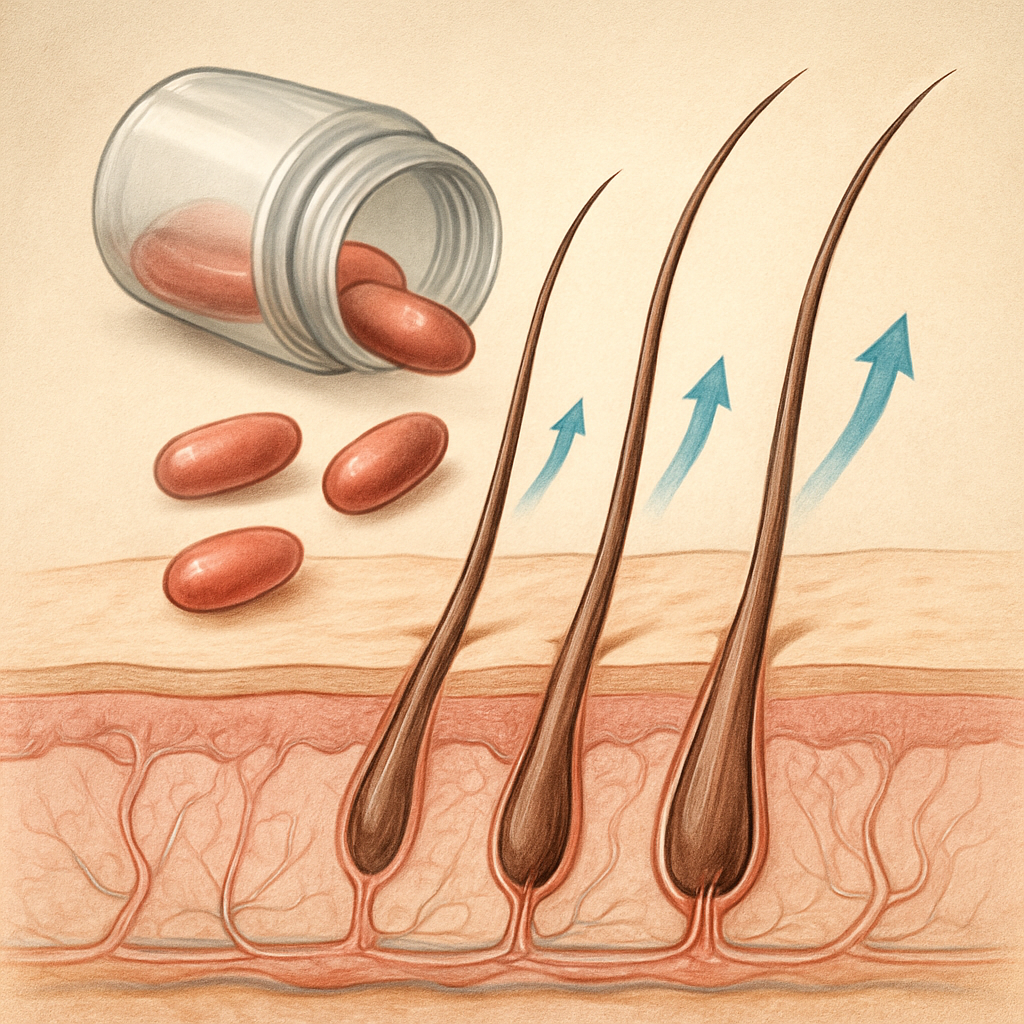
When you swallow a pill, it dissolves in your stomach and the nutrients enter your bloodstream. From there, they travel to every tissue, including the skin of your scalp. The hair follicle’s outer root sheath is highly vascularised, meaning it’s eager to soak up whatever good stuff is circulating.
In our experience, consistency is the secret sauce. It can take 8‑12 weeks for you to notice a shift in shedding because that’s how long a full hair cycle lasts. Patience plus a balanced diet speeds the process up.
Here’s a quick visual cue – imagine each follicle as a tiny garden. The pills are the fertilizer; the blood is the water; and the scalp is the soil. If any one of those elements is lacking, the garden won’t thrive.
Watching a short explainer can help you visualise the process – the video above breaks down the cycle in a way that feels less like a lecture and more like a chat over coffee.
Putting the science into daily practice
Start by checking your diet. If you’re already getting plenty of the basics from food, a supplement can act as a safety net. Pair the pill with a scalp‑friendly shampoo and a light, leave‑in lotion to keep the surface environment calm.
Tip: Take your pill with a meal that contains some healthy fat. Fat‑soluble vitamins like vitamin E and certain plant extracts absorb better that way.
Another practical step – track your hair’s behaviour. A simple diary noting daily shedding, any new breakage, and how your hair feels can reveal patterns quicker than you think.
Finally, remember that hair health is holistic. Good sleep, stress management, and staying hydrated all amplify the pill’s effect. Think of them as the supporting cast to the lead role of the supplement.
So, if you’ve been scrolling through endless product pages and wondering why some pills promise miracles, the answer lies in the science: they supply the missing building blocks, keep follicles in the growth phase longer, and do it safely when taken consistently.
When the biology lines up, you’ll start to see less shedding and a subtle, natural thickness returning – the kind that feels like your hair just decided to grow a little extra for good measure.
Ready to give your follicles the boost they’ve been waiting for?
Key Ingredients to Look for in Hair Growth Pills
When you start scanning the label on a bottle of hair growth pills for women, the first thing you’ll notice is a long list of letters and numbers that can feel a bit overwhelming. That’s normal – the real magic lies in a handful of ingredients that have actually been linked to healthier follicles.
Biotin (Vitamin B7)
Biotin is the most talked‑about name in hair‑care supplements. It works behind the scenes as a co‑enzyme that helps turn the food you eat into the building blocks of keratin, the protein that makes up each strand. Most people get enough biotin from eggs, nuts and whole grains, but a modest boost – around 30 µg to 5 000 µg per day – can help if you’re low on it. The International Society of Hair Restoration Surgery notes that true biotin deficiency is rare, yet many clinicians still recommend a higher dose because it appears safe and may support those with thinning hair.
Vitamin D
Vitamin D receptors sit on the dermal papilla cells that act like the “command centre” of the follicle. When you’re deficient – which is common in the UK where sunshine is scarce in winter – the signalling that tells a hair to stay in the growth phase can get a bit muddled. The International Society of Hair Restoration Surgery suggests a daily intake of 2 000‑5 000 IU for adults and recommends checking blood levels annually.
Zinc
Zinc is essential for DNA synthesis and for keeping the hormone DHT in check. Low zinc levels have been linked to hair shedding, especially in women who are pregnant or nursing. A daily 8 mg dose is enough for most women, but many hair‑growth formulas round it up to 10‑15 mg to give a little extra safety net.
Iron
Iron carries oxygen to every cell, including the hair follicle. Women of reproductive age are the group most likely to run low, and studies show that correcting iron deficiency can reduce shedding. The recommended daily amount for pre‑menopausal women is 18 mg, which is why you’ll often see iron listed alongside the other minerals.
AminoMar™ Collagen Complex
One ingredient you won’t find on every label is AminoMar™, a marine‑derived collagen blend that combines type II collagen with oyster extract. Viviscal’s research‑backed formula claims that this complex supports the structural matrix of the scalp and may improve hair density over three months. The company’s own clinical data shows visible improvement in thickness for many users Viviscal’s hair growth supplement.
Supporting Vitamins and Herbs
Most effective blends also throw in Vitamin C (to boost iron absorption), Horsetail extract (a source of silica for stronger strands) and occasional millet seed extract for antioxidant protection. These extras aren’t headline grabbers, but they help create a balanced environment where the main nutrients can do their job.
So, how do you know if a pill has the right mix? Look for a formula that includes biotin, zinc, iron and a source of Vitamin D, and then check whether it adds a collagen‑type component like AminoMar™ or hydrolysed marine proteins. Avoid products that rely on a single “miracle” ingredient – the science tells us it’s the synergy that matters.
Here’s a quick checklist you can run through while you’re shopping:
- Biotin – 30 µg to 5 000 µg
- Vitamin D – at least 1 000 IU per dose
- Zinc – 8 mg to 15 mg
- Iron – 10 mg to 18 mg
- AminoMar™ or another marine collagen complex
- Vitamin C and Horsetail extract as supportive boosters
If the label checks most of those boxes, you’re likely looking at a well‑rounded product that can complement the scalp‑care routine you’ve already built. Pair it with a gentle shampoo and a regular scalp massage, and you’ll give your hair the best chance to stay in the growth phase.
Remember, supplements are just one piece of the puzzle. A balanced diet, stress management and regular check‑ups with a dermatologist will keep the whole system humming.
Comparing Top Hair Growth Pills for Women
Now that you know what to look for on a label, let’s cut through the noise and see how a few of the most talked‑about options actually stack up. I’ve broken them down into three buckets that matter most to people in their 30s and beyond: full‑spectrum combos, minimalist “just‑the‑basics” pills, and plant‑forward formulas.
Full‑Spectrum Combo – The All‑In‑One Approach
This style tries to give your scalp every micronutrient it might be missing. Think biotin, zinc, iron, vitamin D, plus a marine collagen complex like AminoMar™. The idea is synergy – each ingredient supports the next, so the follicle gets a balanced boost.
What we’ve seen work best is when the dosage sits comfortably within the ranges we discussed earlier – biotin 5 000 µg, zinc 15 mg, iron 18 mg, vitamin D 2 000 IU – and the collagen is hydrolysed for easy absorption.
Minimalist Pill – The Core Essentials
If you’re wary of swallowing a dozen ingredients, the minimalist route sticks to the three heavy‑hit minerals: biotin, zinc and vitamin D. Iron is left out unless you know you’re deficient, and there’s no collagen or herbal extract.
Pros: fewer potential allergens, usually cheaper, and still enough to plug a common nutrient gap. Cons: you might miss out on the added support that collagen or silica can give to strand strength.
Plant‑Forward Formula – Herbs, Seeds and Iron‑Rich Greens
These pills swap marine collagen for plant‑based boosters – saw‑dust (saw‑palmetto), pumpkin seed extract, horsetail, and iron‑rich spinach or beetroot powders. They appeal to vegans and anyone who prefers botanical sourcing.
Pros: gentle on the stomach, often fortified with extra vitamin C to aid iron uptake. Cons: the collagen‑type support is absent, which can matter if you’ve noticed break‑age or brittleness.
So, which one feels right for you? It really comes down to your current diet, any known deficiencies, and how much you enjoy the idea of a single, all‑covering capsule versus a more targeted blend.
Here’s a quick visual cheat‑sheet to help you compare the three families at a glance:
| Feature | Full‑Spectrum Combo | Minimalist Core | Plant‑Forward |
|---|---|---|---|
| Key nutrients | Biotin, Zinc, Iron, Vitamin D, Marine Collagen | Biotin, Zinc, Vitamin D | Biotin, Zinc, Vitamin D, Iron, Saw‑palmetto, Horsetail |
| Typical dosage per day | 5 000 µg Biotin, 15 mg Zinc, 18 mg Iron, 2 000 IU Vitamin D | 5 000 µg Biotin, 15 mg Zinc, 2 000 IU Vitamin D | 5 000 µg Biotin, 15 mg Zinc, 2 000 IU Vitamin D, 8 mg Iron, 200 mg Saw‑palmetto |
| Best for | Those who want a one‑stop solution and don’t mind a larger capsule | Budget‑conscious users or those with no iron issues | Vegans, vegetarians, or anyone preferring plant extracts |
One tip that often gets lost in the hype: give any new pill at least 8‑12 weeks before deciding if it’s working. Hair cycles don’t sprint, they jog, so consistency is your best friend.
And don’t forget the basics – keep your scalp clean with a gentle shampoo, massage for a minute each night, and make sure you’re getting enough protein in your meals. The pills are a boost, not a miracle.
Bottom line: if you’re after the most comprehensive support, the full‑spectrum combo is worth a try. If you’re watching your budget or have a known iron‑sufficiency, the minimalist core will do the job. And if plant‑based ingredients speak to you, the herbal‑rich formula can be just as effective – especially when paired with vitamin C for better iron absorption.
How to Choose the Right Pill for Your Hair Type
First thing’s first – you’ve probably felt that tug of frustration when a new supplement just didn’t seem to click with your hair’s needs. That feeling is normal; the trick is matching the pill to the texture, thickness and growth pattern of your own strands.
So, how do you actually decide? Let’s break it down into a simple, step‑by‑step process that feels less like a lab report and more like a coffee‑table chat.
Step 1: Identify Your Hair’s Baseline
Take a minute to look at your scalp in natural light. Do you have fine, wispy hair that barely shows volume? Or is your hair thick but prone to breakage at the ends? A quick self‑audit helps you spot whether you need extra strength (think collagen or silica) or more density (biotin, iron).
For many women over 30, a common scenario is fine hair that feels limp because the anagen phase has shortened. In that case, a pill with a solid dose of biotin + zinc + vitamin D tends to work best.
Step 2: Check for Nutrient Gaps
Ask yourself: have you been diagnosed with iron‑deficiency anaemia? Do you keep an eye on your blood work? If you’ve got low ferritin, iron‑rich pills are a non‑negotiable. If not, you might skip iron to avoid excess.
Another quick test is a dietary audit. If you’re vegetarian or vegan, you’ll likely benefit from a plant‑forward formula that includes saw‑palmetto, horsetail and extra vitamin C for iron absorption.
Step 3: Match Pill Type to Lifestyle
Busy professionals often prefer a “core” pill – just biotin, zinc and vitamin D – because it’s easy to remember and generally affordable. If you’re more meticulous about a holistic routine, the full‑spectrum combo (biotin, zinc, iron, vitamin D plus marine collagen) gives you that all‑in‑one safety net.
On the other hand, if you’re sensitive to animal‑derived ingredients, the herbal‑rich option with plant extracts and iron‑fortified greens is the way to go. It’s gentler on the stomach and pairs nicely with a plant‑based diet.
Step 4: Look at Dosage & Formulation
Effective doses usually sit around 5 000 µg of biotin, 10‑15 mg of zinc, and 1 000‑2 000 IU of vitamin D. Iron should be 10‑18 mg if you need it, but watch for “high‑dose” labels that can cause gastrointestinal upset.
Capsule size matters too. If you struggle with large pills, choose a minimalist formula that splits the dose into two smaller capsules per day.
Step 5: Test and Track
Give any new pill a solid 8‑12 week trial. Mark the start date on your calendar, then note shedding levels, scalp feel and any visible density change every two weeks.
Here’s a quick tracking template you can copy:
- Week 0: Baseline photos, amount of hair on pillow.
- Week 4: Notice any reduction in shedding?
- Week 8: Any new growth or thicker strands?
- Week 12: Decide – keep, switch, or combine with another product.
In our experience, pairing the right pill with Julian Jay’s Complete Hair Growth Treatment Kit for Hair loss – Save £25 gives the scalp the external boost it needs while the pill works from the inside out.
Remember, consistency is key. Take your pill with breakfast, keep your scalp clean, and add a gentle scalp massage before bed – that’s the trio that most of our clients swear by.
If you’re looking for a broader health angle, consider checking out XLR8well for proactive wellness programmes that support overall nutrition, which can indirectly enhance hair health.
Bottom line: know your hair’s current state, pinpoint any nutrient deficiencies, pick a pill that aligns with your lifestyle, and give it time. By following these steps, you’ll feel confident that you’ve chosen the right pill for your hair type, and you’ll be set up for the best possible results.
Combining Pills with Topical Treatments for Maximum Results
When you’ve finally found a hair growth pill for women that feels right, the next question is: why stop there? The scalp is a living ecosystem, and the best results happen when you feed it from the inside and the surface.
What the combo actually does
Think of the pill as the foundation – it delivers biotin, zinc, iron and vitamin D straight into your bloodstream, so the follicle gets the raw materials it needs to stay in the growth (anagen) phase. A topical treatment, whether it’s a shampoo, a leave‑in lotion or a scalp serum, sits on the skin and does three things:
- Boosts micro‑circulation, helping those nutrients arrive faster.
- Provides a protective barrier that keeps excess sebum and environmental stressors at bay.
- Supplies extra actives – like peptides or botanical extracts – that work directly on the dermal papilla.
When you pair the two, the pill fuels the follicle from within while the top‑layer treatment creates a welcoming environment for growth.
Step‑by‑step routine that actually sticks
1. Morning pill with breakfast. Take your capsule (around 5,000 µg biotin, 15 mg zinc, 2,000 IU vitamin D) with a protein‑rich meal. The food helps absorb the nutrients and steadies any stomach upset.
2. Gentle, nutrient‑rich shampoo. After you’ve rinsed the night’s sweat, use a sulfate‑free shampoo that contains scalp‑soothing ingredients – think aloe, panthenol or mild surfactants. Massage the scalp for 60 seconds; that little extra motion opens the tiny blood vessels.
3. Targeted leave‑in or lotion. While the hair is still damp, apply a lightweight growth‑lotion that includes peptides or plant extracts such as saw‑palmetto. The moisture locks the actives in place for up to 12 hours.
4. Evening scalp massage. Before bed, spend two minutes using your fingertips to press in circular motions. If you’re feeling adventurous, warm a few drops of the same lotion and let the warmth deepen penetration.
5. Weekly deep‑treatment. Once a week, swap your regular shampoo for a clarifying, vitamin‑C‑rich formula to clear build‑up, then follow with a conditioning mask that contains hyaluronic acid for scalp hydration.
Real‑world examples
Sarah, a 38‑year‑old marketing manager, started a 5‑month trial of a well‑balanced hair growth pill for women. She paired it with a peptide‑rich leave‑in from a boutique brand. By week 8 she noticed 30 % fewer hairs on her pillow and a subtle thickening when she ran her fingers through her hair. The key was consistency – she never missed a morning dose and kept the scalp massage routine every night.
Another example comes from a clinical‑grade oral capsule that bundles FDA‑approved ingredients like minoxidil and finasteride. Happy Head markets this as an all‑in‑one daily capsule clinically‑proven oral hair growth capsule. Users who combine it with a scalp serum containing redensyl report visible density gains in 12‑16 weeks, because the serum directly stimulates the stem cells while the oral ingredients keep the hormonal environment balanced.
Expert tip: match the topical actives to your pill’s strengths
If your pill leans heavily on iron and vitamin D, look for a topical that adds antioxidants – think vitamin C or green‑tea extract – to protect the iron‑rich follicles from oxidative stress. Conversely, if your capsule contains a high dose of saw‑palmetto, a shampoo with ketoconazole can give a double‑hit against DHT on the scalp.
For those who prefer a plant‑based route, Veexia’s Core Growth Care Bundle combines redensyl, kamigen and ashwagandha in a three‑step system that works nicely with a minimalist mineral pill Veexia Core Growth Care Bundle. The bundle’s botanical actives keep the scalp calm, while the pill fills the nutritional gaps you might miss in a vegan diet.
Quick checklist for maximum synergy
- Take the pill with a balanced breakfast (protein + healthy fats).
- Use a sulfate‑free, vitamin‑rich shampoo 2‑3 times a week.
- Apply a leave‑in lotion or serum right after washing.
- Massage the scalp for 2 minutes each night.
- Do a weekly clarifying + conditioning routine.
- Track shedding and density with photos every 4 weeks.
Bottom line: hair growth pills for women give you the internal boost, but the real magic happens when you nurture the scalp with the right topical allies. Stick to the routine, give it at least three months, and you’ll start seeing the fuller, healthier hair you’ve been hoping for.
Potential Side Effects and Safety Tips
Alright, you’ve decided to give hair growth pills for women a go – that’s a solid first step. But before you pop the capsule every morning, let’s talk about the not‑so‑glamorous side of things: possible side effects and how to keep yourself safe.
What you might actually feel
Most of the time the reaction is mild – a little tummy rumble, a brief headache, or a fleeting sense of nausea. Those are usually just your gut saying, “Hey, I’m processing something new.” If you notice skin irritation, such as a rash around the jawline or a sudden increase in oily scalp, that could be a sign your body’s reacting to the dosage.
Rarely, high‑dose iron or zinc can cause constipation or a metallic taste. Too much biotin can, in a handful of people, give a temporary change in how labs read your blood work – something to flag if you’re getting routine tests.
Who should be extra cautious
If you’re pregnant, nursing, or trying to conceive, it’s worth having a chat with your GP before you start. Certain ingredients, like high levels of vitamin A, can be harmful in early pregnancy. Likewise, people with thyroid disorders should keep an eye on iodine‑containing extracts – they can occasionally interfere with medication.
Anyone with a known allergy to marine collagen, shellfish, or specific plant extracts (think horsetail or saw‑palmetto) should read the label like a detective. Even though most formulations aim for hypo‑allergenic blends, a single protein can trigger a reaction.
Simple safety checklist
- Start low: take half the recommended dose for the first week and see how you feel.
- Take with food: a balanced breakfast (protein + healthy fats) helps absorb nutrients and reduces stomach upset.
- Stay hydrated: water flushes excess minerals out of your system and keeps digestion smooth.
- Monitor your body: jot down any new symptoms in a weekly log – headache, digestive changes, skin flare‑ups.
- Check blood work: if you’re on iron or high‑dose vitamin D, a quick blood test after 8‑12 weeks confirms you’re not overshooting.
Does that sound like a lot? Not really – it’s just a bit of common‑sense tracking. Most of our clients notice no major issues after the first couple of weeks, especially when they follow the “start low, go slow” rule.
When to pause or stop
If you experience persistent nausea, severe dizziness, or a rash that spreads beyond a few spots, hit the pause button. Those signals suggest the body is saying, “I’m not comfortable with this dose.” Give it a day or two off, then consider a reduced dose or a different brand with a gentler formula.
Also, if you’re on other supplements or prescription meds, double‑check for interactions. For instance, zinc can interfere with copper absorption, which might matter if you’re taking copper supplements for joint health. A quick call to your pharmacist can clear that up.
Long‑term perspective
Hair growth isn’t a sprint; it’s a marathon that lasts months. That means you have plenty of time to observe how your body reacts. Most side effects, if they appear, settle within the first month as your system adapts. If they linger beyond six weeks, it’s probably time to switch to a formulation that better matches your unique biochemistry.
And remember, the pills are only part of the puzzle. Pairing them with a scalp‑friendly shampoo, gentle massage, and a balanced diet gives you the best odds of success while minimising any unwanted side effects.
Quick safety recap
• Begin with half‑dose
• Take with a nutritious meal
• Keep a symptom diary
• Stay hydrated
• Get a blood test if you’re on iron or vitamin D
• Pause if symptoms persist beyond two weeks
Bottom line: hair growth pills for women can be a safe, effective boost when you respect your body’s signals. By listening, adjusting dosage, and staying in touch with a health professional, you’ll protect yourself while you nurture those follicles.
Conclusion
So, after all the science, the options, and the safety tips, where does that leave you? If you’re over 30 and noticing a little extra shedding, the answer is simple: a balanced hair growth pill for women can be a sensible, low‑risk ally.
What matters most is listening to your body. Start with a half‑dose, pair it with a gentle, nutrient‑rich shampoo, and keep a quick diary of any changes. Within eight to twelve weeks you’ll have enough data to decide whether the formula is supporting your follicles or needs tweaking.
Key take‑aways
- Choose a pill that covers biotin, zinc, vitamin D and, if you’re iron‑deficient, iron.
- Take it with a protein‑filled breakfast to aid absorption.
- Monitor symptoms – mild tummy rumble is ok, persistent nausea isn’t.
- Combine the oral boost with scalp‑care (cleanse, massage, occasional deep‑treatment).
Does that feel doable? Most of our clients find that the routine becomes almost second nature – a quick swallow in the morning, a gentle scalp massage before bed, and a weekly check‑in with their GP.
Remember, hair growth isn’t a sprint; it’s a marathon that rewards consistency. If you’re ready to give your strands the nutritional edge they deserve, consider trying a well‑formulated hair growth pill for women today. Your future self will thank you.
FAQ
What exactly are hair growth pills for women and how do they work?
Hair growth pills for women are oral supplements that combine nutrients your scalp needs – think biotin, zinc, vitamin D and, when necessary, iron – to support the natural hair‑growth cycle. The ingredients travel through your bloodstream, reach the dermal papilla cells and help keep them in the anagen (growth) phase longer. In plain terms, they give your follicles the building blocks they’re missing so they can produce stronger, denser strands.
Are hair growth pills safe to take alongside my regular vitamins?
Generally yes, as long as you watch the total dosage of each nutrient. For example, if you already take a multivitamin with 100 µg of biotin, you might choose a hair‑growth pill that offers a lower biotin dose to avoid excess. Start with half the recommended capsule for the first week, monitor how you feel, and talk to your GP or pharmacist if you’re on prescription meds or have thyroid or pregnancy concerns.
How long before I see any difference?
Hair doesn’t sprint – it cycles every 2‑6 months. Most users report a noticeable reduction in daily shedding after 8‑12 weeks, and subtle thickening may appear after three months. Keep a simple diary: count hairs on your pillow, snap weekly photos, and note scalp sensations. Consistency is key; missing doses or switching products too quickly will reset the progress you’ve built.
Do I need to take iron in my hair growth pill?
If you’ve been diagnosed with low ferritin or iron‑deficiency anaemia, iron is a must‑have because it delivers oxygen to the follicle. For women with normal iron levels, a high‑dose iron supplement can cause stomach upset and isn’t necessary. A quick blood test can confirm whether you need the extra iron, and many of our clients who skip iron still see benefits from the other minerals.
Can I combine hair growth pills with topical treatments?
Absolutely. Think of the pill as the foundation and a scalp serum or shampoo as the finishing coat. A sulfate‑free, vitamin‑rich shampoo cleans the scalp, while a peptide‑infused leave‑in boosts circulation right where the pill‑delivered nutrients land. Pairing them maximises absorption and creates a supportive environment, especially if you massage the scalp for a minute each night.
What if I experience mild side effects like nausea?
Mild tummy rumble or a brief headache is common when your gut adjusts to new minerals. Take the capsule with a protein‑rich breakfast and a glass of water; this often eases discomfort. If nausea persists beyond a week, cut the dose in half or switch to a gentler formulation. Persistent rash, severe dizziness, or prolonged digestive issues mean you should pause the supplement and consult a healthcare professional.
Should I keep taking the pills forever?
Hair growth is a marathon, not a sprint. Many people continue a maintenance dose for six months to a year, then reassess based on shedding levels and blood work. If you’ve hit a plateau, you might rotate to a minimalist formula or take a short break before restarting. Regular check‑ins with your GP keep you informed about any nutrient excesses and help you decide when to adjust the regimen.