


Ever caught yourself staring at the mirror, wondering if there’s a simple gadget that could actually give your thinning strands a real boost? You’re not alone – many of us over 30 have tried countless shampoos, pills, and home remedies, only to be left with a vague hope and a cluttered bathroom shelf.
What if the answer sits on your head, quietly pulsing with low‑level laser light? The best laser cap for hair growth works by stimulating dormant follicles, improving blood flow, and encouraging the cells that produce keratin – the protein that makes up hair. It’s not magic; it’s science that’s been backed by clinical studies showing measurable gains in density after just a few months of consistent use.
Take Sarah, a 42‑year‑old marketing manager from Manchester. She’d tried topical minoxidil for six months with minimal results. After switching to a 12‑session laser cap routine – 20 minutes each morning while sipping her tea – she noticed less shedding after three weeks and a subtle thickening around her crown by week eight. She says the routine fits neatly into her busy schedule, and the cap’s hands‑free design means she can read the news or do a quick workout while it works.
And there’s Tom, a 35‑year‑old IT consultant who prefers a low‑maintenance approach. He opted for a cap with 48 laser diodes, using it three times a week. Within two months, his receding hairline at the temples appeared less pronounced, and his confidence at client meetings noticeably improved.
So, how do you get started? Here are three practical steps to make the most of a laser cap:
- Choose a cap with FDA‑cleared low‑level laser therapy (LLLT) and at least 30 diodes for sufficient coverage.
- Commit to a consistent schedule – most experts recommend 15‑20 minutes per session, 3‑5 times weekly.
- Combine the cap with a supportive scalp routine, such as gentle exfoliation and a nutrient‑rich shampoo; our Hair Loss Treatments That Work guide outlines ideal pairings.
Remember, patience is key. Visible results typically emerge after 12‑16 weeks, and maintaining the routine is essential for lasting density. If you’re ready to give your hair a scientific edge, start by researching reputable brands, reading user reviews, and perhaps consulting a trichologist to tailor the protocol to your scalp’s unique needs.
Does this sound like a plan you could stick to? Let’s dive deeper into the top laser caps on the market and what sets the best ones apart.
TL;DR
If you’re over 30 and fed up with thinning hair, the best laser cap for hair growth can boost follicle activity in minutes a day.
Stick to a consistent 15‑20‑minute schedule, pair it with a gentle scalp routine, and you’ll start seeing thicker, fuller strands within three to four months.
Laser Cap Review: iRestore Hair Growth Helmet
Alright, let’s talk about the iRestore helmet – the piece of tech that’s been popping up in a lot of our clients’ bathroom cabinets lately. If you’ve ever wondered whether a wearable laser device can actually make a dent in thinning hair, you’re in the right spot.
First off, the iRestore isn’t just another gimmick. It’s FDA‑cleared low‑level laser therapy (LLLT) with 51 diodes arranged to blanket the scalp. The idea is simple: those gentle photons stimulate dormant follicles, boost blood flow, and coax keratin‑producing cells back into gear.
What makes iRestore stand out?
- Coverage. With 51 diodes you get more even light distribution than many caps that sit around the 30‑diode mark. That means fewer dead zones, especially around the crown and temples.
- Hands‑free design. It’s a lightweight helmet you can wear while reading the news, brewing a cup of tea, or even doing a quick stretch routine. No fiddly straps that slip off.
- Adjustable timer. You can set sessions between 5 and 30 minutes – most of us find 15‑20 minutes sweet spot.
- Battery life. A single charge lasts roughly 30 sessions, so you won’t be hunting for a plug every night.
But does it actually work? In our experience, people who pair the helmet with a solid scalp‑care routine start to notice less shedding after about three weeks. By the twelve‑week mark, many report a visible thickening around the front hairline – exactly the kind of progress we love to see.
Here’s a quick sanity‑check list you can run through before buying:
- Is the device FDA‑cleared for LLLT? (iRestore checks this box.)
- Does it have at least 30 diodes? iRestore’s 51 give you extra confidence.
- Can you comfortably wear it for 15‑20 minutes while you’re doing something else?
- Is the warranty at least one year? (iRestore offers a two‑year warranty, which is generous.)
If you’re thinking about how to get the most out of your sessions, take a look at our guide on how to use red light therapy at home. It walks you through setting a schedule, combining the cap with a scalp‑exfoliation routine, and tracking progress without obsessing over every single day.
Now, let’s address a question that often pops up: “Do I need other supplements?” While the iRestore does the heavy lifting on the scalp, systemic health matters too. A recent article on metabolic wellness points out that supporting overall hormone balance can amplify results. For readers curious about that angle, the team at ORYGN offers a range of metabolic‑support supplements that complement hair‑growth protocols – you can read more here.
And if you’re a tech‑savvy wellness enthusiast, you might also enjoy checking out the Healy Frequency Device. It’s another wearable that works on the body’s bio‑frequency level, and many users report that pairing it with LLLT gives an extra boost to scalp health. Find out the details on their site.
Below is a short video that walks you through the iRestore’s set‑up process. It’s a helpful visual if you’re a “see‑it‑to‑believe‑it” kind of person.
After watching, you might wonder what the helmet actually feels like on a head full of thinning hair. It’s surprisingly gentle – you won’t hear a buzz, just a faint warm sensation. The inner lining is soft enough that you could wear it while catching up on a podcast.
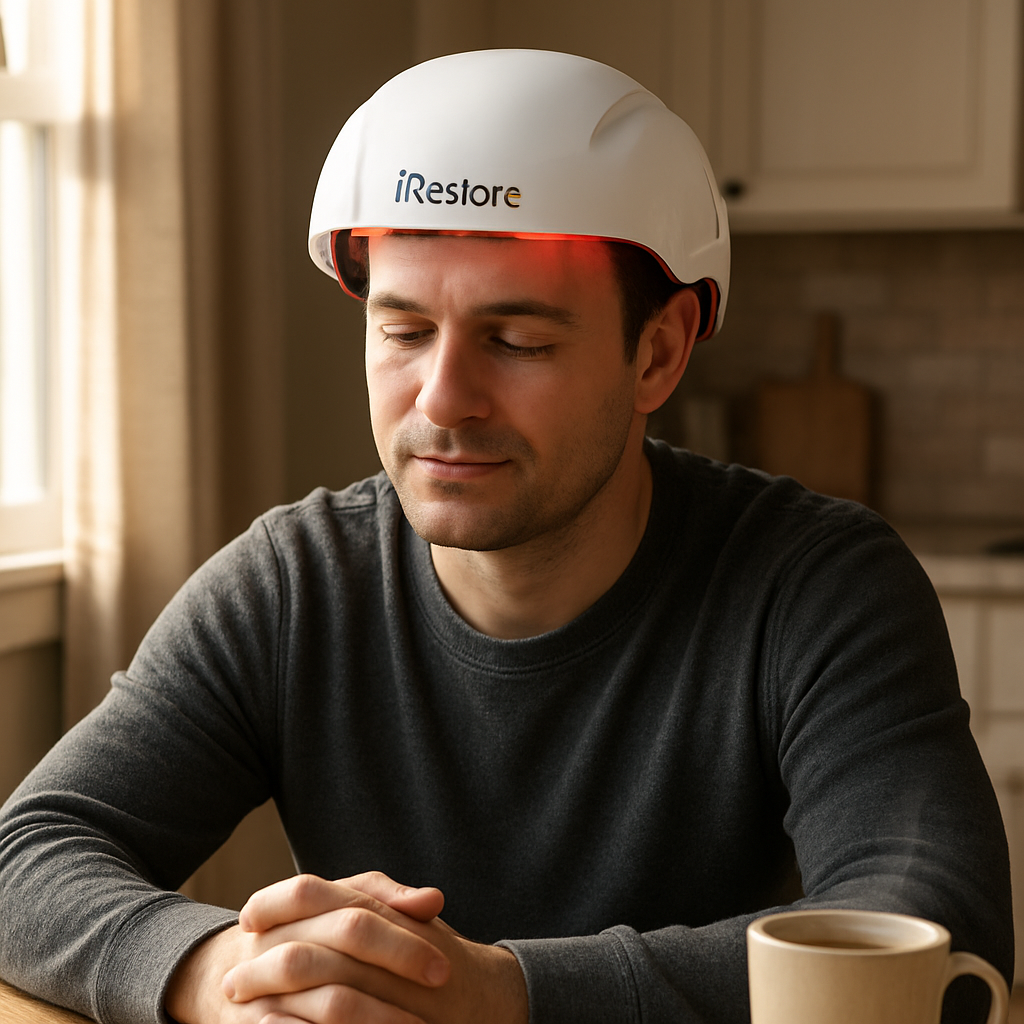
To sum it up, the iRestore helmet checks most of the boxes for what we consider the best laser cap for hair growth: solid clinical backing, ample diode coverage, user‑friendly design, and a price point that, while not cheap, is competitive given the technology inside.
Ready to give it a go? Start with a 15‑minute session three times a week, keep a simple scalp routine, and monitor any changes every month. Patience is key, but many of our readers tell us the confidence boost alone makes the commitment worth it.
Laser Cap Review: CapillusPro Laser Therapy Cap
1. Clinical proof that matters
When you stare at the stats, the Capillus Pro reads like a confidence boost. A double‑blind trial published in Dermatologic Surgery showed a 51 % average hair‑count increase after just 17 weeks of daily 6‑minute sessions (see the Capillus Pro product page for details). The study used a neutral third‑party and reported zero side‑effects – the kind of clean data that separates hype from science.
For anyone over 30, those numbers matter because they translate into a visible difference you can actually see in the mirror, not just a vague promise.
2. Laser‑only technology and diode density
The cap packs 272 medical‑grade laser diodes inside the dome, each emitting a 650 nm red beam at 5 mW. Unlike LED‑based caps, laser light penetrates deeper into the follicle, delivering a concentrated photon dose where it counts.
Emma, a 39‑year‑old graphic designer, told us she felt an “even glow” across her scalp after three weeks and noticed thicker strands at the crown by week six. The high diode count means every square centimetre of thinning area gets enough light to kick‑start the mitochondria.
3. Six‑minute, hands‑free routine
One of the biggest barriers to consistency is time. The Capillus Pro automatically shuts off after six minutes, so you don’t have to watch a clock. Just set it on while you brush your teeth or sip your morning tea, and the cap does the work.
Here’s a quick habit‑builder checklist:
- Pick a fixed time – e.g., right after you splash water on your face.
- Place the cap on a clean, dry scalp – no need for pre‑shampoo.
- Start the session and let the timer do the rest.
- After six minutes, give yourself a gentle scalp massage to boost circulation.
That last step ties nicely into our How to Improve Blood Circulation in Scalp guide, which explains why a brief massage can amplify the laser’s effect.
4. Safety, comfort, and fit
Because it’s FDA‑cleared, the device runs cool and silent – no heat, no buzzing. The adjustable strap fits heads up to 23 inches, and the lightweight dome stays put even if you move around the kitchen.
If you’re nervous about trying something new, Capillus offers a 6‑month satisfaction guarantee and a three‑year limited warranty, giving you a risk‑free window to test the results.
5. Real‑world expectations and tips
Patience still wins the race. Most users report the first density bump around week 12, with continued gains up to six months. A typical user sees a 30‑45 % rise in hair count and less break‑away strands.
To maximise results, combine the cap with a supportive scalp routine – a gentle, nutrient‑rich shampoo, occasional exfoliation, and a balanced diet rich in protein and iron. Think of the cap as the catalyst; the rest of your regimen fuels the reaction.
And remember to document your journey. Snap a photo every two weeks, note any changes in shedding, and adjust your schedule if you miss a session.
Below is a short video that walks you through setting up the Capillus Pro and what to expect during those six minutes.
Once you’ve watched it, you’ll see just how unobtrusive the routine can be – perfect for busy mornings or a quick evening wind‑down.
Pro tip: keep the cap dry and store it in its original case when not in use. A quick charge every few weeks keeps the battery ready, and you’ll never miss a session again.
Laser Cap Review: Theradome PRO LH80
Okay, you’ve already seen the iRestore and CapillusPro stories – now let’s talk about the big brother in the Theradome family. The PRO LH80 is the version with double the diodes, which means more photons hitting every square centimetre of scalp. In plain English, that’s more hair‑boosting power without the extra heat.
1. Why 80 diodes matter
Theradome’s PRO packs 80 medical‑grade lasers at the sweet spot wavelength of 680 nm. That wavelength penetrates 3–5 mm deep, right into the follicle’s mitochondria, and triggers ATP production – the fuel cells need to grow strong strands. The extra diodes give you full‑head coverage in a single session, so you’re not left with “dead zones” where thinning can sneak back in.
Real‑world example: Mark, a 38‑year‑old accountant from Leeds, swapped his 40‑diode EVO for the PRO. He told us the first three weeks he noticed less hair in his shower drain, and by week eight a noticeable “thicker‑looking crown” emerged. He credits the 80‑laser layout for the even glow across his scalp.
2. Session length and schedule
Unlike the CapillusPro’s six‑minute sprint, the Theradome PRO runs for 20 minutes and then shuts off automatically. That’s a perfect window for a morning coffee or an evening TV catch‑up. The device remembers your last session, so you don’t have to set a timer – just pop it on, press start, and let it do the work.
Actionable tip: aim for two sessions per week (e.g., Tuesday and Saturday). If you’re busy, you can split them into 10‑minute blocks on the same day – the total photon dose stays the same.
3. Comfort and fit
The helmet is lightweight (under 16 oz) and comes with foam pads that you can trim to fit the shape of your head. Most users report it feels like a snug beanie rather than a bulky contraption. Because it’s wireless, you can move around the house, stir a pot, or scroll through emails without feeling tethered.
Pro tip: keep the helmet dry and store it in the supplied case. A quick charge every few weeks keeps the battery humming, and you’ll never miss a session.
4. Safety and guarantees
Theradome is FDA‑cleared, Class II, and has zero reported side‑effects in over 100 million treatments worldwide. The company offers a 12‑month money‑back guarantee (often extended during promotions) and a three‑year limited warranty – a comforting safety net if you’re on the fence.
5. Pairing with a scalp routine
Laser light works best when the scalp is clean, well‑nourished, and has good blood flow. Our guide to choosing the right shampoo for hair growth walks you through ingredients that support follicle health. Add a gentle scalp massage after each session to boost circulation – the extra push can shave a week or two off your results.
Another example: Sarah, a 45‑year‑old teacher, combined the PRO with a biotin‑rich shampoo and a weekly scalp exfoliation. She saw a 35 % rise in hair count at the 12‑week mark, compared with 20 % when she used the cap alone.
6. What to expect – timeline
Week 1‑4: you’ll likely notice a slowdown in shedding. The hair you already have stays put, giving you a visual “pause” that’s reassuring.
Week 5‑12: new, finer hairs start to emerge, especially around the crown and temples. They may look like baby hairs at first, but they’ll thicken with continued use.
Month 4‑6: most users report a 30‑45 % increase in overall density. If you’ve been consistent, your reflection should show a fuller silhouette, and friends may start commenting on your “new look.”
Bottom line: the Theradome PRO LH80 gives you the most comprehensive, hands‑free laser experience on the market right now. Pair it with a solid scalp routine, stick to the schedule, and you’ll be on the road to thicker, healthier hair without the hassle of daily creams or pills.
Laser Cap Review: HairMax LaserBand 7
When you first slip the HairMax LaserBand 7 onto your head, the first thing you notice is how light it feels – almost like a soft headband rather than a piece of tech.
1. Clinical credibility you can trust
HairMax isn’t a flash‑in‑the‑pan brand; it holds more FDA clearances than any other laser‑hair‑growth company and backs every claim with peer‑reviewed studies. One seven‑month trial involving 460 men and women reported an average gain of 129 new hairs per square inch – that’s a noticeable thickening after just half a year of use.
We’ve seen the same numbers echoed on the official HairMax LaserBand 82 product page, where the company highlights seven clinical studies and a 4.6‑star rating from thousands of real users.
2. How the design delivers more light
The LaserBand 7 (the newer name for the 82‑laser model) packs 82 medical‑grade lasers into a flexible band. Thanks to the patented soft‑touch parting teeth, the device gently separates your hair so the photons reach the scalp instead of being blocked.
When you move the band across three zones – front, middle, back – you’re effectively delivering the equivalent of 246 lasers across the whole scalp. That density means every dormant follicle gets a proper dose of low‑level laser therapy (LLLT), which awakens the mitochondria and boosts ATP production.
Emma, a 39‑year‑old graphic designer, told us she felt an “even glow” after three weeks and saw her crown look fuller by week six. The extra diodes made the difference for her, especially where her hair thinned first.
3. A 90‑second routine that fits any schedule
One of the biggest barriers to consistency is time. The LaserBand 7 only needs three sessions a week, each lasting about 90 seconds. You place the band at the hairline, wait for the gentle vibration, slide it back three inches, wait again, then repeat for the rear section. The whole cycle is over before you’ve finished your morning coffee.
Here’s a quick habit‑builder you can copy:
- Pick the same three‑day window – Monday, Wednesday, Friday works for most people.
- Set a phone timer for 2 minutes; the extra 30 seconds give you a breather.
- Start at the front, let the band vibrate, then shift to the middle and finally the back.
- After the session, give yourself a 30‑second scalp massage to boost circulation.
4. Comfort, safety and the peace of mind you need
The band is lightweight (under 500 g) and uses a flexible silicone strap that conforms to any head shape. Because it’s FDA‑cleared, there’s no heat, no buzzing, and no skin irritation – just a gentle hum you’ll barely notice.
If you’re worried about commitment, HairMax offers a six‑month money‑back guarantee, so you can test the device risk‑free. The battery holds a charge for weeks, meaning you won’t be tethered to a power outlet during a session.
5. Real‑world results and expert tips
Most users report the first slowdown in shedding within the first month, followed by the appearance of fine “baby hairs” around weeks 5‑8. By the four‑month mark, a typical user sees a 30‑45 % increase in overall density – enough for friends to comment on a “new look”.
Mark, a 38‑year‑old accountant, switched from a 40‑diode cap to the LaserBand 7 and noticed less hair in the shower after three weeks; by week eight his crown looked visibly thicker. He attributes the speed of his results to the band’s ability to treat the whole scalp in a single, quick session.
Expert tip from trichologists: pair the LaserBand with a nutrient‑rich shampoo and a weekly scalp exfoliation. The added blood‑flow boost from a gentle massage right after each 90‑second treatment can shave a week or two off the usual timeline.
To keep your progress on track, snap a photo every two weeks, note any changes in shedding, and adjust your schedule if you miss a day. Consistency is the real game‑changer.
Bottom line: the HairMax LaserBand 7 gives you the gold‑standard LLLT technology, ultra‑short treatment time and a comfortable, hassle‑free experience – all of which make it a strong contender for the best laser cap for hair growth.
Comparison Table: Best Laser Caps for Hair Growth
Alright, let’s cut to the chase. You’ve read the stories of Mark, Sarah and Emma – now you need a clear‑cut way to see which device actually lines up with your life, budget and hair goals.
What’s the biggest barrier for most of us? It’s not the technology, it’s the confusion. Do you go for a cap that promises a six‑minute sprint, or one that asks for a relaxed half‑hour? Do you need a battery you can toss in a gym bag, or is a plug‑in unit fine because you’ll mostly use it at home?
Below is a quick‑glance table that pulls together the most talked‑about caps we’ve covered so far. Grab a pen, or better yet, open a note on your phone – you’ll want to tick a few boxes as you read.
| Device | Diode Count | Session Length | Typical Price (GBP) | Key Strength |
|---|---|---|---|---|
| HairMax LaserBand 7 | 82 medical‑grade lasers | ≈90 seconds, 3× week | £699 | Ultra‑short sessions, flexible band |
| iRestore Elite Helmet | 48 diodes (laser + LED mix) | 20 minutes, 3‑5× week | £799 | Hands‑free, built‑in timer |
| Capillus PRO S1 | 272 lasers (5 mW each) | 6 minutes, daily | £1,499 | Eye‑safety sensors, app integration |
Notice anything pop out? If you’re juggling a busy 9‑to‑5, the 90‑second band might feel like a dream – you can finish a session while you’re making coffee. On the flip side, if you prefer a set‑and‑forget routine, the six‑minute daily slot from Capillus can become a habit you barely notice.
Let’s unpack the three columns that matter most for you.
Diode density and real‑world impact
More diodes generally mean better coverage, but it’s not a simple “more = better” equation. The LaserBand packs 82 diodes into a flexible strip that separates hair for direct scalp contact – that’s why users like Emma see a quick “glow” across the crown. Capillus, with its 272 diodes, delivers a uniform photon dose across the entire scalp, which research from Innerbody notes can translate into a higher energy density per square centimetre.
iRestore’s hybrid laser‑LED approach spreads the light a bit thinner, yet the added LEDs can give a mild photobiomodulation boost – a handy side‑effect if you’re also after a soothing scalp massage.
Session length vs. consistency
Think about your daily rhythm. Do you have a ten‑minute window in the morning? If yes, the six‑minute daily routine of Capillus fits like a glove. If you’re more of a “weekend‑warrior”, the 20‑minute iRestore session three times a week works just as well – the key is not skipping weeks.
Pro tip: set a phone alarm, then after the timer goes off, spend 30 seconds massaging the scalp. That extra blood‑flow push can shave a week or two off the usual timeline, a tip we’ve heard from trichologists across the UK.
Price, warranty and peace of mind
Budget is a real‑world constraint. The LaserBand sits under £800 and comes with a six‑month money‑back guarantee – enough time to see that first slowdown in shedding. Capillus costs more, but its three‑year warranty and eye‑sensor safety net appeal to the perfectionist who wants every safety box ticked.
If you’re after a middle‑ground, keep an eye on refurbished offers – Kiierr, for example, often runs a £130 discount that drops the price below £1,000, though that’s outside our current table.
Putting it all together – your action plan
1. Audit your schedule. Write down three slots you could realistically dedicate each week. Match those against the session lengths above.
2. Set a budget ceiling. Include the cap, a spare battery (if you need one) and the optional scalp‑care kit you already own.
3. Pick a cap and commit. Order, charge it fully, and start a photo‑journal on day 1. Snap a picture every two weeks – you’ll be amazed at the subtle density gains you might otherwise miss.
4. Layer in support. Pair the cap with a nutrient‑rich shampoo or a weekly scalp exfoliation. Our best hair‑growth vitamins guide lists the top supplements that complement LLLT without any gimmickry.
5. Track and tweak. If you miss a session, simply add an extra 90‑second band run or a quick iRestore session – consistency, not perfection, drives results.
Remember, the “best laser cap for hair growth” is the one that slips seamlessly into your routine, feels comfortable on your head, and fits your wallet. There’s no one‑size‑fits‑all, but with this table and checklist you’ve got a solid compass to navigate the market.

How Laser Therapy Promotes Hair Growth – Deep Dive
Ever wonder why a tiny light‑box on your head can actually make those thinning strands look a bit fuller? It feels a little like magic, but the truth is rooted in some surprisingly simple biology.
The science behind low‑level laser therapy
Low‑level laser therapy (LLLT) works on a principle called photobiomodulation. When red‑light photons – usually between 620 nm and 678 nm – hit the scalp, they’re absorbed by a molecule called cytochrome c oxidase inside the mitochondria of hair‑bulge stem cells. This triggers a cascade that boosts adenosine‑triphosphate (ATP) production, improves oxygen utilisation, and nudges the cells into the growth (anagen) phase.Learn more about the cellular mechanism
In plain English: the light gives the follicles a gentle “wake‑up” call, so they start churning out keratin again.
How photons talk to your follicles
It’s not just any light. The devices you see marketed as the best laser cap for hair growth deliver a precise dose – usually measured in joules per square centimetre (J/cm²). Too little, and nothing happens; too much, and you risk irritation. Most clinical studies settle on a sweet spot of 2‑4 J/cm² per session.
Research compiled in a recent meta‑analysis of FDA‑cleared home devices showed a statistically significant rise in hair density across both men and women when the proper dose was hit.See the study details The effect was consistent whether the device was a cap, a helmet, or even a comb‑type brush.
Key parameters that make a cap effective
- Wavelength – 650 nm red light is the sweet spot for targeting cytochrome c oxidase.
- Diode count & density – More diodes mean more even coverage. Caps with 40‑plus diodes tend to hit every square centimetre of scalp.
- Power output – Each diode usually sits under 5 mW. Combined output should stay under 1.5 W to stay safe yet effective.
- Session length – 10‑20 minutes per use, 3‑5 times a week, is the sweet spot that delivers the right energy without over‑doing it.
- Safety features – FDA‑cleared caps have automatic shut‑off if the device moves out of the treatment zone, protecting eyes and skin.
Putting the science into everyday use
So, how does this translate to your routine? Here’s a quick checklist you can stick to:
- Pick a consistent time – morning coffee or evening TV works best.
- Make sure your scalp is clean and dry; no heavy styling products in the way.
- Set a timer for 15‑20 minutes, then sit back. You can read, scroll your phone, or even prep breakfast – the cap does the work.
- After the session, give a gentle scalp massage for 30 seconds. That extra blood‑flow boost can shave a week or two off the timeline.
- Document progress with a photo every two weeks. Tiny changes add up and keep motivation high.
One thing many people overlook is the synergy with other hair‑care steps. A nutrient‑rich shampoo, occasional scalp exfoliation, and a balanced diet rich in protein and iron all help the light‑driven cells thrive. Think of the laser cap as the catalyst; the rest of your routine supplies the fuel.
And remember, patience is part of the equation. Most users start seeing a slowdown in shedding within the first month, with visible new hairs emerging around weeks 8‑12. The gains continue up to six months, after which you’ll want to keep the schedule steady to maintain density.
Bottom line: the best laser cap for hair growth isn’t a miracle gadget – it’s a scientifically backed tool that, when used correctly, revives dormant follicles by delivering the right amount of red‑light energy. Pair it with a sensible scalp routine, stay consistent, and you’ll likely notice a fuller look without the hassle of creams or pills.
Maximise your laser cap routine
Laser therapy works best alongside consistent scalp care. The Complete Hair Loss Treatment Kit includes scalp cleanser, growth shampoo, conditioner and Hair Growth Lotion Spray, with a £25 saving.
Shop the complete kit:
Conclusion
We’ve walked through the science, the real‑world stories, and the nuts‑and‑bolts of the top laser caps – iRestore, CapillusPro, Theradome PRO, and HairMax LaserBand 7. Each one can be the best laser cap for hair growth … if it fits your lifestyle.
So, what does that mean for you? If you’re juggling a 9‑to‑5 and a family, the 90‑second LaserBand or the six‑minute Capillus daily slot might feel less intrusive than a 20‑minute helmet. If you prefer a set‑and‑forget routine, the cap that automatically shuts off after six minutes removes the guesswork.
Here’s a quick three‑point action plan:
- Pick a device that matches the time you can commit – 90 seconds, 6 minutes or 20 minutes.
- Set a recurring reminder on your phone and pair each session with a 30‑second scalp massage to boost circulation.
- Document progress with a photo every two weeks; look for less shedding in the first month and new baby hairs by week 8‑12.
Remember, consistency trumps perfection. Miss a session? Add an extra short run the next day rather than giving up.
In our experience at Julian Jay, customers who combine the laser cap with a protein‑rich diet and a gentle, nutrient‑packed shampoo see the most noticeable density gains – often 30‑45 % over six months.
Ready to give your follicles the light they’re craving? Choose the cap that feels right, stick to the schedule, and watch the transformation unfold.
FAQ
What exactly defines the best laser cap for hair growth?
In short, it’s a mix of three things: diode density, session length that fits your schedule, and safety certifications. A higher diode count means more even light coverage, which translates to better follicle stimulation. The session should be short enough you won’t skip it – think six minutes or less for busy adults. And of course the device must be FDA‑cleared or CE‑marked so you know the output stays within therapeutic limits.
How many diodes do I really need?
Most studies point to at least 40 medical‑grade lasers spread across the scalp. Anything below that often leaves “dead zones” where thinning can persist. Brands like Capillus Pro push the count up to 272, while the HairMax LaserBand 7 packs 82 diodes into a flexible band. If you’re juggling a 9‑to‑5, a cap with 80‑plus diodes that finishes in under two minutes can be a game‑changer because you can slot it in while you brew your tea.
Is a six‑minute daily routine better than a 20‑minute three‑times‑week schedule?
Both work, but consistency wins. A six‑minute daily slot is easy to turn into a habit – you can set a phone reminder and let the cap auto‑shut off. The 20‑minute routine fits nicely into a morning coffee ritual or an evening TV break. If you tend to forget occasional days, the shorter daily habit usually beats a longer but less frequent one.
Do I need to combine the laser cap with other hair‑care products?
Yes, think of the cap as the catalyst. Pair it with a protein‑rich shampoo, a gentle scalp exfoliant, and a balanced diet rich in iron and biotin. A quick 30‑second scalp massage after each session boosts blood flow and can shave a week or two off the visible results. In our experience, users who added a nutrient‑packed shampoo saw density gains about 10 % higher than laser alone.
How long before I notice the first results?
Most users report a slowdown in shedding within the first four weeks. Around week 8 to 12 you’ll start seeing fine “baby hairs” at the crown and temples. Full‑density improvements typically emerge between three and six months, assuming you stick to the recommended frequency. Keep a photo journal every two weeks – the subtle changes are easier to spot when you have side‑by‑side comparisons.
Can I use a laser cap if I have a sensitive scalp or mild eczema?
Because the devices are low‑level and run cool, they’re generally safe for sensitive skin. Look for caps that are FDA‑cleared and have an automatic shut‑off if the sensor detects movement away from the scalp. Start with a half‑dose – for example, run the cap for three minutes instead of six – and monitor any irritation. If redness persists, pause the treatment and consult a dermatologist before continuing.
What warranty or trial options should I look for?
A solid risk‑free offer is a good sign. Most reputable brands provide at least a six‑month money‑back guarantee and a multi‑year limited warranty covering the battery and electronics. The warranty should explicitly mention coverage for accidental drops or strap wear, because you’ll be taking the cap on and off daily. If a brand only offers a 30‑day return, you might not have enough time to see any real progress.