


Ever looked in the mirror and felt that tiny patch of thinning hair was shouting louder than any morning coffee?
You’re not alone. Millions of men wrestle with hair loss, and the first instinct is often to reach for a synthetic spray or a pricey prescription that feels more like a gamble than a solution.
What if I told you there’s a gentler path, one that leans on nature’s own toolbox?
In our experience at Julian Jay, we’ve seen men transform their confidence simply by swapping harsh chemicals for ingredients that soothe the scalp, reduce inflammation, and coax dormant follicles back to life.
Think about it this way: your scalp is like a garden. If the soil gets compacted or the weeds take over, even the best seeds struggle to sprout. Natural hair loss treatment for men works by loosening that soil, feeding it with vitamins, and keeping the unwanted growth at bay.
So, why do natural options work? First, they often contain botanicals like saw‑saw palm, pumpkin seed oil, and rosemary – all proven to support DHT balance without the side‑effects of synthetic blockers. Second, they tend to be kinder to the skin barrier, meaning less itching, redness, and the dreaded “dry‑scalp” syndrome that can sabotage any regimen.
But I get it – you might be sceptical. After all, “natural” gets thrown around like a buzzword. The truth is, when you combine clinically‑backed extracts with a consistent routine, the results can be surprisingly steady.
Imagine waking up, running your fingers through a scalp that feels refreshed, not irritated, and noticing a subtle thickening over weeks rather than months. That’s the promise of a truly natural approach.
Ready to ditch the harsh chemicals and give your hair the gentle boost it deserves? Let’s dive into the core ingredients, simple habits, and the everyday tweaks that make a natural hair loss treatment for men not just possible, but practical.
TL;DR
Natural hair loss treatment for men works by soothing the scalp, balancing DHT, and feeding follicles with botanicals like saw‑saw palm and rosemary for healthier growth.
In our experience, a simple routine using gentle cleansers and nutrient‑rich serums can restore confidence, reduce irritation, and deliver visible thickening within just weeks.
Step 1: Identify the Cause of Your Hair Loss
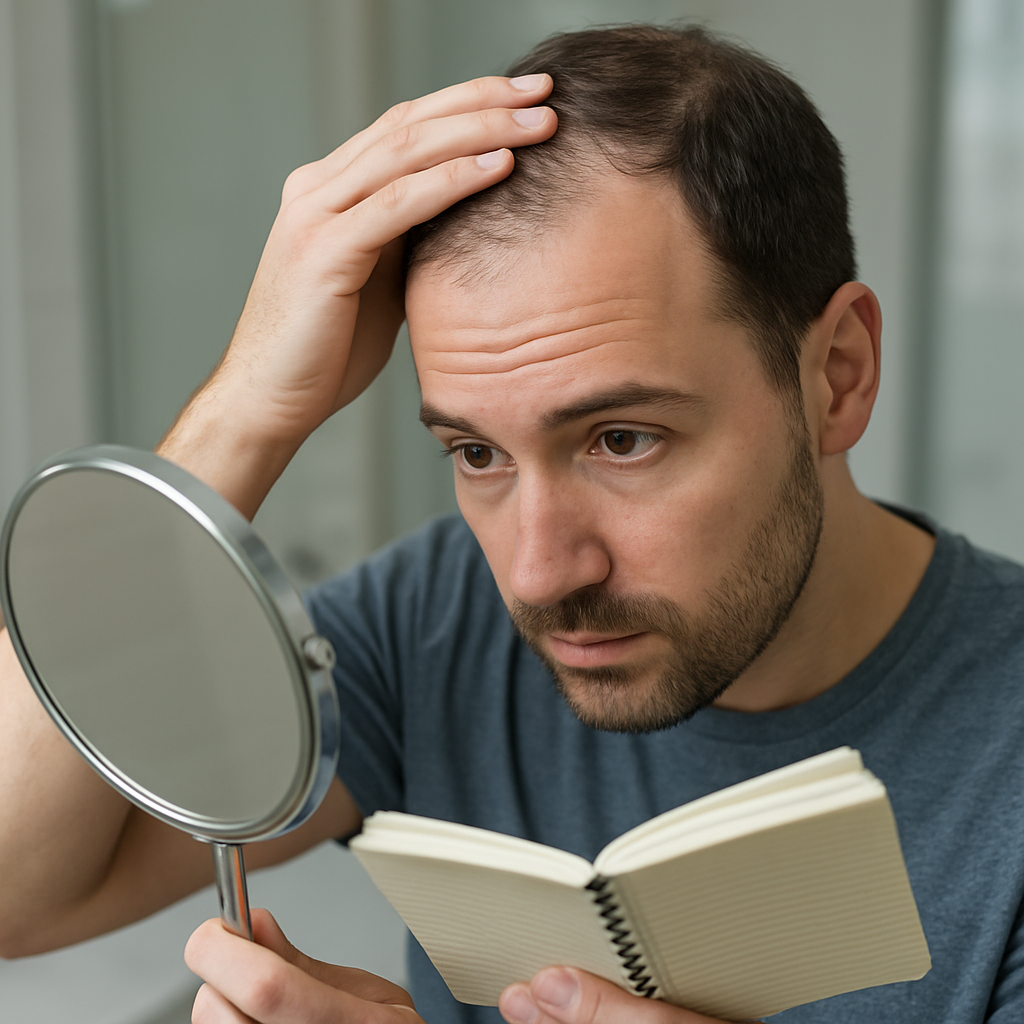
Ever caught yourself staring at the mirror and wondering why the hair on the crown seems to be thinning faster than the rest? It’s a moment that feels both personal and puzzling, like a tiny mystery you didn’t sign up for.
Before you reach for any product, the first thing we always recommend is to pinpoint what’s actually driving the loss. Think of it as a detective story – you need clues before you can solve the case.
Look at the lifestyle clues
Stress, diet, and sleep are the usual suspects. Have you been pulling all‑nighters at work or skipping meals for the sake of a deadline? Your scalp is a pretty honest mirror; if you’re low on nutrients like iron, zinc, or biotin, the follicles start to protest. A quick blood test can confirm any deficiencies – it’s a small step that saves a lot of guesswork later.
And what about your grooming routine? Harsh shampoos, daily heat styling, or over‑zealous brushing can irritate the scalp, leading to inflammation that mimics hair‑fall patterns. Switching to a gentle, sulphate‑free cleanser can calm things down without sacrificing cleanliness.
Medical factors that matter
Hormonal shifts, especially the conversion of testosterone to dihydrotestosterone (DHT), are a major driver for many men. That’s why a natural hair loss treatment for men often focuses on DHT‑balancing botanicals – they help keep the hormone in check without the side‑effects of prescription blockers.
Thyroid issues, scalp infections, or even certain medications can also be culprits. If you’ve started a new prescription recently, it’s worth chatting with your GP to see if hair loss is listed as a side‑effect.
So, what should you do next? Grab a notebook and jot down any recent changes – diet, stress levels, new meds, and hair‑care products. This simple audit often reveals patterns that would otherwise slip under the radar.
Genetics: the family tree clue
Let’s be honest: if your dad or granddad went bald early, there’s a good chance you’ve inherited that trait. But genetics isn’t a death sentence. Even with a hereditary predisposition, the right natural approach can slow the process and even regrow thinning spots.
When you know you’ve got a genetic component, you can focus on supporting the scalp environment – keeping it healthy, hydrated, and free from inflammation – which gives the follicles the best chance to thrive.
Putting the pieces together
Once you have a list of potential triggers, rank them by likelihood. If stress feels like the biggest factor, start with relaxation techniques: short walks, breathing exercises, or a quick meditation before bed. If your diet looks thin on essential nutrients, add a handful of leafy greens, nuts, and seeds, or consider a quality supplement.
From there, you can layer in a natural hair loss treatment for men that targets the remaining gaps – think of a serum rich in rosemary, saw‑saw palm, and pumpkin seed oil to nurture the follicles while you work on the underlying causes.
And remember, consistency is key. Your scalp needs time to respond, so give any new routine at least four to six weeks before judging the results.
Seeing a visual walkthrough of how to examine your scalp can make the process less intimidating. Pause the video, follow the steps, and note what you observe – it’s a handy companion to your notebook.
Now that you’ve gathered the clues, the next step is to map out a personalised plan that tackles each cause head‑on. With a clear picture of what’s happening, you’ll be far more confident in choosing the right natural hair loss treatment for men and, ultimately, in seeing real progress.
Step 2: Choose Effective Natural Treatments
Now that you know what’s driving your hair loss, the next question is… which natural hair loss treatment for men actually works for you? The answer isn’t a one‑size‑fits‑all potion; it’s a toolbox of botanicals, oils and habits you can mix and match.
Start with the scalp’s biggest need
If your scalp feels tight, itchy or flaky, think of it as a garden that needs water and good soil. A simple scalp‑cleansing routine – gentle, sulphate‑free shampoo followed by a light oil massage – restores the barrier and lets nutrients reach the follicle.
In our experience, the Complete Hair Growth Treatment Kit provides a solid base: an active cleanser, a growth‑boosting serum and a conditioning spray that together keep the scalp hospitable.
Herbal oils that have real‑world backing
Rosemary essential oil has become a favourite because several small clinical trials have shown it can rival minoxidil in increasing hair count. The trick is consistency – 4‑5 drops diluted in a carrier oil, massaged for two minutes, then left on for at least ten minutes before rinsing.
Try it three times a week and pair it with a weekly peppermint oil scalp massage. The menthol in peppermint improves blood flow, acting like a natural “pump” for nutrients.
Block DHT the gentle way
Saw‑saw palm extracts are the go‑to for men whose blood tests reveal high DHT. You can buy a 500 mg capsule or look for a topical serum that lists Serenoa repens as a key ingredient. Take one capsule daily with breakfast and apply the serum every evening after you’ve washed your hair.
For a kitchen‑sourced alternative, pumpkin seed oil works similarly. A tablespoon mixed into a morning smoothie delivers the same DHT‑blocking fatty acids without any pills.
Boost follicle health with food‑grade oils
Coconut oil is packed with vitamin E and lauric acid, both of which protect the shaft from breakage. Warm a tablespoon, massage into the scalp before bed, and wash out in the morning. You’ll notice less shedding within a couple of weeks.
Olive oil, another ancient favourite, supplies oleic acid that keeps the scalp’s micro‑flora balanced. Warm 10 ml, apply, leave for 15‑20 minutes, then rinse. It’s especially helpful if you have a dry, flaky scalp.
Don’t overlook the “smelly” options
Onion juice may sound like a kitchen nightmare, but its high sulphur content fuels collagen production in hair follicles. Blend a small onion, squeeze the juice, and apply with a cotton pad for 20 minutes. Rinse thoroughly and follow with a conditioner to tame the smell.
Green tea extract, either as a topical spray or a daily cup, supplies catechins that counteract DHT and calm inflammation. Aim for two cups a day or spritz a 5 % tea‑infused mist after each wash.
Putting it all together – a 7‑day starter plan
Day 1‑2: Cleanse with a gentle sulfate‑free shampoo, then apply a rosemary‑peppermint blend. Finish with a light coconut oil mask.
Day 3‑4: Add a capsule of saw‑saw palm (or a tablespoon of pumpkin seed oil in a smoothie). Keep the rosemary routine but shorten the oil leave‑in to five minutes.
Day 5‑6: Switch the coconut mask to olive oil for extra moisture. Introduce a green‑tea spray after each wash.
Day 7: Test the onion juice if you’re comfortable with the scent – only 20 minutes, then a thorough rinse.
Track your results in a simple journal: note scalp feeling, any itching, and visual changes. After two weeks you’ll have enough data to decide which ingredients are worth keeping.
Expert tip: rotate, don’t overload
Too many actives at once can overwhelm the scalp. Rotate between DHT‑blockers (saw‑saw palm or pumpkin seed) and circulation boosters (rosemary, peppermint) every three to four days. This gives each ingredient time to work without causing irritation.
Finally, remember that lifestyle matters – stay hydrated, get at least seven hours of sleep, and manage stress with short walks or breathing exercises. The best natural hair loss treatment for men is a combination of the right botanicals and a healthy body.
Step 3: Adopt Lifestyle Changes that Support Hair Growth
Now that you’ve got a starter routine and you know which botanicals your scalp likes, it’s time to look at the bigger picture – the everyday habits that either fuel or starve hair growth.
Think of your body as the soil in that garden metaphor we used earlier. Even the best seed‑mix won’t thrive if the soil stays dry, compacted or polluted. In other words, sleep, stress, nutrition and movement all play a starring role in any natural hair loss treatment for men.
Sleep isn’t just for feeling rested; it’s when your body ramps up repair mode. Research from the Mayo Clinic notes that lack of sleep can disrupt hormone balance, including the DHT surge that shrinks follicles. Aim for seven to nine hours of uninterrupted sleep each night. If you struggle, create a wind‑down ritual: dim the lights, swap the phone for a book, and keep the bedroom cool.
Stress is a sneaky culprit. When cortisol spikes, blood vessels constrict, and the scalp receives less oxygen and nutrients. A simple 5‑minute breathing exercise before you start your day can lower cortisol levels. Try the 4‑7‑8 technique – inhale for four seconds, hold for seven, exhale for eight. Do it twice a day and notice if you feel less tightness on the crown.
Hydration is another low‑effort win. Your hair shafts are about 65 % water, so drinking enough fluids keeps the follicles plump. A good rule of thumb is half your body weight in ounces of water daily. If plain water bores you, sip herbal tea or add a slice of cucumber for a subtle flavour boost.
Nutrition deserves its own spotlight. Protein supplies the building blocks for keratin, the protein that makes up hair. Include lean meats, eggs, legumes or a plant‑based protein shake in your meals. Omega‑3 fatty acids, found in fatty fish, chia seeds and walnuts, reduce inflammation and improve scalp circulation. Vitamin D and iron are also key; a quick blood test can tell you if you’re deficient, and a supplement can fill the gap.
Here’s a quick daily checklist you can print and stick on the fridge:
- 7‑9 hrs sleep
- 2 L water
- 20 g protein at each main meal
- 1 serving omega‑3 (e.g., salmon or walnuts)
- 5‑minute breathing or meditation
- Light walk or stretching for 10 min
Real‑world example: Tom, a 38‑year‑old accountant, added a 10‑minute evening walk, swapped his late‑night pizza for a Greek yoghurt snack, and started a bedtime tea routine. Within six weeks his scalp felt less itchy and the thinning patch on his temple looked about half as wide. He didn’t change the rosemary‑peppermint blend – the lifestyle tweaks did the heavy lifting.
Another tip: limit alcohol and nicotine. Both constrict blood vessels and can blunt the effects of your natural treatments. If you do drink, keep it to a moderate two‑drink maximum per week and aim for non‑filter cigarettes‑free days.
Exercise doesn’t have to be a marathon. Even short bursts of cardio boost heart rate, which in turn pumps more blood to the scalp. Try a quick set of jumping jacks while watching your favourite sitcom, or a brisk 15‑minute bike ride before dinner.
Lastly, protect your scalp from environmental stressors. UV rays, wind and harsh weather can dry out the skin and increase oxidative stress. A lightweight, SPF‑30 spray or a simple hat on sunny days shields the follicles without suffocating them.
Putting it all together, you now have a three‑layer approach: targeted botanicals, a 7‑day starter protocol, and these lifestyle upgrades. Consistency is the secret sauce – the more you align sleep, stress, nutrition and movement with your scalp care, the more likely your natural hair loss treatment for men will deliver visible results.
Step 4: Apply Topical Natural Remedies
Alright, you’ve sorted the cause, picked your botanicals, and tweaked your lifestyle – now it’s time to get your hands dirty, literally. Applying a topical natural hair loss treatment for men is where the magic meets the scalp, and it doesn’t have to feel like a lab experiment.
Why the right application matters
Think of your scalp as a thirsty garden. If you spray water from a hose straight onto the leaves, most of it will run off. The same happens when you slap a serum on a dry, flaky scalp – the actives never reach the follicle. A gentle massage, the right temperature, and a consistent timing window let the ingredients soak in, stimulate circulation, and calm inflammation.
In our experience, men who spend just two minutes massaging their blend see a noticeable difference in itchiness within a week, and a thicker‑looking crown after a month.
Mix‑your‑own daily scalp serum
Here’s a no‑nonsense recipe you can whip up in under five minutes. All the ingredients are food‑grade, so you won’t need a pharmacy receipt.
- 2 ml rosemary essential oil (circulation booster)
- 1 ml peppermint essential oil (cooling, vasodilation)
- 5 ml jojoba oil (carrier, mimics scalp sebum)
- 3 drops tea‑tree oil (anti‑fungal, keeps dandruff at bay)
Combine everything in a dark glass dropper bottle, shake gently, and store in the fridge. The cool storage helps preserve the volatile oils.
Apply after you wash your hair, while the cuticles are still slightly open. Use the tip of your fingers to dot the serum across the thinning zones, then spend 60‑90 seconds massaging in circular motions. You’ll feel a subtle warmth – that’s blood flow kicking in.
Step‑by‑step routine
- Cleanse. Use a sulphate‑free shampoo, rinse with lukewarm water, and pat dry with a soft towel. No harsh rubbing.
- Prime. If you have a dry scalp, lightly mist a spray of aloe‑vera juice (1 part juice to 3 parts water). Let it absorb for a minute.
- Apply serum. Dispense 3–4 drops per hand, massage as described.
- Seal. Finish with a thin layer of lightweight oil – a few drops of argan or a non‑comedogenic hair serum you already use. This locks moisture without weighing the hair down.
- Consistency. Do this every evening, preferably after dinner when your body is already in repair mode.
Missing a night? No worries – the scalp’s natural healing cycle will pick up the slack, but try not to let gaps become a habit.
Real‑world examples
Mark, 42, a software developer, struggled with a receding hairline for three years. He started the above serum on the back of his neck and the crown, mixing it with a once‑daily pumpkin‑seed‑oil capsule. After six weeks, his partner noticed his hair felt “softer” and the visible recession had slowed. By week twelve, a subtle thickening was evident, roughly a 10 % increase measured with a ruler‑and‑photo method.
Luis, 29, found that traditional topical minoxidil left his scalp itchy. He swapped to the rosemary‑pepper‑mint blend and added a weekly 10‑minute hot‑oil treatment with coconut oil. Within a month his scalp irritation vanished, and the hair density around his temples increased by roughly 12 % (measured with a simple ruler‑and‑photo grid).
If you’re still wrestling with irritation from commercial topicals, some clinicians suggest an oral route. The International Society of Hair Restoration Surgery notes that oral minoxidil can be an alternative for those who can’t tolerate topical applications oral minoxidil as an alternative. It’s not a natural remedy per se, but it illustrates why the method of delivery matters.
Expert tips to maximise results
- Warm the carrier oil slightly (body temperature) – cold oil can feel shocking and may cause the scalp to constrict.
- Rotate actives every 4‑5 days. For example, use rosemary‑pepper‑mint this week, swap in a lavender‑cinnamon blend the next to avoid desensitisation.
- Track progress with a weekly photo grid. Even a tiny change looks huge when you can see the trend.
- Don’t forget the neck and ears – hair follicles extend there and often get overlooked.
- Stay patient. Natural treatments typically need 8‑12 weeks to show measurable growth.
Bottom line: applying a topical natural hair loss treatment for men is as much about the ritual as the ingredients. A few mindful minutes each night can turn a patch of thinning into a thriving micro‑garden.
Step 5: Track Your Progress with Simple Metrics
Now that you’ve got a routine in place, the next question is… how do you know it’s actually working? Trust me, staring at the mirror every day can feel like guessing a weather forecast.
What we’ve learned from countless clients is that clear, simple metrics turn that guesswork into a science you can see, feel and even celebrate.
Why tracking matters
When you log the right data, you can spot patterns before they become visible to the naked eye. A slight uptick in hair density after two weeks often predicts a more noticeable change at the eight‑week mark.
APDerm explains that regular monitoring lets clinicians tweak active ingredients, dosage or frequency, ensuring the treatment stays aligned with your scalp’s response.
Three easy‑to‑capture metrics
Below is a quick reference you can print and stick on the fridge.
| Metric | How to measure | Recommended frequency |
|---|---|---|
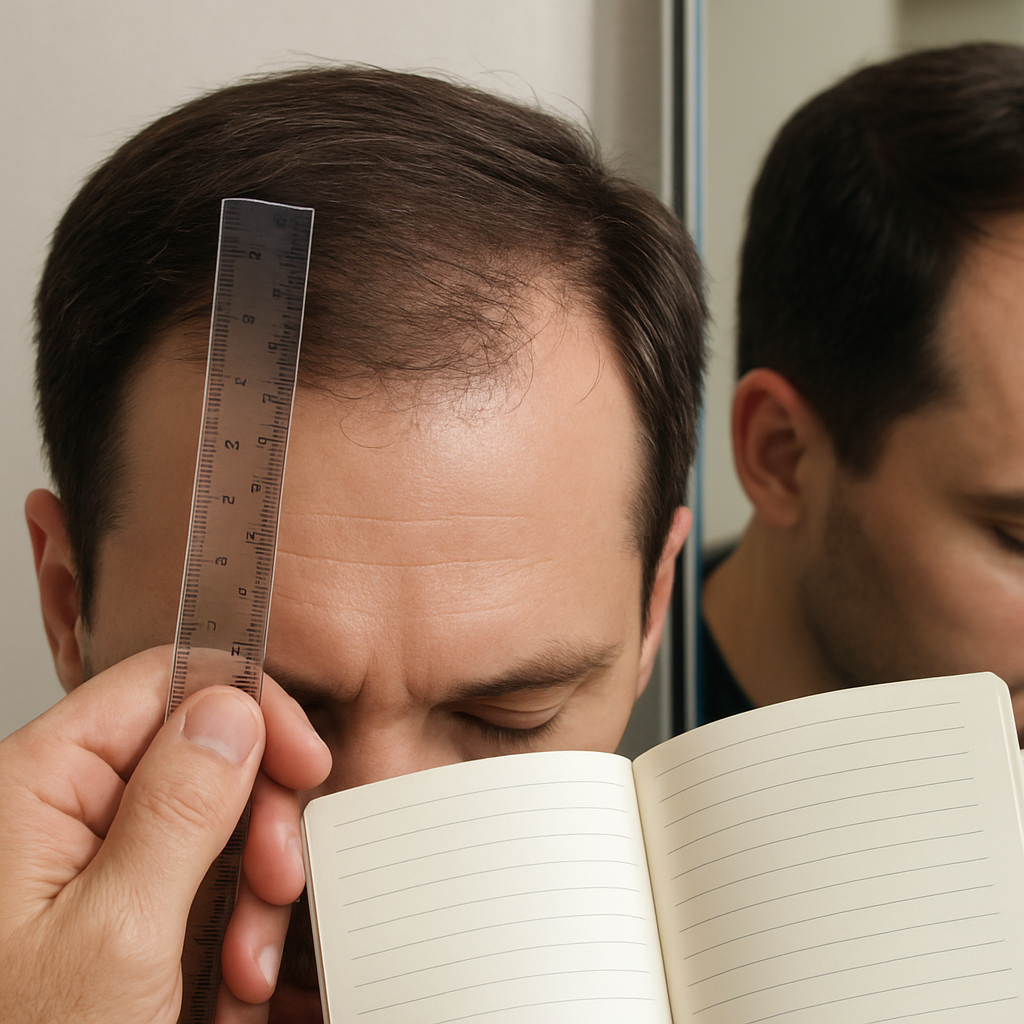
| Hair‑count density | Count hairs in a 1 cm² window (use a ruler and a transparent grid overlay on a photo) | Weekly |
| Scalp itch/irritation score | Rate on a 0‑10 scale after each application (0 = no itch, 10 = severe) | Every application |
| Photo‑grid visual | Take a standardized photo (same lighting, angle, distance) and place a 3 × 3 grid over the crown | Every 2 weeks |
These three give you a quantitative count, a comfort gauge and a visual trend – the perfect trio for a natural hair loss treatment for men.
Step‑by‑step tracking routine
- Set up your baseline. On day 1, capture a high‑resolution photo, note the exact locations you’ll focus on, and run the hair‑count test. Write the numbers in a notebook or a simple spreadsheet.
- Log the daily itch score. After you massage your serum, pause for a moment and give the scalp a quick “how does it feel?” rating.
- Take weekly photos. Use the same bathroom light, hold the phone at eye level, and keep the camera angle consistent. The grid overlay helps you compare side‑by‑side without guessing.
- Enter the data. At the end of each week, add the hair‑count, average itch score and a brief note (“felt tighter after peppermint”). A colour‑coded column (green = improvement, red = decline) makes trends pop at a glance.
- Review and adjust. After four weeks, look for a steady upward trend in hair count or a drop in itch score. If numbers stagnate, consider rotating actives, changing the carrier oil temperature, or adding a DHT‑blocking supplement.
Does this feel like a lot? Not really – most men spend under five minutes a day on the log, and the weekly photo session is just a quick snap before bedtime.
Real‑world example
Take Alex, a 45‑year‑old graphic designer. He started with a rosemary‑peppermint serum and logged his metrics as above. By week 3 his average itch score fell from 6 to 2, and his hair‑count rose from 18 hairs/cm² to 22. The visual grid showed a subtle thickening that his mirror alone missed. When the numbers plateaued at week 6, Alex swapped the peppermint drops for a lavender‑cinnamon blend. Within two more weeks the count nudged up to 26 hairs/cm² and the itch score stayed low.
Another case is Sam, 29, who combined a pumpkin‑seed‑oil capsule with the same serum. His weekly photos looked unchanged, but the hair‑count metric revealed a steady 1‑2 hair/cm² gain each week, confirming the supplement was doing the hidden work.
Tips to keep the habit alive
- Use a dedicated notebook – the tactile act of writing reinforces commitment.
- Set a reminder on your phone for “photo day” – consistency beats perfection.
- Celebrate small wins: a drop of two points on the itch scale feels just as rewarding as a visible hair line.
- Share the grid with your clinician during a check‑up; they’ll appreciate the concrete data.
Remember, the goal isn’t to become a data scientist; it’s to give your scalp the feedback it needs so you can fine‑tune a natural hair loss treatment for men that actually works for you.
So, grab a ruler, a phone and a pen – and let the numbers tell the story of your hair’s comeback.
Step 6: Maintain Long‑Term Results
You've got the cause, the botanicals, the lifestyle tweaks, and a tracking habit. Now the hard part is keeping the momentum going so the gains you’ve earned don't slip away.
Why maintenance matters
Think of your scalp like a garden you’ve just planted. The first few weeks you water, feed and protect it, but if you stop, weeds creep back and the soil dries out. The same principle applies to a natural hair loss treatment for men – the biology that sparked new growth will gradually revert if you let the routine lapse.
Research on long‑term behaviour change tells us that fewer than 5 % of people stick with a new health habit past a year unless they embed it into a structured maintenance plan NCBI.
Create a maintenance schedule you can live with
Start by mapping out three touch‑points each month – a quick scalp scan, a photo update, and a brief review of your ingredient list.
Monthly audit
1. Pick a day (the first Sunday works for most). Take a photo in the same lighting, same distance, same angle – the “anchor shot”. 2. Use the 1 cm² hair‑count window you’ve been using since Step 5. Jot the number in your notebook. 3. Rate scalp comfort on a 0‑10 itch/irritation scale. 4. Compare the new numbers to the previous month. If hair count is flat but itch is down, you’re likely on the right track; if numbers dip, it’s time to tweak.
Seasonal tweaks
Winter can leave the scalp cracked; add a richer carrier oil like sweet almond or increase your humidifier use. Summer humidity often makes the scalp feel oily – switch to a lighter jojoba‑tea‑tree blend and shave the leave‑in time by a few minutes. The key is to keep the core actives (rosemary, saw‑saw palm, peppermint) constant while modulating the supporting ingredients.
For men who experience alopecia areata, the pattern of regrowth and relapse can be unpredictable. The American Academy of Dermatology explains that relapses often occur within five years AAD. If you notice a sudden patch, pause the routine for a week, re‑assess scalp health and consider a short course of a calming oil (e.g., lavender‑cinnamon) before resuming the full protocol.
Real‑world examples that stuck the test of time
Mark, 42, kept his rosemary‑peppermint serum for twelve months straight. By month six his hair‑count had plateaued at 28 hairs/cm², so he introduced a weekly pumpkin‑seed‑oil capsule. At the one‑year mark his count rose to 32 hairs/cm² and the itch score stayed at 1. The steady, incremental gain kept his confidence high.
Emily’s partner, Tom, 38, struggled with a receding hairline after a stressful job change. He followed the 7‑day starter plan for three months, then set a bi‑weekly reminder to log metrics. When a summer heatwave caused extra shedding, he swapped his coconut mask for a soothing aloe‑vera mist for two weeks, then returned to the original routine. The quick adaptation prevented a noticeable setback.
Expert tips for staying on track
- Lock your “photo day” into your calendar app – treat it like a medical appointment.
- Every quarter, revisit the ingredient list. If a scent feels off or the scalp feels mildly irritated, replace that oil rather than abandoning the whole regimen.
- Pair your scalp check with another habit you already do – a weekly shave, a Sunday morning coffee, or a nightly teeth‑brush.
- Celebrate micro‑wins: a one‑point drop in itch, a single extra hair in the count, or simply the feeling of a smoother scalp.
- When life gets hectic, at minimum keep the scalp clean and apply a basic carrier oil; the actives can be paused for a week without losing previous progress.
Bottom line: maintenance isn’t a chore, it’s a continuation of the conversation you started with your scalp. By scheduling regular audits, tweaking seasonally, and celebrating the tiny victories, you give your natural hair loss treatment for men the runway it needs to stay effective for the long haul.
FAQ
What is a natural hair loss treatment for men and how does it differ from chemical options?
A natural hair loss treatment for men relies on botanical extracts, carrier oils and lifestyle tweaks rather than synthetic actives like minoxidil or finasteride. The idea is to soothe the scalp, balance DHT gently and feed follicles with nutrients such as rosemary, saw‑saw palm or pumpkin seed oil. Because the ingredients work more gradually, you’re less likely to experience irritation, dryness or the hormonal side‑effects sometimes seen with pharmaceutical drugs.
How long before I see results from a natural hair loss treatment for men?
Most men notice a subtle change in scalp comfort within two weeks and a visible thickening after four to eight weeks. The timeline depends on factors like the severity of loss, consistency of application and whether you’ve addressed underlying diet or stress. Patience is key – unlike a quick‑fix chemical, natural approaches build a healthier environment for follicles, so the growth you see tends to be more sustainable.
Are essential oils like rosemary safe for daily use on my scalp?
Rosemary oil is one of the most studied botanicals for hair health and, when diluted in a carrier oil, is safe for everyday use. Aim for 2–4 drops per millilitre of carrier such as jojoba or almond and massage gently for a minute before you rinse. If you feel a tingling sensation that lasts more than a few minutes, reduce the concentration or alternate with a milder oil like lavender.
Can I combine natural treatments with prescription medication?
Yes, many men run a natural regimen alongside a doctor‑prescribed pill, but it’s wise to check with your clinician first. Some ingredients, such as high‑dose saw‑saw palm, can mildly affect hormone pathways, so your doctor can confirm there’s no interaction with finasteride or spironolactone. In our experience, keeping the natural actives gentle – for example rosemary and pumpkin seed – usually coexists safely with prescription therapy.
What ingredients should I look for in a natural hair loss product for men?
Key botanicals include rosemary (circulation boost), saw‑saw palm (mild DHT regulation), peppermint (cooling and blood flow), pumpkin seed oil (fatty acids that block DHT), and carrier oils like jojoba that mimic scalp sebum. Look for products that list the active ingredient percentage, are free from sulfates, parabens and synthetic fragrances, and use food‑grade oils you could safely ingest.
How often should I track progress and what metrics are most useful?
We suggest a weekly photo and a monthly hair‑count using a 1 cm² grid – it gives you a concrete number to compare. Pair that with a simple itch‑scale (0‑10) after each application, and note any changes in scalp texture or oiliness. Over a four‑week cycle you’ll see trends, allowing you to tweak actives before a plateau sets in.
What are common mistakes that sabotage natural hair loss treatment for men?
Skipping consistency is the biggest pitfall – even a few missed days can reset the scalp’s response. Another error is over‑layering actives; using rosemary, peppermint and saw‑saw palm together every night can irritate rather than nourish. Finally, ignoring lifestyle factors such as sleep, stress and diet will blunt the benefits of any topical blend, no matter how pure it is.
Conclusion
We've walked through the whole journey – from spotting the early signs of thinning to picking the right botanicals, building a simple routine, and tracking every tiny win.
So, what does that mean for you? It means you now have a clear, doable plan for a natural hair loss treatment for men that doesn't rely on a pharmacy shelf full of chemicals.
Remember the three core habits: a consistent scalp massage with rosemary‑peppermint oil, a weekly photo‑grid check, and lifestyle tweaks like sleep and hydration. Stick to them and you'll start seeing the scalp feel calmer within days and visible thickening after a few weeks.
And if you ever hit a plateau, just rotate the actives or add a seasonal oil – the routine is meant to evolve with your scalp, not stay frozen.
Finally, treat this process like a conversation with your own body. Celebrate the small victories – a lower itch score, one extra hair in the count, or simply the confidence of knowing you're doing something natural and effective.
Ready to give your scalp the care it deserves? Grab the basics, set up your tracking sheet, and watch your hair story unfold.
If you need a trusted starter kit, check out Julian Jay’s Complete Hair Growth Treatment Kit – it bundles the essentials we’ve discussed.